

Grief is often misunderstood as a process of “moving on” or “letting go,” but for many, processing a loss comes not from detaching from the deceased, but from maintaining a meaningful connection. Continuing bonds theory in grief counselling challenges the outdated notion that grief has an endpoint. Instead, it suggests that keeping an emotional relationship with the deceased can be a healthy, adaptive part of bereavement.
In this article, we’ll explore how continuing bonds theory in grief counselling reshapes the way we understand loss, how mental health professionals can integrate it into their work, and why it’s a crucial component of our Grief Models course.
🌱 Online Training
Explore our courses, including Grief Models, which covers Continuing Bonds theory.
-
Product on sale
 Original price was: $142.00.$102.00Current price is: $102.00.
-
Product on sale
 Original price was: $108.00.$81.00Current price is: $81.00.
What Is Continuing Bonds Theory in Grief Counselling?
Introduced by Klass, Silverman, and Nickman in 1996, continuing bonds theory in grief counselling proposes that instead of detaching from a lost loved one, the bereaved maintain a connection in new ways. This perspective shifts grief support from a “letting go” mindset to one that acknowledges the ongoing relationship between the living and the deceased.
Rather than seeing grief as something to be “resolved,” this model highlights that:
- Many people find comfort in honouring and remembering their loved ones.
- Maintaining a connection can be an adaptive coping strategy in grief.
- Bonds with the deceased evolve over time rather than disappearing.
This theory opposes earlier models, such as Freud’s idea of grief as detachment, which suggested that to heal, one must sever emotional ties with the deceased. Instead, continuing bonds theory in grief counselling validates the diverse ways individuals choose to keep memories, traditions, and relationships alive.
How Do People Maintain Continuing Bonds?
Grieving individuals may sustain a bond with their loved ones in many ways, often without realising they are engaging in a recognized psychological process. Some common expressions of continuing bonds theory in grief counselling include:
- Talking to the deceased – Many people find comfort in speaking aloud to their lost loved ones, whether privately or in the presence of others.
- Holding onto objects – Keeping personal belongings, such as a piece of jewellery or a handwritten note, serves as a tangible link to the deceased.
- Engaging in rituals – Anniversaries, birthdays, and special occasions often become times to honour and reflect on the person’s life.
- Carrying forward their values – Some find meaning in continuing a loved one’s work, passions, or charitable efforts.
- Dreams and spiritual connections – Many people report vivid dreams or feelings of a deceased loved one’s presence, which can offer emotional reassurance.
These actions help integrate the loss into daily life in a healthy, meaningful way, supporting emotional well-being rather than deepening distress.
Why Continuing Bonds Theory in Grief Counselling Matters for Mental Health Professionals
For therapists, counsellors, and grief support professionals, continuing bonds theory in grief counselling offers a powerful framework for helping clients reframe their experience of loss. Some key benefits include:
- It reduces guilt and anxiety – Many grieving individuals worry that “holding on” is unhealthy. Understanding that continuing bonds are natural and beneficial helps ease these concerns.
- It shifts focus from detachment to adaptation – Instead of urging people to “move on,” counsellors can help them explore meaningful ways to keep connections alive.
- It aligns with cultural and spiritual beliefs – Many traditions already embrace the idea of an ongoing connection with ancestors and loved ones. This model supports diverse perspectives on grief.
- It encourages personalised grief support – Every person experiences loss differently. Continuing bonds theory in grief counselling provides a flexible and client-centred approach.
Therapists integrating this model can help clients recognise that grief does not have to be a process of forgetting, but rather a process of transforming the relationship with the deceased in a way that promotes healing.
How Our Course Explores Psychological Models, Including Continuing Bonds Theory in Grief Counselling
Learn about embracing Compassion Focused Therapy (CFT) in supporting people who are grieving. We will cover theory, exercises and look at what the evidence base tells us is helpful in supporting bereavement with compassion.
Price: £104.99 Sale price: £74.99
9 Videos – 2.5 Hours | 3 Resources | One Year Online Access
If you’re a mental health professional, grief counsellor, or caregiver, understanding continuing bonds theory in grief counselling is just one part of supporting individuals through bereavement. Our Formulating Grief – Psychological Models course provides a comprehensive overview of grief theories, offering practical applications and case studies that deepen your ability to help those in mourning. This course also offers a CPD opportunity, helping you enhance your skills and continue your professional development in the field of grief support.
What You’ll Learn in the Course:
- Anticipatory grief – Understanding grief before a loss occurs.
- Key psychological models on grief
- Real-world case studies – Practical applications of grief models in therapy.
- Continuing bonds theory in grief counselling – Exploring the role of lasting connections in the grieving process.
- Effective grief support strategies – Evidence-based interventions for mental health professionals.
With six video lessons, downloadable resources, and one year access, this course equips you with the tools to provide compassionate, informed grief support.
Final Thoughts…
Grief is not about forgetting, and processing loss does not require detaching from the past. Continuing bonds theory in grief counselling offers a compassionate, modern approach to supporting those who are grieving. By embracing the idea that love and connection can persist beyond death, mental health professionals can effectively empower their clients as they navigate loss.
If you want to deepen your understanding of grief models and explore continuing bonds theory in grief counselling in greater depth, our Formulating Grief – Psychological Models course provides the insights, tools, and strategies you need.
🧠 Understand the ‘Stages’ of Grief
Many people first encounter grief through the idea of “stages,” but the model is often simplified or misunderstood.
Our Stages of Grief page looks at where the framework began, what each stage represents, and how it can support understanding – without suggesting that grief unfolds in a tidy order.
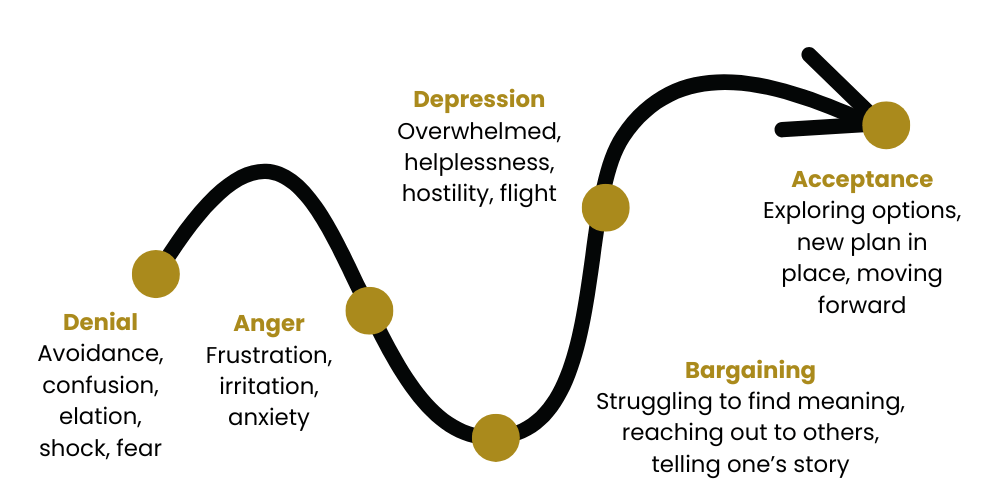
Explore the page to learn:
📘 A clear explanation of what the Five Stages are (and what they’re not)
🧭 Why grief rarely moves in a straight line
🌊 How feelings can rise and fall in waves
🧩 Other grief models that may resonate more with your experience
Photo by Toa Heftiba on Unsplash
One response to “Continuing Bonds Theory in Grief Counselling”
[…] also talk about continuing bonds — the idea that grief isn’t about cutting ties, but about maintaining an evolving relationship […]