Following bereavement it is not uncommon to experience intrusive memories and nightmares about loss and moments surrounding the death, especially if you witnessed traumatic events.
Losing a loved one is inherently traumatic, and when the loss is due to cancer, it often involves a series of distressing experiences—from diagnosis and treatment to palliative care. Following the passing of a loved one, you may find that certain memories involuntarily resurface, bringing with them the pain associated with those moments.
To better comprehend our experiences, it’s helpful to understand the workings of our brain during trauma. Delve into our video to gain insights into how our brain responds in moments of trauma.
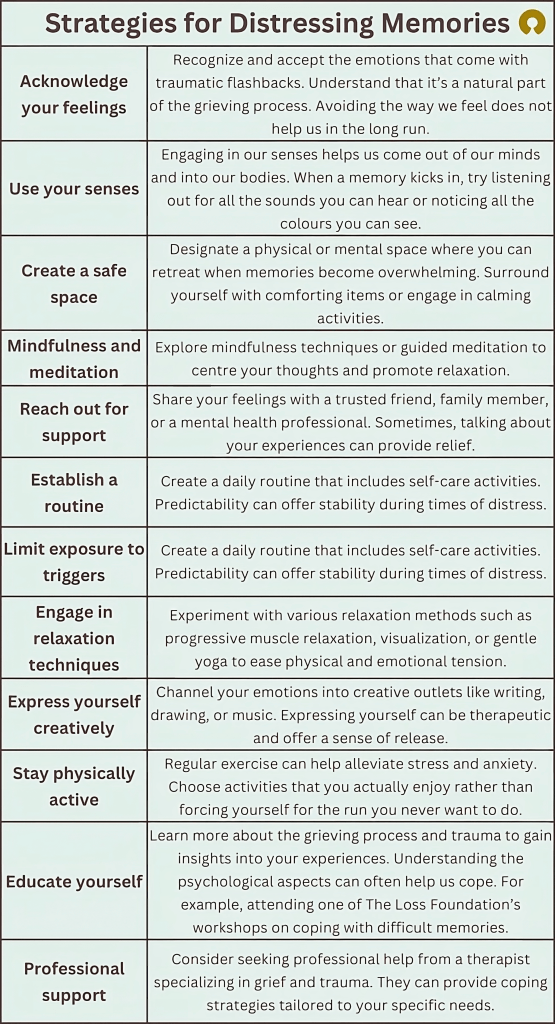
Coping with traumatic flashbacks and intrusive memories after a bereavement can be challenging, but there are strategies to help you look after yourself during these difficult times. Here are some of our suggestions:
Resources to support you
When we bottle up grief, the pressure builds in the pipes and eventually we burst. That could manifest as sleeplessness, irritability, relationship difficulties. Give yourself the time for grief outlets.