
Stages of Grief Worksheets
+ Other grief models
Explore the activities from our Grief Journey Workbook that focus on the Five Stages of Grief model, as well as four other grief models…
🌊 The Kübler-Ross Five Stages of Grief Worksheet – denial, anger, bargaining, depression, and acceptance as common responses to loss.
⚖️ The Dual Process Model Grief Worksheet – balancing grief with everyday life.
🫙 The Jar Model Grief Worksheet – showing how grief may stay the same, but life can grow around it.
🛤️ The Tasks of Mourning Grief Worksheet – guiding steps for processing loss.
🔗 Attachment Theory Grief Worksheet – exploring how our bonds shape grief.

The Kübler-Ross Five Stages of Grief Worksheet
Denial, anger, bargaining, depression, and acceptance as common responses to loss.

This worksheet provides an overview of the Kübler-Ross Model and how it relates to grief.
It explains the five stages of grief – denial, anger, bargaining, depression, and acceptance – while also addressing how grief is non-linear and unique to each person.
Additionally, the worksheets introduce expanded grief models.
This includes the seven and nine-stage adaptations, with space to reflect on which ‘stage’ feels most familiar to you.
The seven-stage model adds shock and testing to Kübler-Ross’s five stages, while the nine-stage model includes tormented hope and guilt, highlighting the complex and non-linear nature of grief.


This worksheet explores the acute and integrated grief model, which highlights how grief evolves over time.
It distinguishes between acute grief, characterised by intense, immediate reactions such as disbelief, sorrow, and emotional distress, and integrated grief, which reflects the gradual adaptation to life after loss while maintaining a connection to the deceased. The worksheet also addresses complicated grief, a prolonged and disruptive form of mourning that can significantly impact daily life.
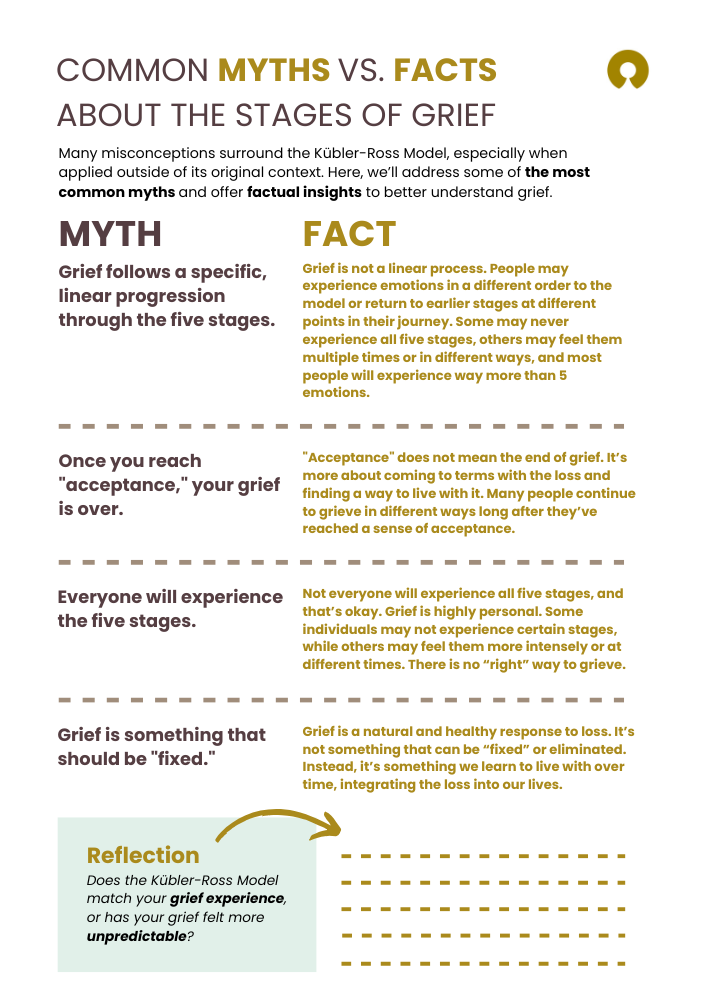
Last of the four worksheets on stages of grief – a run through of fact versus myth.
There are many misconceptions surround the Kübler-Ross Model, especially when applied outside of its original context. This worksheet looks at some of the most common myths versus factual insights to better understand grief.
The Dual Process Model Grief Worksheet
Balancing grief with everyday life.
Our Dual Process Model of Grief worksheet helps individuals navigate the balance between two essential aspects of the grieving process: loss-oriented and restoration-oriented factors. Loss-oriented factors involve grief-related thoughts and tasks, like memories or probate, which can bring up sadness and anger. Restoration-oriented factors offer a break from grief, helping you engage in daily life and distracting from the pain.


The Jar Model Grief Worksheet
Shows how grief can stay the same, but life can grows around it.

Our Jar Model of Grief worksheet, based on Tonkin’s Model of Grief, encourages you to reflect on how new experiences and moments of enjoyment can gradually fill your “jar” over time.

The Tasks of Mourning Grief Worksheet
Guiding steps for processing loss.
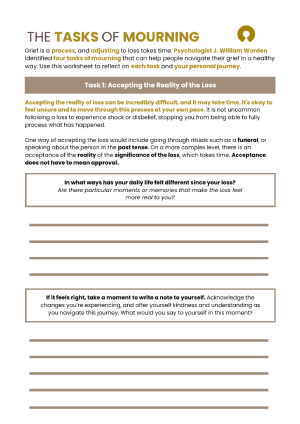
Our Tasks of Mourning worksheet is based on J. William Worden’s four tasks of mourning, which guide individuals through the grieving process. These tasks are designed to support the process of adapting to life after loss.

Attachment Theory Grief Worksheet
Explores how our bonds shape grief.

This worksheet helps you reflect on how your own attachments and attachment style may be impacting your grieving process, offering gentle guidance as you navigate your emotions during this difficult time.

Learn more about the Stages of Grief here.
An in-depth exploration of the Kubler-Ross stages of grief, and additional stage models, expanding on alternative frameworks that explain emotional responses during loss. You can also read about acute and integrated grief, which describes how individuals transition from intense emotional reactions to more integrated and adaptive responses over time.