
Denial in Grief
Understanding Its Role and Fluid Nature
Grief is a deeply personal experience that can take many different forms.
One of the emotions commonly associated with loss is denial – the feeling that the reality of the situation is simply too much to bear. Denial often acts as a defense mechanism, offering a temporary escape from the overwhelming emotions that come with grief.
While denial is often discussed in relation to the Five Stages of Grief, it’s important to understand that this is just one lens through which grief is viewed. At The Loss Foundation, we take a different approach. We recognise that there is no “right” way to grieve and that each person’s journey is unique.

Your Grief Journey Workbook
Grief is not a linear journey, and everyone experiences it differently. This workbook provides guidance and helpful tools for your journey.
📖 73 pages, 20 supportive activities & 8 audio meditations
🧠 Created by our Clinical Psychologists
✍️ A blend of reflection, practical exercises & coping strategies
💛 Designed for those grieving or supporting others
-
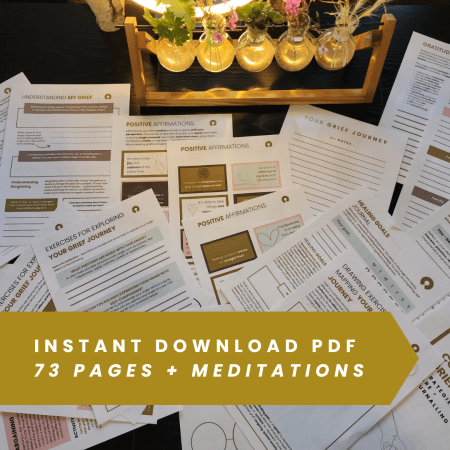 Your Grief Journey Workbook£15.00
Numbness versus denial in grief
Rather than seeing grief as a rigid, step-by-step process, we believe it is more of a dynamic experience, with emotions ebbing and flowing over time like waves. Denial may show up early on, but it can also reappear throughout the grieving process, sometimes unexpectedly.
It might not be experienced in a linear or predictable way; some days may feel more manageable, while other days may bring feelings of disbelief and shock, no matter how long it’s been since the loss.
The emotion of denial can manifest in various ways.
You might find yourself feeling numb, as though you are detached from the reality of your loss. You might avoid thinking or talking about it, or you might convince yourself that everything is fine, despite the obvious pain. These responses are natural and understandable ways that people sometimes cope with deep sorrow.
Importantly, denial is not a sign of weakness or avoidance—it’s often just the mind’s way of protecting itself from feelings that may seem too overwhelming. It offers a brief respite, a space to gather strength before fully confronting the reality of loss. This is why we believe that grief can’t be rushed, and there’s no timeline or set process to follow.
“Denial helps us to pace our feelings of grief. There is a grace in denial. It is nature’s way of letting in only as much as we can handle” – Elisabeth Kübler-Ross
At The Loss Foundation, we understand that grief is not a one-size-fits-all experience.
Whether denial is part of your emotional journey or not, your grief will be shaped by your unique relationship with the person you’ve lost, your circumstances, and your emotional makeup. It’s crucial to remember that there’s no “correct” or “incorrect” way to grieve.
The Waves of Grief
As we move through grief, the waves can grow calmer or more intense. Denial might give way to other emotions, or it might return when least expected.
The process is not linear – grief is the natural, human response to loss, one that requires patience, compassion, and understanding. Each person’s path is different, and that’s okay. It’s all part of what makes grief such a uniquely personal experience.
Our approach to the five stages of grief
At The Loss Foundation, we understand that grief is a deeply personal experience. Instead of viewing it as a set path, we see it as a fluid process, where emotions ebb and flow like waves, influenced by individual relationships, life circumstances, and emotional resilience.
Learn more about the stages of grief (and other models of grief)
Explore our Stages of Grief page to dive into Kübler-Ross’s five-stage model and discover other perspectives on the grieving process.