
🪞 Overview
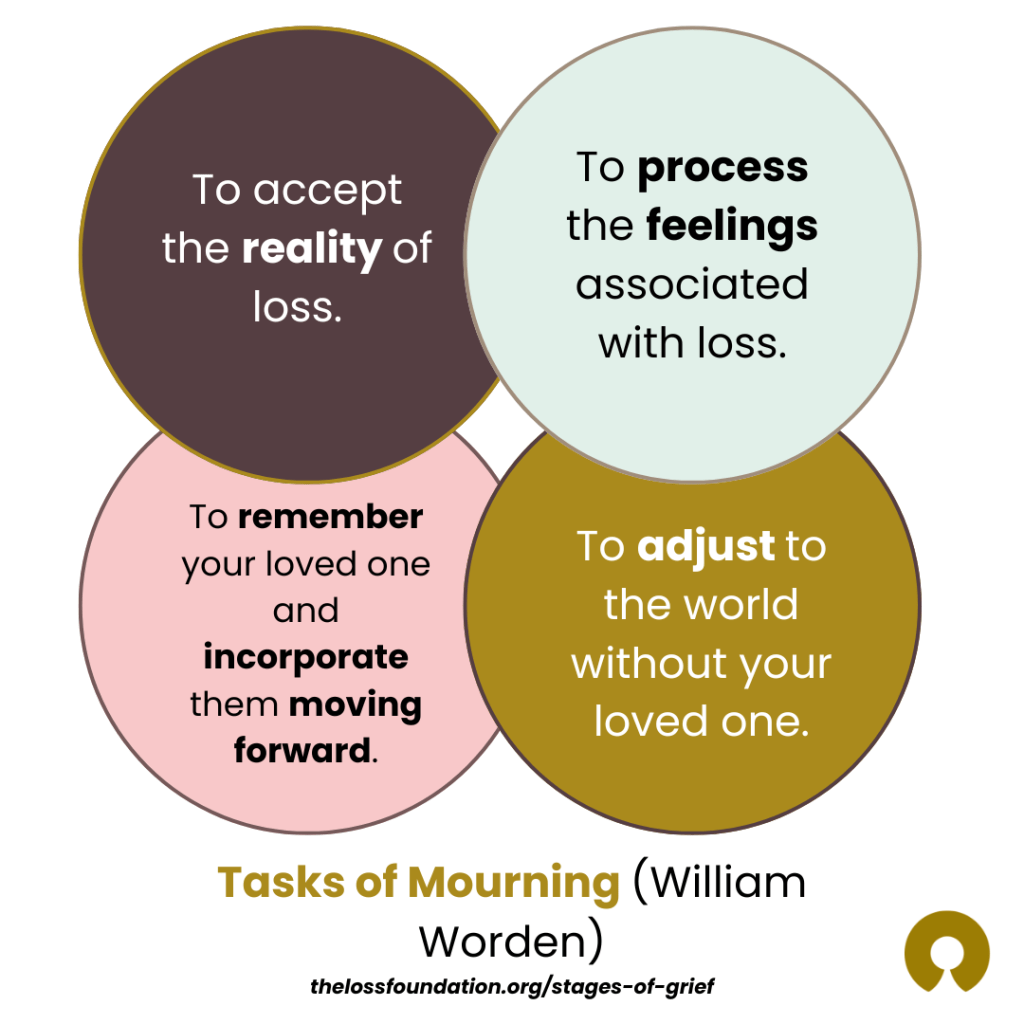
William Worden’s model identifies four “tasks” of mourning – not steps, but processes that help people adapt to loss at their own pace.
This approach sits alongside Stage-based Grief models, offering another way to understand how people work through loss over time rather than in a fixed order.
🙌 How It Helps
The Tasks of Mourning model provides gentle structure without pressure, helping you make sense of what you may need emotionally and practically as you process your loss.
🤍 May Be Helpful If…
- You find comfort in having a clear framework for understanding what grief asks of you.
- You want to explore grief as something we actively engage with, rather than something that “just happens” to us.
- You’re looking for guidance on what it can mean to adjust, adapt, and carry loss forward.
📌 Tips for Using This Model
- Reflect on where you are within the four tasks (see below for an explanation of each):
- Accepting the reality of the loss;
- Processing the pain of grief;
- Adjusting to a world without your loved one;
- Finding a way to remember them while continuing to live.
- Revisit these tasks when you feel stuck – they can loop and overlap.
The Four Tasks of Mourning
Worden’s model describes four tasks that people may move in and out of as they adapt to life after a loss. These aren’t steps or a timeline, but ongoing processes that people revisit in their own time.
1. Accept the Reality of the Loss
This task involves beginning to acknowledge that the person has died and that life has changed. Shock, disbelief, or a sense of unreality can make this difficult at first. Acceptance may come through rituals like funerals, talking about the person in the past tense, or gradually recognising the emotional significance of the loss.
2. Process the Pain of Grief
Grief brings a range of emotions – sadness, anger, guilt, loneliness, or numbness. This task involves allowing space for those feelings rather than avoiding them. Processing can happen through talking, crying, writing, seeking support, or any form of expression that helps the emotions move.
3. Adjust to a World Without the Person
This includes external adjustments (learning new skills, taking on tasks the person once did, changes to daily routines or living situations) and internal adjustments (shifts in identity, role, and worldview). People may also grapple with spiritual or existential questions as they rebuild their understanding of life without the person.
4. Find a Lasting Connection While Re-engaging in Life
The final task involves finding a way to carry the memory and love of the person forward while continuing to live. This may include creating new routines, forming new relationships, or discovering meaningful activities. It’s about maintaining an ongoing bond without being held back from living a full life.
📖 Further Reading
Worden, J. W. (2009). Grief Counselling and Grief Therapy: A Handbook for the Mental Health Practitioner.
Remember: these models are simply ways of understanding grief. You are the expert in your own experience, and you never need to fit yourself into any single model.
Take what’s helpful and leave the rest.
Grief Models: Online Course
Psychological models offer structure for understanding the many emotions and changes that grief brings. They help professionals – and anyone supporting someone who is grieving make sense of the experience and respond with empathy, clarity, and confidence.
👥 See real case studies that bring theory to life
🕯️ Understand continuing bonds, meaning-making, tasks of mourning, and more
🛠️ Practical tools for real-world settings
📘 Worksheets to use in sessions