

Grief is a deeply personal and complex experience, and over the years, different models have attempted to define its emotional journey. While the well-known Kübler-Ross model outlines five stages, some frameworks condense the process into four stages, offering a simplified yet meaningful perspective on how people navigate loss.
What Are the 4 Stages of Grief?
The four-stage model of grief typically includes the following:
- Shock and Numbness – The initial reaction to loss, often marked by disbelief, emotional numbness, or an inability to process what has happened.
- Yearning and Searching – A phase of deep longing for what has been lost, often accompanied by emotional pain, sadness, or even bargaining.
- Disorganisation and Despair – Feelings of confusion, hopelessness, or even withdrawal as the full weight of grief settles in.
- Reorganisation and Recovery – A gradual adjustment to life without the loved one, where moments of hope, adaptation, and meaning begin to emerge.
This model focuses on broader emotional transitions rather than rigid steps, recognising that grief does not follow a linear path.
How This Model Differs from Other Grief Frameworks
Unlike the five-, seven-, or even twelve-stage models, the four-stage framework aims to simplify the experience without reducing its significance. It acknowledges the core aspects of grief—shock, emotional pain, deep sadness, and eventual adaptation—without overcomplicating the process. This can be particularly helpful for those who feel overwhelmed by grief theories and just want a clear, digestible way to understand their emotions.
Your Grief Journey Workbook
Grief is not a linear journey, and everyone experiences it differently. This workbook provides guidance and helpful tools for your journey.
📖 73 pages, 20 supportive activities & 8 audio meditations
🧠 Created by our Clinical Psychologists
✍️ A blend of reflection, practical exercises & coping strategies
💛 Designed for those grieving or supporting others
-
 Your Grief Journey Workbook£15.00
Is the 4-Stage Model Right for You?
While some find comfort in structured grief models, others may not relate to them at all. Grief is unique to each person, and no single framework can fully capture its complexity. If you resonate with this model, it can serve as a helpful way to recognise and validate your feelings. However, if your experience doesn’t fit neatly into these four stages, that’s completely okay – grief doesn’t follow a set formula.
Final Thoughts
The four stages of grief provide a straightforward yet insightful way to understand loss. They emphasise that while grief is painful and often disorienting, adaptation is possible. No matter how you grieve, what matters most is finding support, allowing yourself to feel, and recognising that your journey is valid—no matter what shape it takes.
At The Loss Foundation, we understand that grief is not a one-size-fits-all experience. Each person’s journey through loss is deeply personal, shaped by their relationship to the person they’ve lost, their circumstances, and their emotional makeup.
Instead of viewing loss as a linear progression through stages of grief, we approach it as a dynamic process with periods of intensity and calm, often described as waves that ebb and flow over time.
🧠 Explore How the ‘Stages of Grief’ Work
The “stages” of grief are one of the most familiar frameworks people turn to when trying to understand loss – yet they’re often interpreted too literally.
Our Stages of Grief guide breaks down where the model came from, what each stage represents, and how it can offer insight without suggesting grief moves in tidy steps.



Explore the page to learn:
📘 A clear explanation of what the Five Stages do – and don’t – mean
🧭 Why grief shifts over time rather than progressing in order
🌊 How emotions can rise and fall in waves
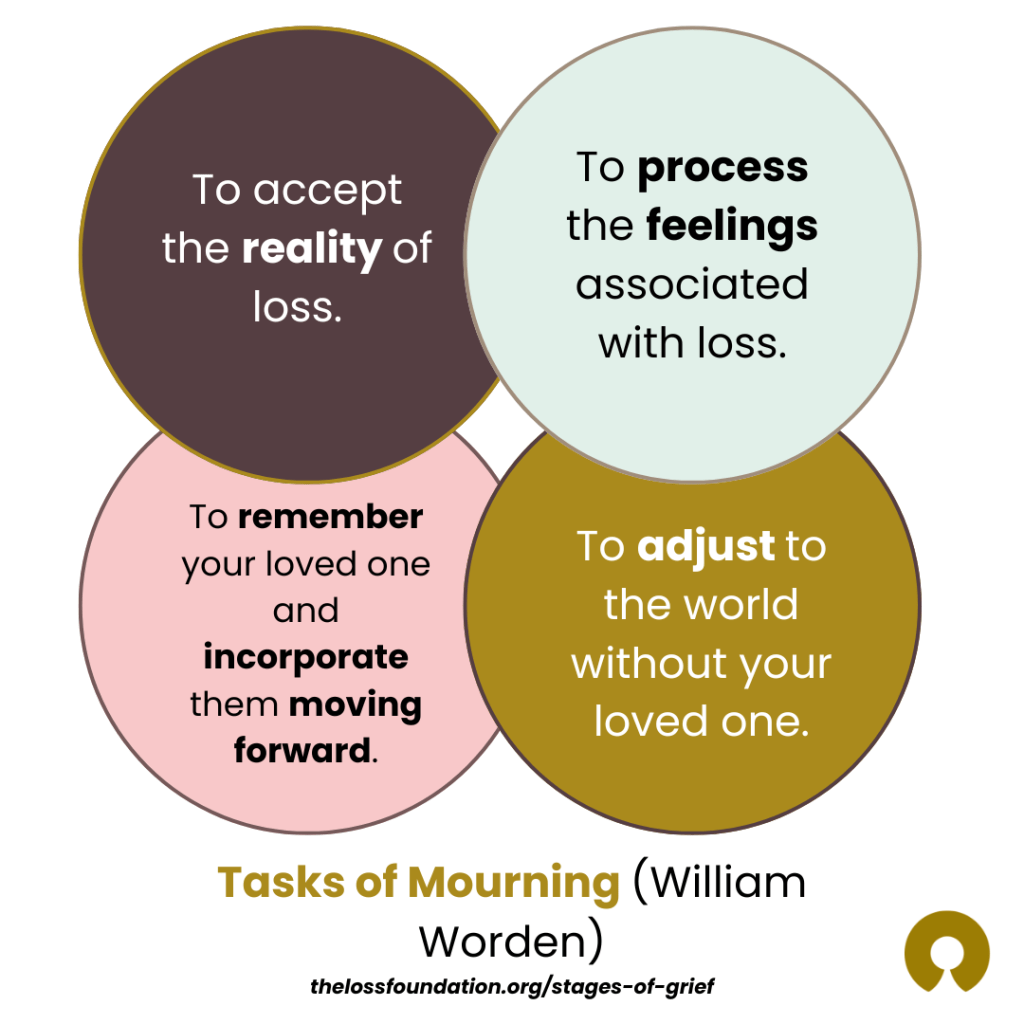
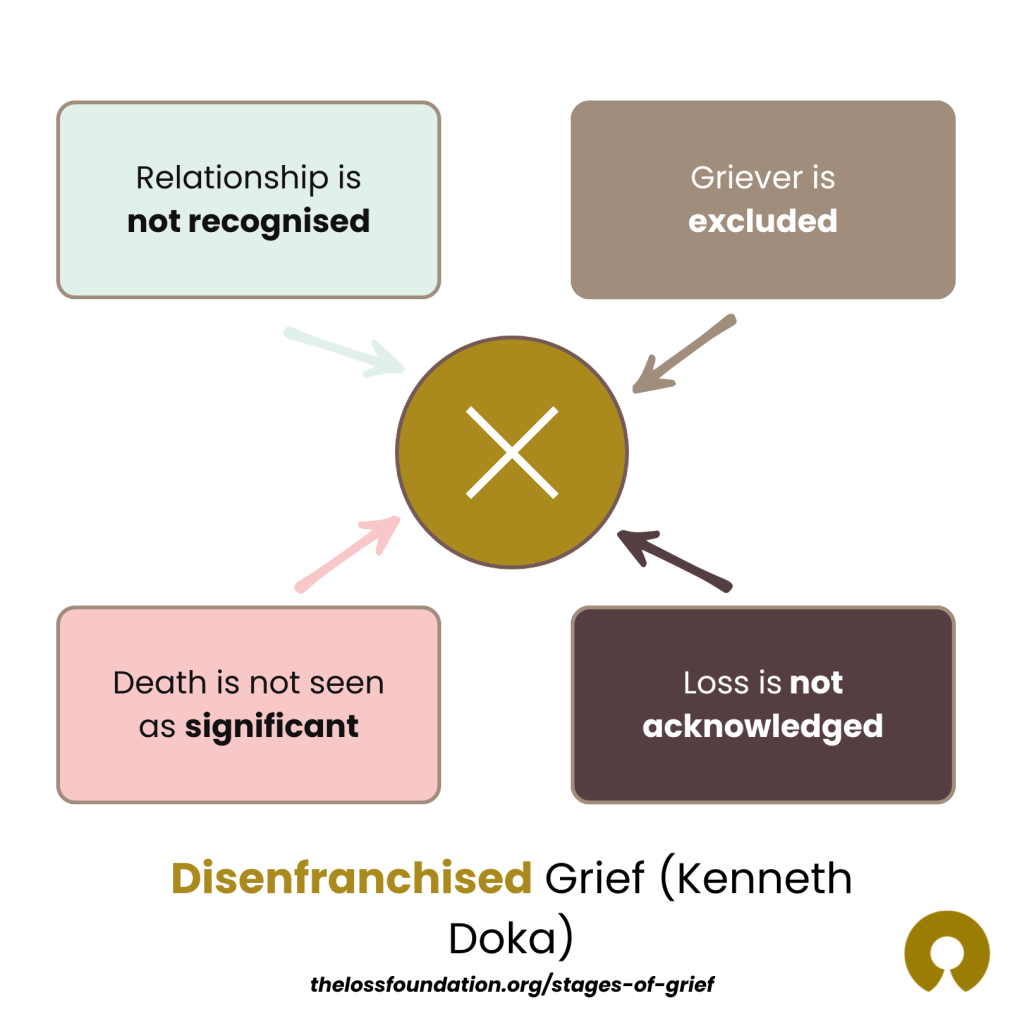
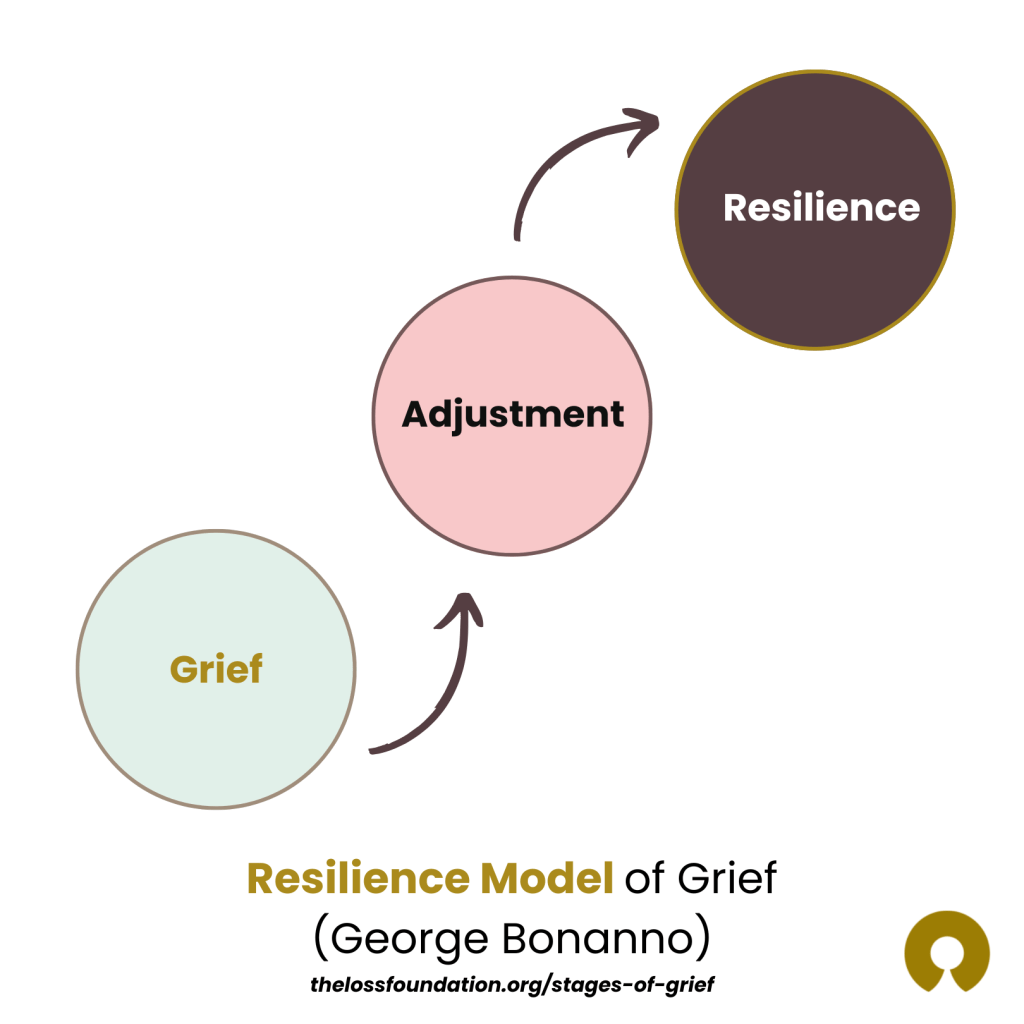
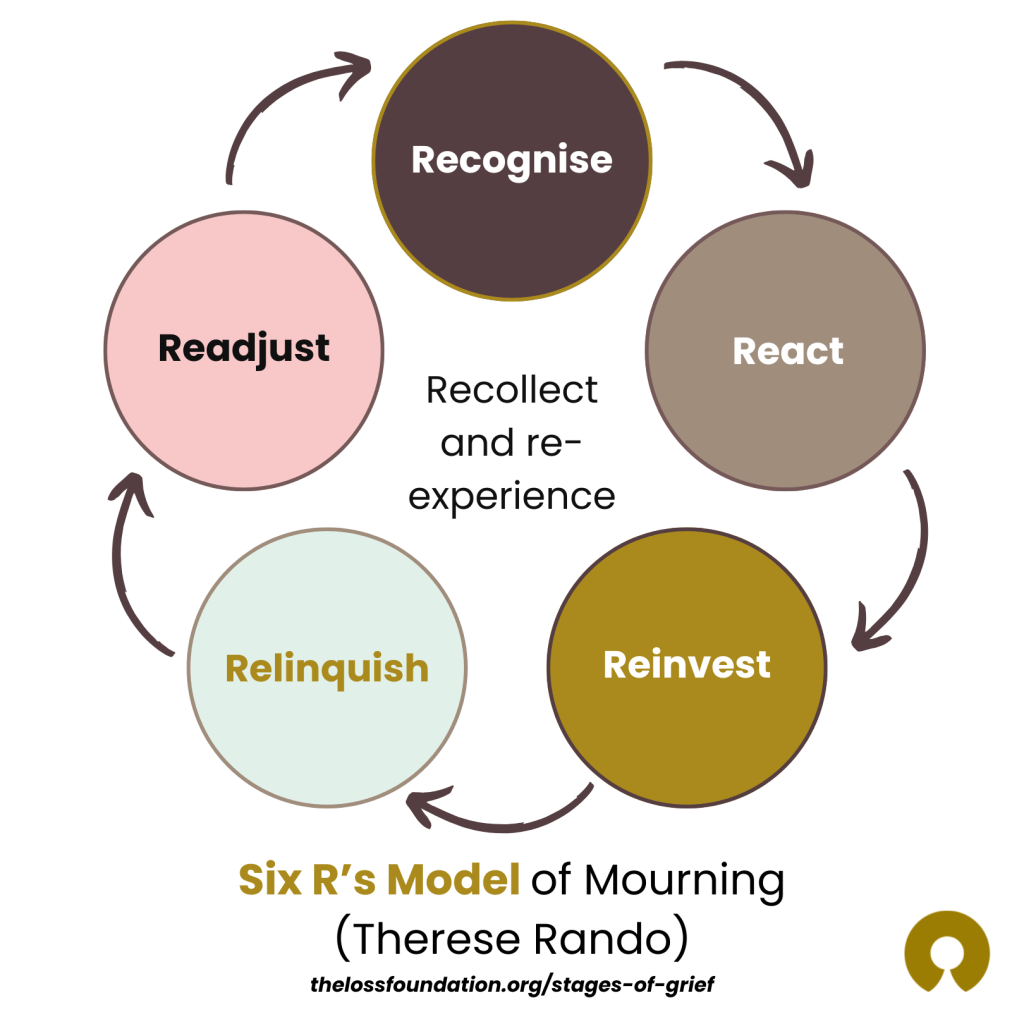
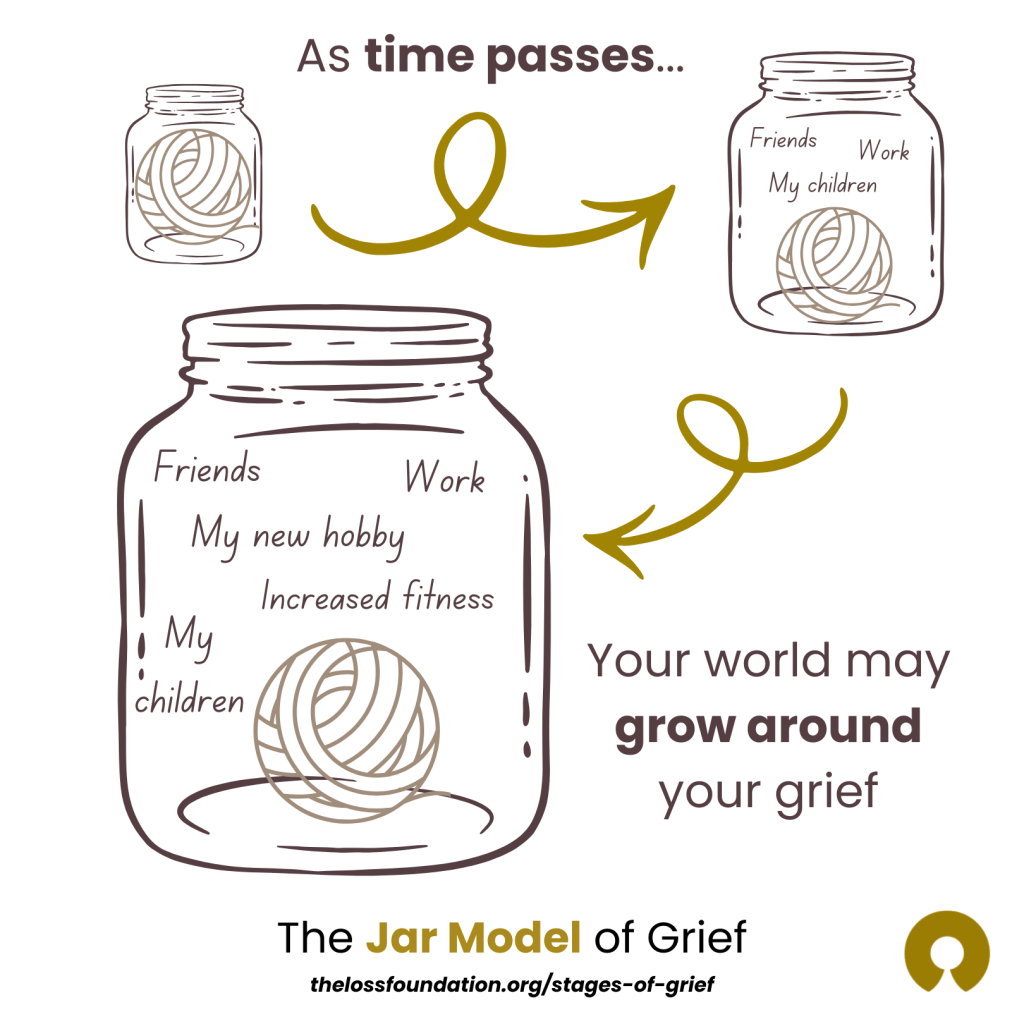
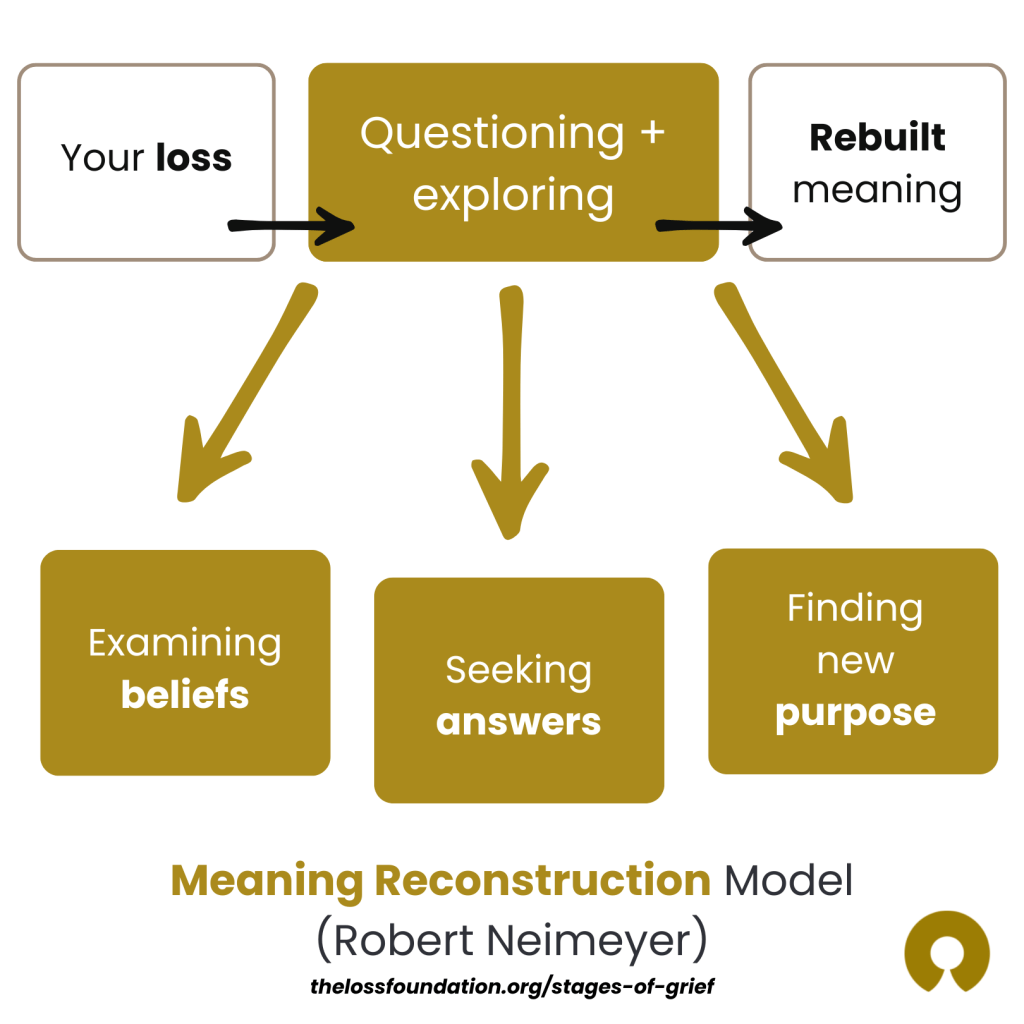
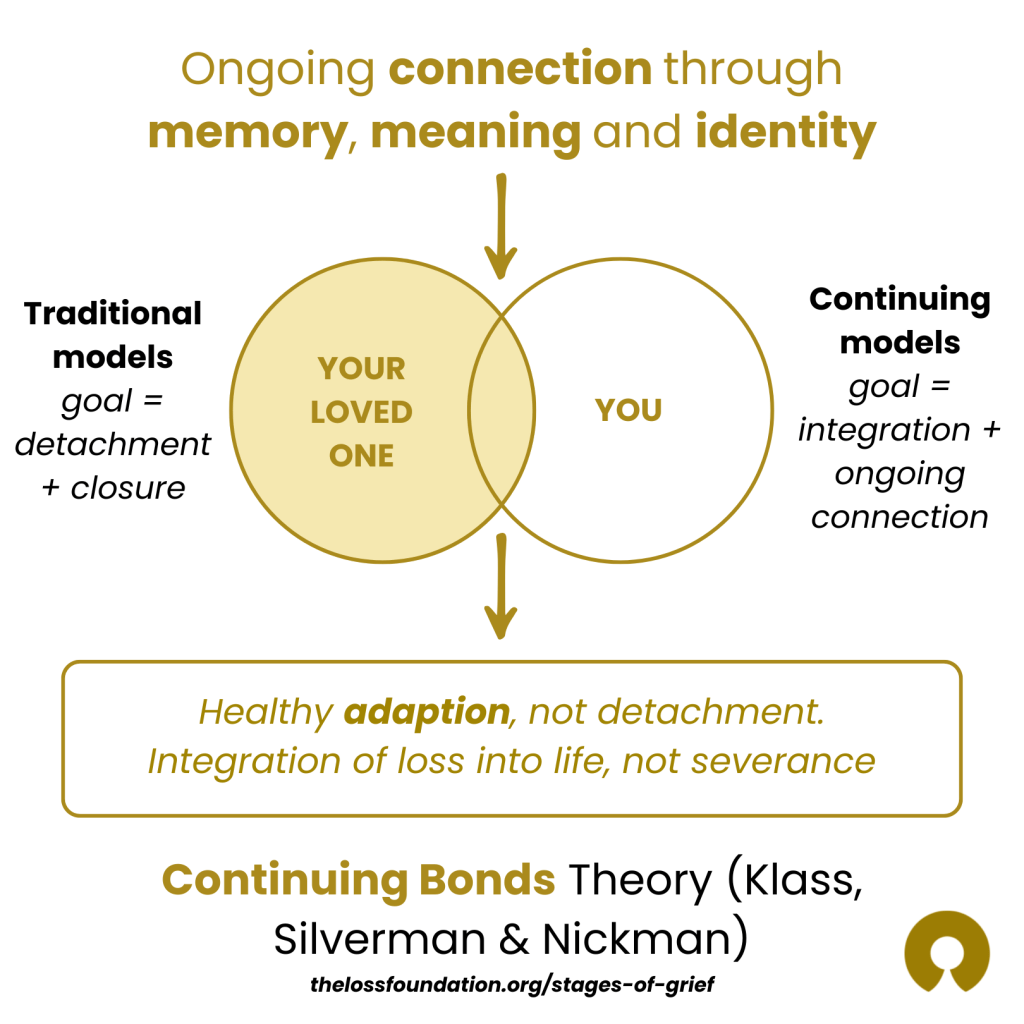
🧩 Other grief models that may resonate more deeply with your experience
Photo by matthew Feeney on Unsplash