

Welcome to Day three of December. Each day this month, we’re featuring books that explore grief through various lenses and experiences, offering understanding and solace. Let’s take this time to reflect and grow, one book at a time.
As an Amazon Associate, we earn from qualifying purchases if you click a link – these donations (at no extra cost to you) help support others in grief. Thank you.
Mrs Dalloway
By Virginia Woolf
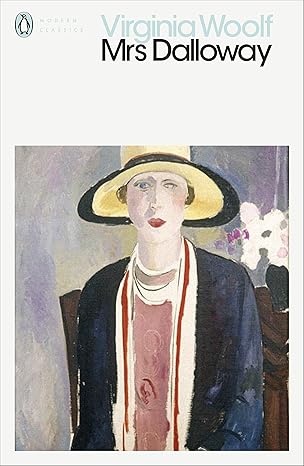
‘Mrs Dalloway’ (1925) is set on a single day in London in boiling June 1923. Set in the aftermath of WW1, life and death are, as you would expect, claustrophobically intertwined. It tells the parallel stories of Clarissa Dalloway, who is throwing a party, and Septimus Warren Smith, a shell-shocked war veteran.
Clarissa is preoccuppied with her party but death is a constant underlying presence, threatening to punctuate her main event. “She had a perpetual sense as she watched the taxi cabs, of being out, out, far out to sea and alone; she always had the feeling that it was very, very dangerous to live even one day.”
Featured Amazon review…
⭐⭐⭐⭐⭐ I finally managed to read this
“This is one of those books that has been on my list for a while. I somehow could not commit to it. Now I am so glad I did, for I would not have wanted to miss out! It took a while for me to get my head around the ‘stream of consciousness’ thing, and I started it several times, but I persevered and it was worth it. It’s a simple plot that’s been told over and over in many ways, but the way Virginia Woolf has handled it is unique. What did I enjoy most? the way the different life stories collide with this ‘one day in the life of Mrs Dalloway’ time structure. And the shell shocked solider grounds the message, the time wasting emptiness of the social class in which Mrs Dalloway lives. Virginia Woolf has left a legacy.”
Amazon customers say…
Readers have mixed opinions about the book. Many praise it as brilliant, cleverly crafted, and highly enjoyable, lauding its timeless narrative and modern-day relevance. The writing style divides opinion—some admire its cleverness and skilful execution, while others find it overly complex and challenging to follow. The plot, too, garners varied reactions; while some appreciate its depth and thought-provoking nature, others feel it meanders and becomes bogged down in overly intricate language.
Photo by Daria Shevtsova on Unsplash
Discover more books that may support you over on our ‘Books for Grief‘ Hub
🧠 Understand the ‘Stages’ of Grief
Many people first encounter grief through the idea of “stages,” but the model is often simplified or misunderstood.
Our Stages of Grief page looks at where the framework began, what each stage represents, and how it can support understanding – without suggesting that grief unfolds in a tidy order.
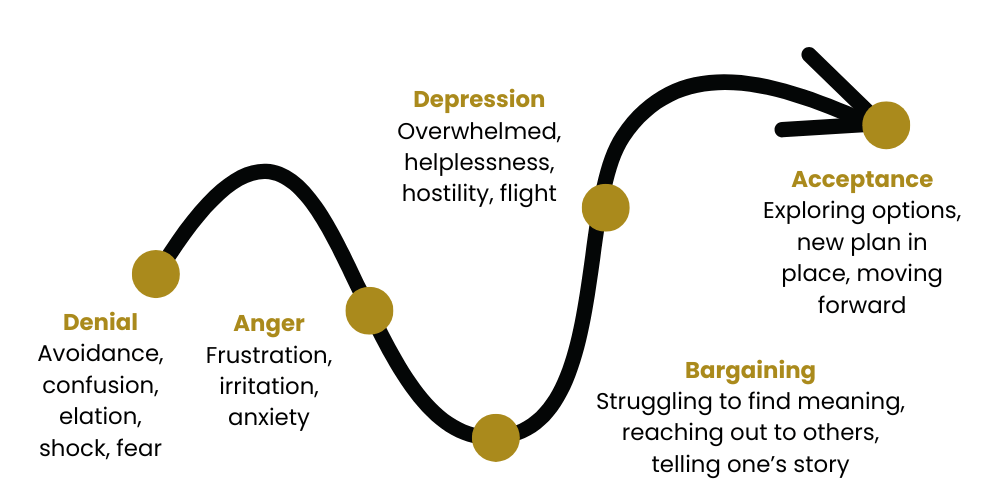
Explore the page to learn:
📘 A clear explanation of what the Five Stages are (and what they’re not)
🧭 Why grief rarely moves in a straight line
🌊 How feelings can rise and fall in waves
🧩 Other grief models that may resonate more with your experience