
Grief is one of life’s hardest experiences, and when a child loses someone important, it can feel overwhelming for everyone involved. Whether you’re a parent, carer, or teacher, knowing how to help a grieving child can make a lasting difference.
Grief looks different for every child. Some might talk, others might draw, play, or stay quiet. The most important thing is to help them feel safe, seen, and listened to. You don’t need perfect words – just your calm presence and honesty. 💛
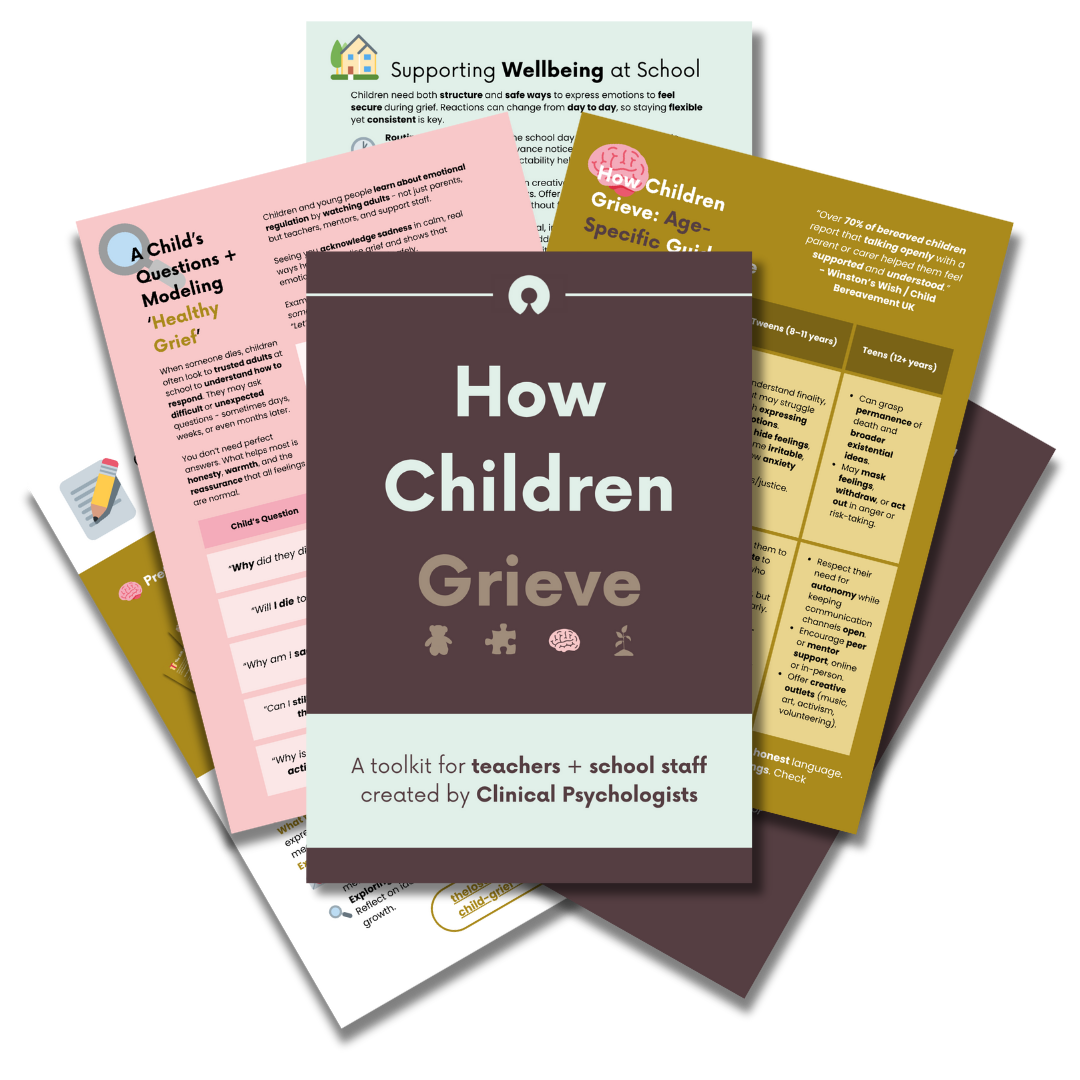
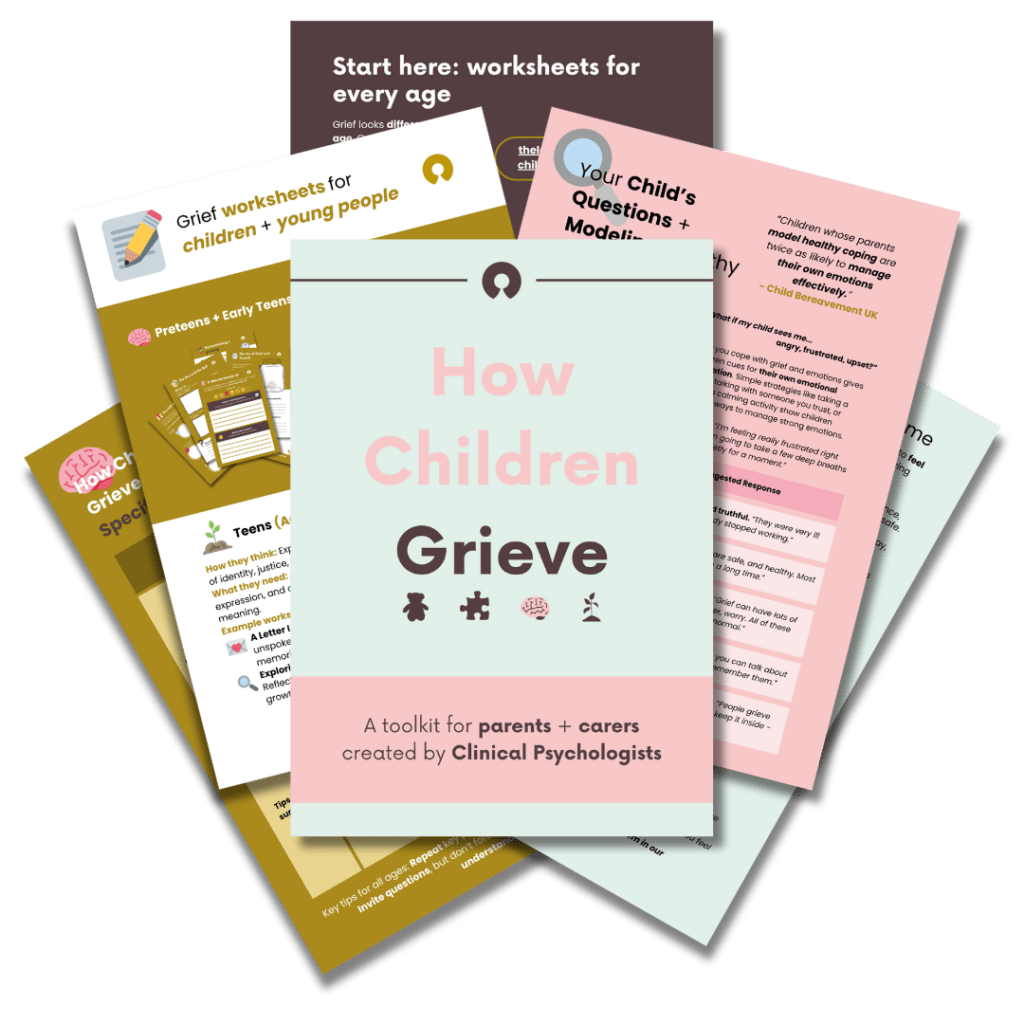
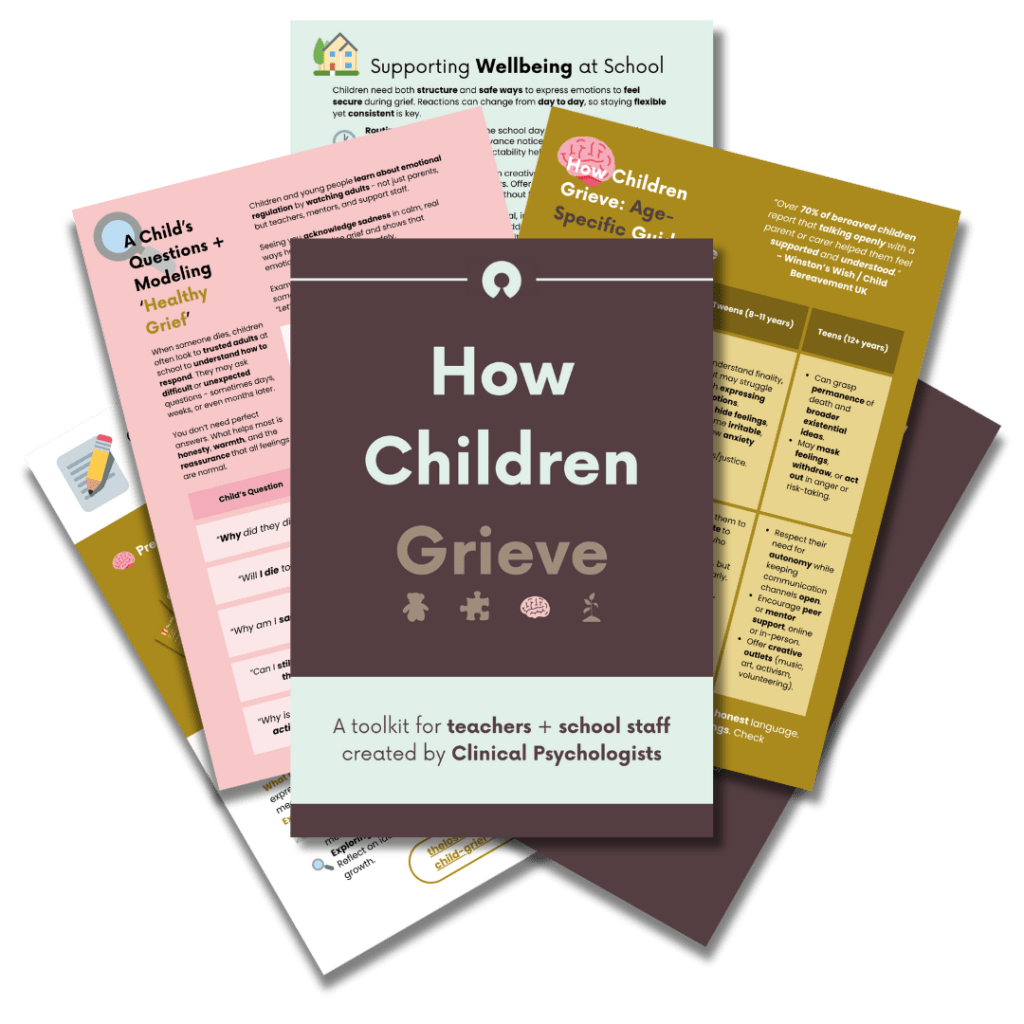
Our free PDF guides for parents, carers, and teachers offer simple, practical ways to support children of all ages as they navigate loss.
📘 Inside the Guides:
🧠 Understanding how children experience grief
💬 What to say (and what to avoid)
🏠 Creating safety and routine after loss
🎨 Encouraging healthy expression through play and creativity
🧭 Supporting yourself while helping your child
Together, these resources build confidence and connection – so no one has to face grief alone.
🌱 Understanding How Children Grieve
Children’s understanding of death evolves as they grow. Grief is not a step-by-step process, but something children revisit throughout their lives – often in waves that reflect their age, personality, and environment.
Common Emotional Needs Across All Ages:
- Emotional literacy – naming and understanding feelings
- Coping strategies – expressing sadness, anger, guilt, or confusion safely
- Resilience and security – knowing they’re still safe and loved
- Connection to their loved one – remembering, honouring, and celebrating
🧩 Grief at Different Ages
Early Childhood (Ages 3–6): “Concrete Thinkers”
Young children often see death as temporary or reversible. They might ask repetitive questions or express grief through play, clinginess, or regression (like bedwetting or tantrums).
👉 Support tip: Use simple, honest language – e.g. “He was very ill, and his body stopped working.”
Encourage expression through drawing, storytelling, or play.
Middle Childhood (Ages 7–10): “Curious Realists”
Children begin to grasp that death is permanent but may focus on fairness and causality (“Why did it happen?”). Guilt and anger are common.
👉 Support tip: Help them label emotions and offer concrete coping tools such as journaling or grief worksheets like “My Feelings House” or “My Grief Jar.”
Preteens (Ages 11–13): “Feeling It Deeply”
This stage brings self-awareness and introspection. Children may reflect more deeply or withdraw socially.
👉 Support tip: Allow space for privacy and creative outlets such as writing letters or reflective journaling (“A Letter I Need to Write”).
Teens (Ages 14–18): “Meaning-Makers”
Adolescents understand the permanence of death but may mask emotions through isolation or risk-taking. They seek meaning and autonomy.
👉 Support tip: Offer choice and trust. Encourage connection through art, music, or volunteering to honour the person who died.
🧠 Supporting Neurodivergent Children
Both guides highlight that children with ADHD or autism may experience grief differently. They might need:
- Visual reminders (social stories, calendars)
- Predictable routines
- Movement or sensory breaks
- Clear, concrete communication
Creating consistency and sensory-safe outlets helps neurodivergent children process loss in ways that feel secure and regulated.
🏠 Supporting Grieving Children at Home
Parents and carers are a child’s emotional anchors. Modeling “healthy grief” — showing sadness, talking openly, or taking breaks — teaches children it’s okay to feel deeply and to heal gradually.
Try saying:
- “You seem angry – that makes sense. What could help right now?”
- “Would you like a hug or some quiet time?”
- “You can always talk about them – remembering helps keep them with us.”
📘 Download the full guides for practical worksheets and age-specific activities: How Children Grieve – Teachers + School Staff (PDF)
🏫 Supporting Grieving Children in Schools
Teachers and school staff often notice changes before anyone else — concentration dips, irritability, or withdrawal.
The Teachers Guide offers ideas for integrating gentle grief support into school life:
- Keep routines predictable (timetables, transitions, advance notice of changes).
- Offer creative outlets (art, journaling, poetry, calm corners).
- Check in quietly and without pressure: “Would you prefer to write, draw, or just sit with the group today?”
- Reassure pupils that joy and grief can coexist — it’s okay to laugh and have fun.
📘 Read the full guide for classroom strategies and downloadable worksheets: How Children Grieve – Parents + Carers Guide (PDF)
💬 Helpful Grief Resources
If you or a child you support needs more help, these trusted organisations offer free guidance and emotional support:
- Child Bereavement UK – Support for families and professionals
- Grief Encounter – Therapy and creative resources for young people
- Hope Again (Cruse) – Online community for grieving youth
- Winston’s Wish – Support for children up to age 25
- Samaritans – 24/7 confidential helpline (Call 116 123)
❤️ Final Thoughts
Grief doesn’t need to be “fixed.” Children simply need safe spaces, honest conversations, and gentle reassurance that they’re not alone.
Whether at home or school, your presence – calm, patient, and compassionate – is the most powerful support of all.