
Midwives play a vital role in supporting families through the joyous moments of childbirth, but they are also present during heartbreaking losses. Pregnancy loss, stillbirth, and neonatal death are deeply emotional experiences for parents, and midwives are often on the frontline of bereavement care. Understanding how to provide compassionate, informed support is essential for midwives to help grieving families navigate their loss.
What Does a Midwife Do in Bereavement?
A bereavement-trained midwife provides emotional, practical, and psychological support to families who have experienced pregnancy or infant loss. This includes:
- Offering compassionate communication when delivering difficult news.
- Providing immediate and ongoing emotional support to grieving parents.
- Explaining medical information sensitively while respecting the family’s emotional state.
- Assisting with memory-making (e.g., handprints, footprints, photographs).
- Signposting families to bereavement support services.
- Supporting the well-being of colleagues who also experience the emotional toll of pregnancy loss cases.
The Role of a Bereavement Nurse in Maternity Care
A bereavement nurse in maternity settings works closely with midwives to ensure grieving families receive specialist support. Their responsibilities include:
- Coordinating care for bereaved families, ensuring they have the time and space they need.
- Providing emotional and psychological first aid to parents experiencing trauma.
- Educating and supporting other healthcare professionals in handling bereavement cases sensitively.
- Advocating for parents’ choices around post-mortem options, funeral planning, and support services.
- Facilitating support groups for families coping with pregnancy loss.
What Services Does Bereavement Care Include?
Bereavement care in maternity services should be holistic and family-centred. It includes:
✔️ Emotional support – Immediate counselling and ongoing mental health referrals.
✔️ Practical assistance – Guidance on legal procedures, funeral options, and maternity leave policies.
✔️ Memory-making opportunities – Encouraging keepsakes to help families cherish their baby’s memory.
✔️ Specialist bereavement midwives and nurses – Dedicated professionals offering tailored support.
✔️ Follow-up care – Ensuring families have ongoing access to grief support services.
What Does a Bereavement Doula Do?
A bereavement doula provides continuous emotional and practical support to families who experience pregnancy loss, stillbirth, or neonatal death. Unlike medical professionals, bereavement doulas focus on holistic and non-clinical care, including:
- Helping families navigate their grief journey with emotional support.
- Assisting with memory-making and rituals to honour their baby.
- Providing guidance on what to expect after a loss, including physical and emotional recovery.
- Offering post-loss support for subsequent pregnancies and anxiety around birth.
Bereavement Training for Midwives
At The Loss Foundation, we offer expert-led bereavement training specifically designed for midwives. Our courses equip midwives with the skills and confidence to support grieving families while also taking care of their own emotional well-being.
A Resource for Midwives Supporting Bereaved Individuals
This workbook provides structured activities and practical tools to help individuals navigate loss, offering a blend of reflection, coping strategies, and therapeutic exercises.
📖 73 pages, 20 supportive activities & 8 audio meditations
🧠 Created by our Clinical Psychologists
✍️ A blend of reflection, practical exercises & coping strategies
-
 Your Grief Journey Workbook$21.00
Bereavement Training UK & Online Options
- Bereavement training for midwives near me – In-person workshops for hospital and community midwifery teams.
- Bereavement training for midwives NHS – Tailored courses designed for NHS maternity teams.
- Bereavement training for midwives online – Flexible, interactive training accessible from anywhere.

“She was so passionate about her work… which made learning from her interesting.” – Training Delegate
Dr. Erin Hope Thompson MBE, Founder and Director of The Loss Foundation, leads the content creation and delivery of our bereavement training.
As a Clinical Psychologist, she has extensive experience across the NHS, private, and third sectors. In 2022, Dr. Thompson was awarded an MBE for her services to bereaved families.
Why Choose The Loss Foundation’s Bereavement Training?
- Expert-Led Learning: Training is developed and delivered by Clinical Psychologists with extensive experience in grief and bereavement.
- Customisable Content: Programs are tailored to meet the specific needs of different professional settings, ensuring relevant and practical applications.
- Practical Post-Training Resources: Participants receive a comprehensive workbook with tools and action plans to reinforce learning.
- Flexible Training Delivery: Sessions are available in-person and online, accommodating diverse schedules and learning preferences.
Grief training for midwives
Midwives are in a unique position to offer meaningful, compassionate support to those experiencing loss.

By investing in Bereavement Training, you can develop the skills and confidence needed to guide individuals through their grief with empathy and professionalism.
Key outcomes of our training include:
- Understanding grief and trauma in maternity care.
- Effective communication techniques for delivering difficult news.
- Practical guidance on supporting families through stillbirth, miscarriage, and neonatal loss.
- Self-care strategies for midwives coping with the emotional impact of bereavement cases.
- Legal and ethical considerations in pregnancy and infant loss cases.
Additional Support for Participants
Beyond training, The Loss Foundation offers ongoing support to ensure that participants can integrate their learning effectively. This includes:
- Access to mental health resources curated by Clinical Psychologists.
- Industry-specific strategies for applying bereavement training in different workplaces.
- A community of professionals dedicated to improving grief support practices.
Contact us about our bereavement training for midwives
Your message has been sent

“Supporting someone to navigate the complexities of grief can feel challenging. These worksheets aim to shed light on the grieving process and equip a person with tools to process loss, while looking after themselves in grief.“
Dr Erin Hope Thompson MBE – Founder and Director of The Loss Foundation
Photo by Neil Thomas on Unsplash
🧠 Understand the ‘Stages’ of Grief
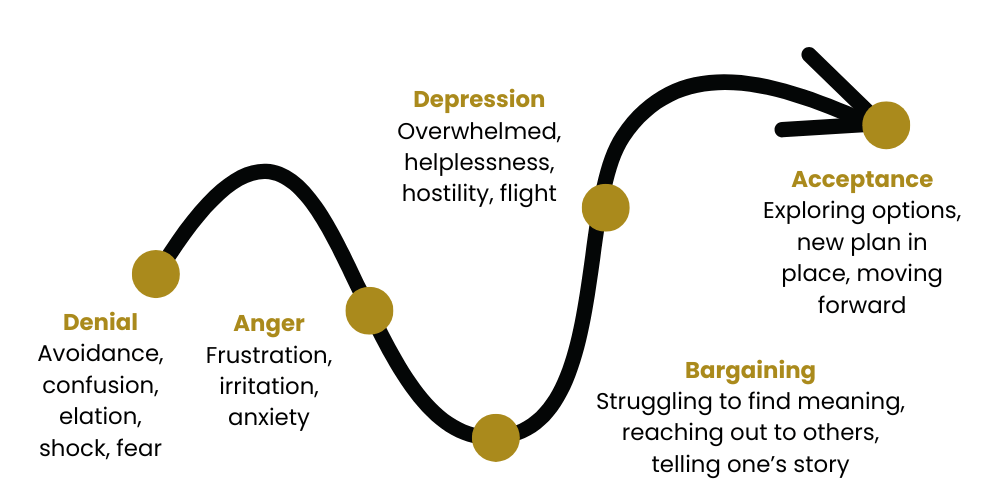
Many people first encounter grief through the idea of “stages,” but the model is often simplified or misunderstood.
Our Stages of Grief page looks at where the framework began, what each stage represents, and how it can support understanding – without suggesting that grief unfolds in a tidy order.
Explore the page to learn:
📘 A clear explanation of what the Five Stages are (and what they’re not)
🧭 Why grief rarely moves in a straight line
🌊 How feelings can rise and fall in waves
🧩 Other grief models that may resonate more with your experience