

Grief can affect anyone, regardless of age, and for children and adolescents, the experience of losing a loved one can feel particularly overwhelming. As educators, it’s essential to be prepared with the knowledge and resources to support grieving students in a compassionate and effective way.
In this guide, we’ll explore practical tips, key advice, and the significance of bereavement training for schools. By understanding how to approach grieving students, grief in the classroom, and the broader role that mental health CPD for teachers plays, you can help create a supportive school environment for those navigating loss.
Why Bereavement Training is Vital for Schools
Advocating for bereavement support in the workplace ensures that employees receive the compassion and flexibility they need during a difficult time.
Grief in children and young people is often misunderstood. It can manifest in various ways, including sadness, withdrawal, anger, or even poor academic performance. Bereavement training for schools provides staff with the tools to recognise these signs and respond with sensitivity.
Schools are a key setting where children are expected to process their emotions, and yet the subject of grief is often overlooked. Having bereavement training ensures that school staff can support grieving students, not just emotionally but also academically. Additionally, creating a clear framework for dealing with grief can help reduce stigma and encourage open conversations.
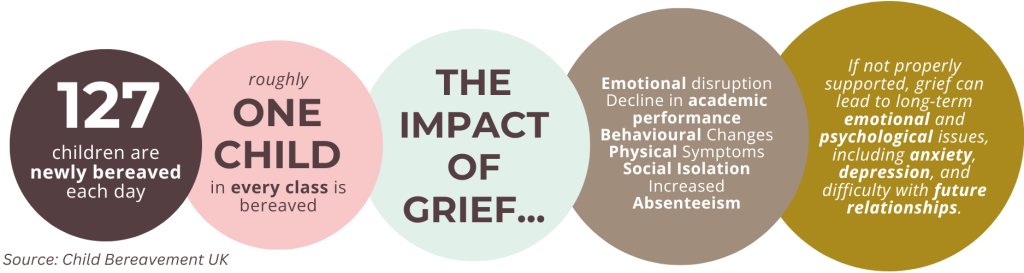
The impact of bereavement for a child can be wide and varied, may include…
- Emotional Disruption – Grieving children may experience sadness, anger, guilt, or confusion, which can make it difficult to focus or engage in school activities.
- Decline in Academic Performance – Bereaved students often struggle with concentration, memory, and completing assignments, leading to a drop in academic performance.
- Behavioural Changes – Grief can cause mood swings, irritability, or withdrawal from social interactions, which may affect classroom behaviour and peer relationships.
- Physical Symptoms – Children who are grieving may report feeling tired, headaches, or stomach aches, all of which can interfere with their ability to participate in school.
- Social Isolation – Bereaved children may isolate themselves from friends or have difficulty maintaining friendships due to emotional distress.
- Increased Absenteeism – Grieving students may miss school more often, either due to emotional difficulties or family needs.
- Long-term Effects – If not properly supported, grief can lead to long-term emotional and psychological issues, including anxiety, depression, and difficulty with future relationships.

Questions about our bereavement training?
Schedule a free call with Dr Erin Hope Thompson MBE to discuss your team’s needs and find out how our training can support your organisation.
“Every team is different, and each experience of grief is unique. This call is a chance to explore what will truly work for your staff and the people they support.”
— Dr Erin Hope Thompson MBE, Founder + Clinical Psychologist
We’ve trained…





Grieving Students: What You Need to Know
Grieving students may struggle with maintaining focus, interacting with peers, or performing at their usual academic level. The emotional toll can make it difficult for students to manage the classroom setting, affecting their behaviour, learning, and social interactions.
Common Responses to Grief in the Classroom…
- Emotional reactions: Grief often leads to extreme emotions like sadness, irritability, or anger. Students may cry unexpectedly or express frustration at the situation.
- Physical symptoms: Grief can take a toll on a child’s body, leading to fatigue, headaches, or even physical illness.
- Withdrawal: Some students may become more withdrawn, isolating themselves from peers or disengaging in school activities.
- Changes in academic performance: The emotional strain of grief may impact a student’s ability to concentrate, remember information, or complete assignments.
Tips for Supporting Grieving Students:
- Acknowledge their loss: If a student has experienced the death of a loved one, take a moment to express your sympathy. A simple “I’m sorry for your loss” can provide comfort and acknowledge their feelings.
- Provide flexibility: Grieving students may need additional time for assignments or emotional breaks during the day. Consider adapting deadlines or allowing quiet space for them to cope.
- Encourage expression: Encourage students to express their grief in their own way—through writing, art, or conversation—while providing opportunities for them to share memories of their loved ones.
- Maintain normalcy: While it’s important to offer emotional support, maintaining a sense of routine and normalcy in the classroom can provide grieving students with a sense of stability during a turbulent time.
Mental Health CPD for Teachers: Building Capacity to Support Grieving Students
Mental health is a significant factor in how a student copes with grief. Mental health CPD for teachers offers professional development on the psychological effects of grief, providing insights into how grief affects emotional regulation and mental well-being.
By engaging in continuous professional development, teachers can better understand how to approach emotional and psychological challenges in the classroom.
Key Areas to Focus on:
- Recognising signs of distress: Understanding the physical and emotional indicators of grief, which can often mimic other behavioural issues.
- Promoting resilience: Helping grieving students build emotional resilience through coping strategies and support systems.
- Creating a supportive environment: Establishing a classroom culture where grief is understood and students feel safe to express their feelings without fear of judgment.
How Do You Help Someone Grieving at Work?
As a school staff member, it’s crucial to approach grief with sensitivity and care. Here are some steps for handling grief at school:
Establish a clear bereavement policy: Schools should have a bereavement policy in place, providing guidelines for how to support grieving students, communicate with parents, and manage classroom disruptions related to grief.
Provide additional resources: Make sure grieving students and their families are aware of any external support available, such as counselling services or local grief groups. Free child bereavement training online is a great resource for those seeking further information.
Designate a point of contact: Having a school counsellor, teacher, or administrator as a designated point of contact for grieving students ensures they have someone to turn to for support.
Create a safe space: Sometimes students need a quiet space where they can retreat when the weight of their grief becomes too overwhelming. This could be a designated room or simply a quiet area within the classroom where students can go to reflect and relax.
Should Schools Have a Bereavement Policy?
Yes, schools should have a bereavement policy in place. A comprehensive policy ensures that grieving students are supported appropriately, that staff members are equipped to handle grief-related issues, and that the school community understands the steps to take when a student experiences loss.
The policy should include:
- Guidelines for staff: Offering advice on how to communicate with grieving students and their families.
- Student accommodations: Making allowances for academic performance, attendance, and emotional support during difficult times.
- Collaboration with external support: Partnering with mental health professionals, counsellors, or grief support organisations.
How to Help a Child Deal with Bereavement

Supporting a child through bereavement is a delicate process that requires patience, understanding, and consistent emotional support. Here’s how you can help a child deal with bereavement:
- Provide stability: Routine can be grounding. Encourage activities that promote normalcy, like attending school events or keeping up with hobbies.
- Encourage open dialogue: Let the child know it’s okay to talk about their feelings and ask questions. Be prepared for them to ask about death in ways that may seem unusual, but this is part of their process of understanding and making sense of their loss.
- Allow for different grieving styles: Every child grieves differently. Some may want to talk about their loved one, while others may prefer to be alone. Respect their individual needs and give them the space to grieve in their own way.
What is Puddle Jumping in Grief?
Puddle jumping in grief refers to a metaphor used to describe the way people experience moments of joy or normalcy amid the deep emotional pain of grief. Grieving individuals may experience brief moments of relief or happiness, like “jumping over puddles” in their grief journey, before returning to feelings of sorrow. Understanding this concept can help educators recognise when grieving students may appear to be fine one moment, only to be overcome by grief again the next.

“She was so passionate about her work… which made learning from her interesting.” – Training Delegate
Dr. Erin Hope Thompson MBE, Founder and Director of The Loss Foundation, leads the content creation and delivery of our bereavement training.
As a Clinical Psychologist, she has extensive experience across the NHS, private, and third sectors. In 2022, Dr. Thompson was awarded an MBE for her services to bereaved families.
Bereavement in the workplace
By investing in Bereavement Training, you can develop the skills and confidence needed to guide individuals through their grief with empathy and professionalism.

Key outcomes of our training include:
- Greater emotional resilience when supporting grieving individuals
- Able to manage sensitive situations and provide empathetic support
- Communication skills for handling difficult conversations with confidence
- Skills for personal wellbeing while supporting others
- Problem-solving and decision-making skills when addressing grief-related challenges
Contact us about bereavement training for schools
Talk to our team to learn more about our Bereavement training.
🧠 Understand the ‘Stages’ of Grief
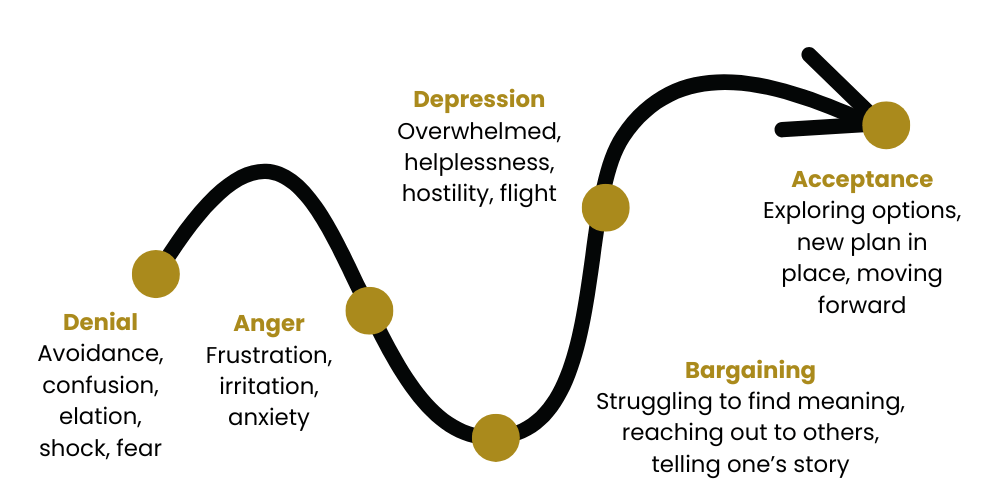
Many people first encounter grief through the idea of “stages,” but the model is often simplified or misunderstood.
Our Stages of Grief page looks at where the framework began, what each stage represents, and how it can support understanding – without suggesting that grief unfolds in a tidy order.
Explore the page to learn:
📘 A clear explanation of what the Five Stages are (and what they’re not)
🧭 Why grief rarely moves in a straight line
🌊 How feelings can rise and fall in waves
🧩 Other grief models that may resonate more with your experience
Download: The Care Kit for Grieving Employees
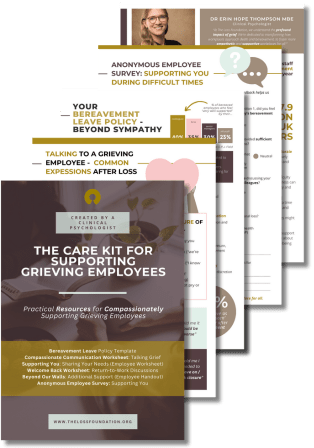
Foster compassionate communication, support employee needs, and ease their return to work.
Inside you’ll find…
- Bereavement Leave Policy Template
- Communication Worksheet
- Sharing Your Needs Worksheet
- Return-to-Work Worksheet
- Signposting Handout
- Anonymous Employee Survey Handout
Provide your email address to receive our PDF guide. By doing so, you are also consenting to receive information regarding our training and services.
Photo by Markus Spiske on Unsplash