

Grief is a deeply personal experience. Whether you are grieving the loss of a loved one or supporting someone through their own grief journey, it’s crucial to acknowledge that grief doesn’t follow a set timeline. Each person experiences it uniquely, and there’s no “right” way to grieve. That’s why it’s so important to find tools that allow you to explore your emotions at your own pace.
One such tool is our Grief Journal Workbook, a 73-page guide designed to gently help you navigate loss on your terms. In this blog post, we’ll explore three simple but powerful exercises from the workbook that you can try today in just 10 minutes, with a free PDF grief worksheet download for each exercise. These worksheets were designed to support you in connecting with your emotions, expressing your grief, and moving towards processing your loss, all at a pace that feels right for you.
1. A Letter to Your Loved One
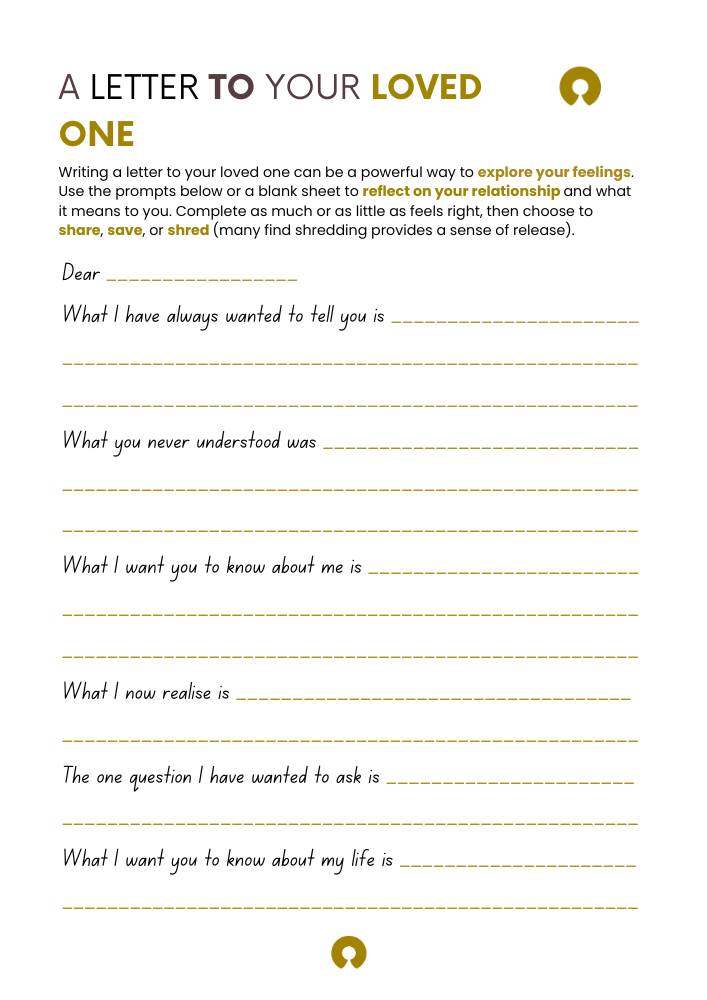
Who Is This Exercise Suitable For?
This exercise is particularly beneficial for those who have unresolved feelings or are struggling to say goodbye to their loved ones. Whether it’s due to sudden loss or the lingering emotions that follow a prolonged illness, writing a letter can provide a sense of emotional release.
Benefits of Writing a Letter to Your Loved One
- Emotional Release: Writing allows you to express feelings that may be hard to say out loud. It’s a safe space to share what’s been left unsaid, whether it’s words of love, regrets, or unfinished conversations.
- Validation: This exercise helps you validate your grief and the love you still have for the person who’s died. It gives you the opportunity to acknowledge your feelings.
- Catharsis: Many studies have shown that expressive writing can help reduce the emotional burden of grief by allowing the writer to process complex emotions in a structured way. (Pennebaker, J.W., 1997)
Tips for Writing Your Letter
- Start with Your Heart: Don’t worry about the structure or wording – just let your feelings flow.
- Be Honest: If you’re angry, confused, or even relieved, it’s okay to express that. Your feelings are valid, and this is your space to be real.
- Read It Aloud: If you feel comfortable, reading the letter aloud can enhance the emotional release and help you connect deeper to your feelings.
2. Reflecting on Your Emotions
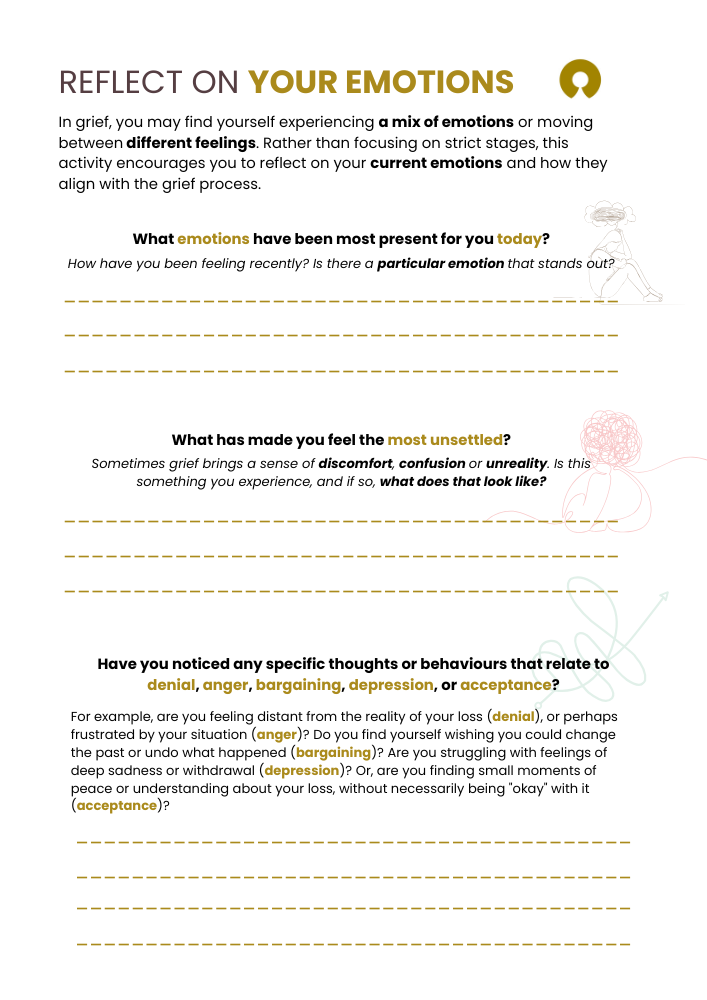
Who Is This Exercise Suitable For?
This exercise is suitable for anyone who feels overwhelmed by their emotions or doesn’t know how to articulate what they’re feeling. It’s a good tool for those who may be experiencing a blend of emotions in grief.
Benefits of Reflecting on Your Emotions
- Clarity: Sometimes grief brings so many emotions that it’s hard to identify exactly what you’re feeling. Reflecting on your emotions allows you to bring clarity to your grief.
- Emotional Awareness: This exercise helps you recognise and acknowledge your emotions as they come up, which can lead to better emotional regulation. Recognising your emotions is the first step in understanding them.
- Mindfulness: Studies show that mindfulness practices, including emotional reflection, can help reduce anxiety and depression in grieving individuals. (Neff, K.D., 2003)
Tips for Reflecting on Your Emotions
- Be Patient: Grief is not linear, and your emotions may shift constantly. Give yourself the space to reflect without judgment.
- Use a Journal: Writing down your thoughts can help you keep track of your emotions and see patterns over time.
- Identify Triggers: Note what situations or memories trigger certain emotions, as this can help you manage them more effectively.
3. Mapping Your Grief Journey

Who Is This Exercise Suitable For?
This exercise is ideal for individuals who find it difficult to articulate their grief with words. If you’re a visual learner or want to capture the complexity of your grief, mapping offers a creative outlet.
Benefits of Mapping Your Grief Journey
- Visualising Grief: Grief can feel overwhelming and chaotic. Mapping your grief journey offers a structured way to visually represent the emotional ups and downs you’re experiencing.
- Non-linear Expression: Grief doesn’t follow a straight path, and mapping allows you to show the winding, unpredictable nature of it. By acknowledging this, you can release the pressure of having to “move on” or “heal” in a prescribed manner.
- Understanding Complexity: Research has shown that creative expression, such as drawing, can help process grief more effectively by tapping into different parts of the brain. (Kramer, S. et al., 2013)
Tips for Mapping Your Grief
- Be Free with Your Drawing: You don’t need to be an artist. Use simple shapes or lines to represent how you feel at different points in your grief journey.
- Use Colors: If you feel moved to, use colours to represent different emotions. Red might symbolise anger, while blue could represent sadness or calmness.
- Map Over Time: You can revisit and update your map as your grief evolves. This helps track your emotional shifts and gives you a sense of progress over time.
Self-Care Tips and Considerations
While these exercises offer powerful tools for navigating grief, it’s important to recognise that the emotional process of grieving can be demanding. Here are some self-care tips to keep in mind as you begin this journey:
- Start Small: If diving into your grief feels too overwhelming, start with just a few minutes a day. Even 10 minutes of focused reflection can make a difference.
- Be Gentle with Yourself: Grief is exhausting, both emotionally and physically. Allow yourself to take breaks, and avoid pushing yourself too hard to “move on.”
- Seek Support: Grief is often more manageable when you don’t go through it alone. Consider reaching out to a counsellor, therapist, or support group (read about our support events here).
- Allow for Both Good and Bad Days: It’s normal to have days when you feel more at peace and others when the sadness feels too much to bear. Honour where you are each day.
- Create Boundaries: Grief can be triggered by external events, whether it’s an anniversary or a conversation. Don’t hesitate to set boundaries around these moments to protect your emotional health.
Final Thoughts
Grieving is not a journey with a set destination; it’s a process that evolves as time goes on. These exercises from the Grief Journal Workbook offer just a small step forward in the complex journey of grief. They’re designed to help you explore your grief in a safe, gentle, and personalised way. Remember that it’s okay to take it one small step at a time, and most importantly, be kind to yourself through the process.
Grief may not have a defined timeline, but with the right tools, patience, and self-care, you can find your way through it – on your terms.
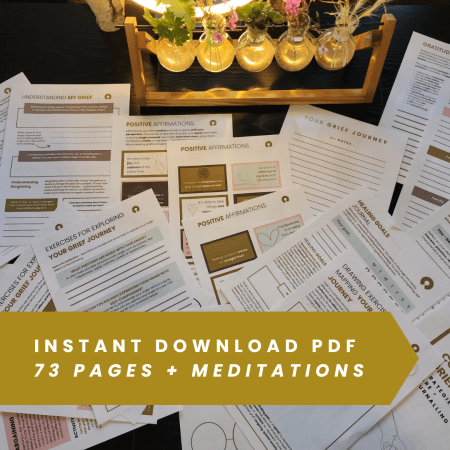
Grief Journey Workbook
These worksheets are from our Grief Journey Workbook…
📖 73 pages, 20 supportive activities & 8 audio meditations
🧠 Created by our Clinical Psychologists
✍️ A blend of reflection, practical exercises & coping strategies
💛 Designed for those grieving or supporting others
Donate What You Can – whether you donate nothing or something, our aim is to provide support. If you donate, you’ll enable someone to attend a Support Group meeting (thank you).
-
 Your Grief Journey Workbook$21.00
Photo by Aron Visuals on Unsplash
🌱 Grow with our courses
Explore our courses – including Mental Health: Supporting Ourselves and the Grief Journey Workbook – on our dedicated Grief & Mental Health Training page.
