
Meditation is a valuable tool for navigating the complex emotions associated with grief.
By fostering mindfulness and emotional regulation, grief meditation can support you in processing your loss and managing your grief.
Are you a mental health professional? These resources can help you support individuals coping with grief. You may also want to explore our Bereavement Training and Grief Handouts page for additional tools.
Track Guide to our Grief Meditation

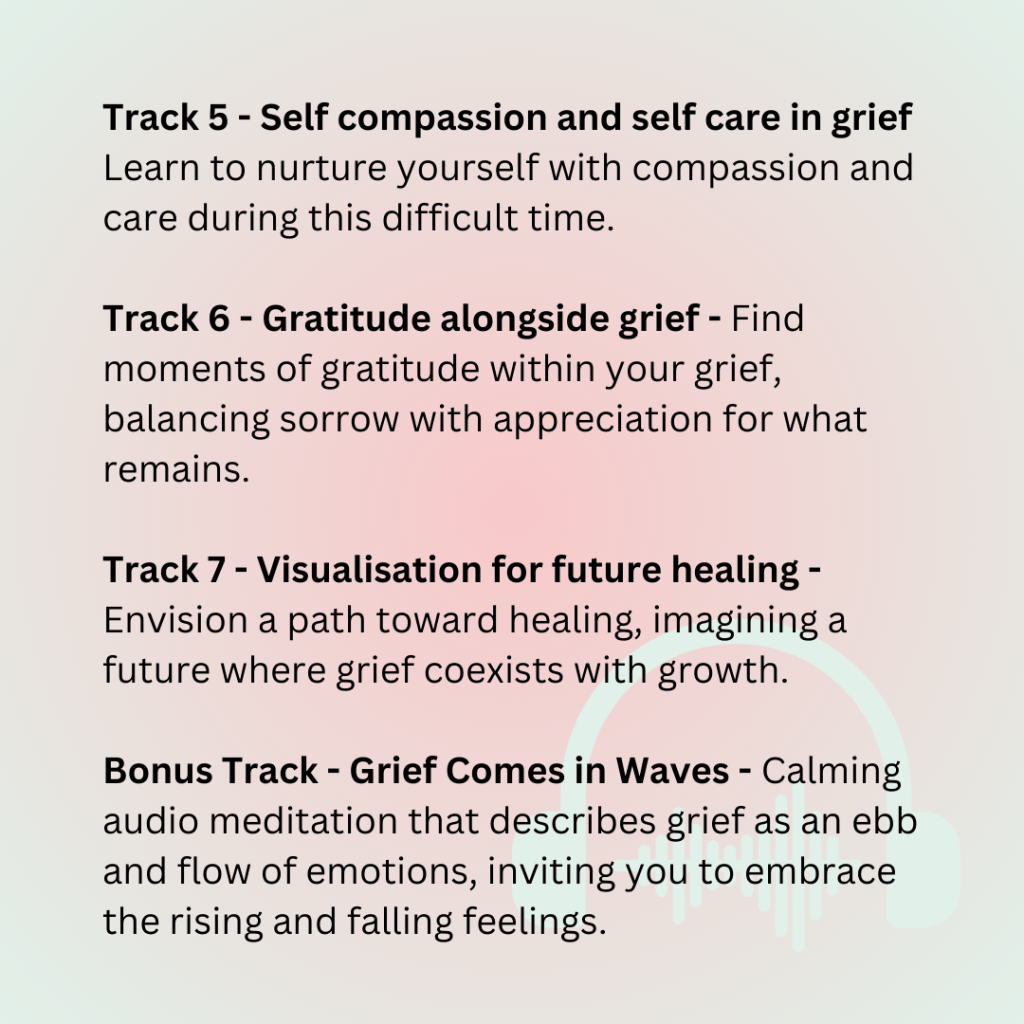

Benefits of Meditation in Grief
- Emotional Regulation: Mindfulness practices can enhance the brain’s ability to manage emotions, reducing anxiety and stress common in bereavement.
- Present Moment Awareness: Meditation encourages living in the present, helping individuals confront and accept their grief without becoming overwhelmed.
- Improved Coping Mechanisms: Regular meditation practice can lead to better coping strategies, allowing for a healthier grieving process.
Meditation is a valuable tool for navigating the complex emotions associated with grief.
By fostering mindfulness and emotional regulation, it aids individuals in processing loss and managing challenges that arise in grief.
Questions About Grief Meditation
Meditation aids in processing grief by promoting emotional regulation, reducing stress, and fostering acceptance of present emotions.
Consistency is key; starting with daily sessions of 10-15 minutes can be beneficial. Adjust the frequency based on your comfort and schedule. Learn more about how frequently you should meditate for grief.
Mindfulness meditation, loving-kindness meditation, and guided meditations focused on grief are particularly helpful. Learn more about different kinds of meditation for grief.
While beneficial, meditation is best used as a complementary practice alongside other therapeutic approaches. Read our blog: Can Meditation Replace Other Forms of Grief Therapy?
It’s normal for suppressed emotions to surface during meditation. If it becomes overwhelming, consider seeking support from a mental health professional. Read our blog for more guidance on this subject: What If Meditation Intensifies My Feelings of Grief?
-
Product on sale
 Guided Grief MeditationOriginal price was: £15.00.£10.00Current price is: £10.00.
This grief meditation pack offers a compassionate journey through grief. With gentle guidance and reflective practices, you’ll cultivate self-compassion, connection, and gratitude while honouring the complex emotions that arise in grief.
Grief meditation on Youtube
View our most popular grief meditations from Youtube below.

Mindful Grief Meditation
Mindfulness helps us step back from constant thoughts, notice unhealthy patterns, and change direction. We’ve created various mindfulness and meditation tracks for busy or overwhelmed minds.

Mindfulness helps us step away from overwhelming thoughts, especially during grief. It can guide us away from unhealthy thinking patterns and bring calm. This page offers various mindfulness and meditation tracks, each with a brief description. These practices may be helpful if you’re feeling mentally overwhelmed.
Mindfulness takes time to master, so don’t be discouraged if it feels challenging. Even if you struggle, finding ten minutes of stillness each day can still provide relief.
One Minute Meditation (1 minute)
If you’re grieving and finding it hard to set aside time to meditate, start with a 1-minute meditation. It can help you create a brief moment of pause, offering a small space for calm amidst your grief.
Two Minute Meditation (2 minutes)
During grief, a 2-minute grounding meditation can offer a brief escape from the chaos and create a moment of calm. It’s not about the length of time, but the intention to reconnect with yourself. Treat these two minutes as a gift to your well-being, and experience how even a small pause can bring a sense of relief.
Basic Grounding Exercise (3 minutes)
In times of grief, listening to a basic grounding exercise can offer a chance to anchor yourself in the present, release the weight of your emotions, and find inner calm. When grief feels overwhelming, taking a few moments to ground yourself can bring a much-needed sense of stability and peace.
Mindful Breathing Short (6 minutes)
In the midst of grief, mindful breathing offers a calm, non-judging awareness, allowing thoughts and emotions to flow without becoming overwhelming. This short guide is ideal for beginners, providing a gentle introduction to finding peace during difficult times.
Compassionate Hand Exercise (5 minutes)
The compassionate hand exercise is a mindfulness technique that can be especially helpful during grief. It encourages relaxation and self-care by imagining the comforting touch of a compassionate figure or using your own hand to symbolize care and kindness for yourself. This simple gesture can provide a sense of support and comfort in moments of sorrow.
Deep Belly Breathing – Short (4 minutes)
In the midst of grief, deep belly breathing can provide a path to inner calm. This practice helps you connect with your breath and stay anchored in the present, offering a gentle yet powerful way to find peace and restore emotional balance as you navigate your grief.
Meditation Body Scan (9 minutes)
This meditation begins with calm breathing and transitions into a body scan, inviting you to focus your attention on different parts of your body and observe any sensations you notice.
Meditation Body Scan (9 minutes)
This meditation begins with calm breathing and transitions into a body scan, guiding you to focus on different parts of your body and observe sensations. This practice can be especially beneficial for those grieving, as it fosters mindfulness and helps release emotional tension.
Calming Place Exercise (9 minutes)
During grief, the calming place exercise can offer a gentle escape from intense emotions and create a safe space to breathe and reflect. Take this short moment to find a bit of calm for yourself.
Counting Meditation (9 minutes)
This meditation focuses on the breath as an anchor for concentration, helping you become aware of your mind’s tendency to wander. By concentrating on your breath, you can cultivate mindfulness, which can be particularly beneficial during grief. It serves as an antidote to restlessness and anxiety, promoting relaxation and positively impacting your overall mental and physical well-being.
Lower Belly Meditation (9 minutes)
This unique meditation encourages you to shift your awareness from your mind and heart down into your belly, the center of your being. While it requires practice, it can be very effective for calming restless hearts and minds.
Deep Breathing Exercise (9 minutes)
During grief, a deep breathing exercise can provide grounding and comfort, helping you reconnect with your body and ease emotional turbulence. This exercise is similar to our Deep Belly Breathing but lasts longer.
Guided Imagery – The Beach (9 minutes)
A mindfulness exercise which uses the imagery of being on a beach to help focus your attention and calm the mind.
Forgiveness Meditation (10 minutes)
Forgiveness meditation during grief can be a powerful step toward healing. It helps you gently explore and release unresolved feelings towards others and yourself, lightening the burden of grief and paving the way for greater inner peace and acceptance.
Safe Place Imagery (10 minutes)
Therapeutic imagery exercises can positively impact emotional well-being, especially for those grieving. This exercise guides you in creating a safe place to explore and return to whenever you need comfort and support.
Mindfulness Bodyscan (13 minutes)
A mindfulness audio exercise that helps you nourish your body and mind with some space to be as you are. This is very similar to the Body Scan Meditation at the top of the page, but is a slightly longer version of the exercise.
Soften Soothe Allow Meditation (13 minutes)
The “Soften, Soothe, Allow” meditation is a mindfulness practice that fosters self-compassion and emotional regulation. By softening tension, soothing with kindness, and allowing without judgment, this meditation helps you cultivate self-compassion, emotional resilience, and inner peace.
Progressive Muscle Relaxation (20 minutes)
Progressive muscle relaxation involves tensing and then relaxing specific muscle groups to enhance awareness of tension and relaxation. By working through all major muscle groups, this technique promotes total relaxation, making it an excellent exercise to do before bed.
NOTE: If you have any injuries or pains in your body it is recommended that you do not tense those parts of the body when they are introduced in the guide.
Practical Tips for Grieving Meditation
- Create a Comfortable Space: Choose a quiet, comfortable environment where you can meditate without interruptions.
- Start with Guided Meditations: Utilise resources designed for grief to help navigate your emotions.
- Be Patient with Yourself: Grieving is a personal journey; allow yourself to experience emotions without judgment.
- Incorporate Breathing Exercises: Focus on your breath to ground yourself and find calm amid emotional turbulence.
- Seek Support: Consider joining meditation groups or seeking guidance from professionals experienced in grief counselling.
Further reading…
The Science of Grief Meditation: How Mindfulness Supports Healing