
🛤️Two-Track Model of Bereavement – Overview
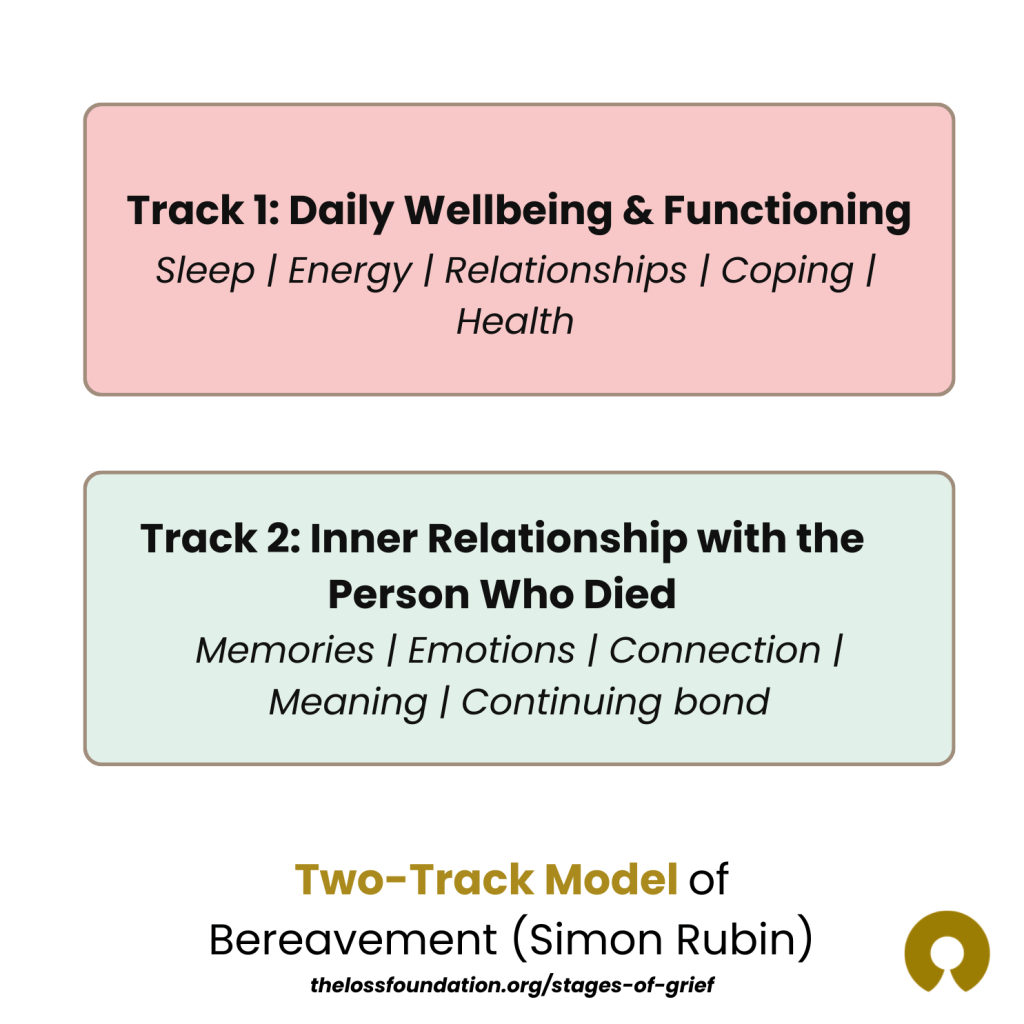
Developed by psychologist Simon Rubin (1981), the Two-Track Model of Bereavement suggests that grief affects us along two interrelated paths at the same time. In contrast to the Five Stages of Grief model, it emphasises how daily functioning and ongoing emotional connection can move at different paces, showing that practical life and deep emotions often unfold simultaneously.
Track 1 focuses on daily wellbeing and functioning – how grief shapes things like sleep, concentration, work, relationships, and physical health.
Track 2 focuses on the ongoing emotional relationship with the person who has died – your memories, feelings, connection, and the meaning they continue to hold in your life.
These tracks operate side by side. You might find that you’re coping relatively well in your daily life while your emotions feel raw — or that your emotional connection feels steady but practical life feels difficult. Rubin’s model normalises this mix, showing that healing involves adjusting both externally and internally.
🙌 How It Helps
This model validates the two sides of grief – managing everyday life and staying connected to the person you love.
It can offer reassurance that there’s no pressure to “get over” the bond, and no shame in finding moments of functioning or even joy.
Rather than aiming for closure, the Two-Track Model highlights that grief is about balance, flexibility, and living with both tracks in your own way.
🤍 May Be Helpful If…
- You’re finding it difficult to juggle emotions and day to day responsibilities.
- You sometimes feel guilty for functioning “well” while still feeling pain.
- You want a way to visualise why coping in grief can feel uneven or unpredictable.
📌 Tips for Using This Model
- Notice which “track” feels most active for you right now – it can change from day to day.
- Be gentle with yourself if the tracks feel uneven – that’s normal.
- Self-check basic needs – sleep, nourishment, connection, rest.
- Reflect on the ways you continue your bond – memories, rituals, shared values.
📖 Further Reading
The Two-track Model of Bereavement: Overview, Retrospect, and Prospect
Remember: these models are simply ways of understanding grief. You are the expert in your own experience, and you never need to fit yourself into any single model.
Take what’s helpful and leave the rest.
Grief Models: Online Course
Psychological models offer structure for understanding the many emotions and changes that grief brings. They help professionals – and anyone supporting someone who is grieving make sense of the experience and respond with empathy, clarity, and confidence.
👥 See real case studies that bring theory to life
🕯️ Understand continuing bonds, meaning-making, tasks of mourning, and more
🛠️ Practical tools for real-world settings
📘 Worksheets to use in sessions