
The Five Stages of Grief

This page is a comprehensive guide to the stages of grief, exploring the origins of the five-stage model and what denial, anger, bargaining, depression and acceptance can look like in real life, alongside criticisms of stage-based approaches. Written by Dr Erin Hope Thompson MBE (BSc, ClinPsyD), it also introduces other widely recognised psychological frameworks for understanding grief.
Think of this as your starting point to understanding loss from multiple perspectives – what it feels like, how it affects you, and where to find support. Below you’ll find key concepts, tools, and links to related resources that can help you navigate this experience at your own pace.
Explore more about grief and loss
Not everyone experiences grief in the same way. These guides can help you understand what you’re feeling, explore different models, and find support.
💔 Grief Comes in Waves – An analogy of grief that our visitors often find helpful.
🌀 Different models of grief – Beyond “stages”: other frameworks that many people find more realistic.
📝 Grief worksheets and tools – Gentle self-guided exercises to support you through difficult moments.
🤝 Finding support – Explore our support (for people affected by cancer-loss).
🌧️ When grief feels overwhelming – Signs you might need extra support and what to do next.
🧠 Books for grief – A list of compassionate, insightful books to help you understand and navigate the experience of grief.
🧒 Children and young people – Guidance for supporting children and teens through bereavement.
🌱 How do you ‘release’ grief from the body? – Learn about how grief affects physical health, and ways to gently release stored tension.
Explore the five stages of grief below. Or if you’d like to understand grief in different ways, you can learn about other grief models that look beyond the five stages. These approaches offer fresh perspectives on how people adapt, find meaning, and continue bonds with their loved one.
Contents
Grief is a deeply personal and multifaceted experience, yet many have sought frameworks to help make sense of its complexities.
Among these frameworks, the five stages of grief, introduced by Elisabeth Kübler-Ross, is perhaps the most well-known.
Here we’ll explore the origins of this model, other stage-based approaches that have emerged over time, criticisms of such models, and alternative perspectives on the grieving process.
Not sure where to start? If you’re interested in different ways people understand grief, begin with our comparison of grief models. If you want practical tools, exercises, meditations and helpful downloads, explore our grief resources and worksheets.
Kubler Ross Stages of Grief
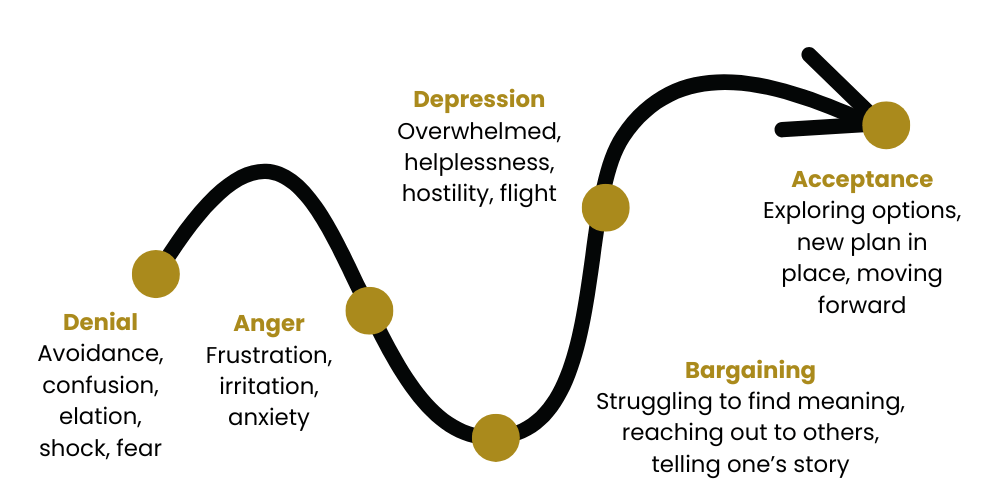
The Kübler-Ross stages of grief, first introduced in her 1969 book On Death and Dying, were initially designed to describe the emotional journey of individuals facing terminal illness.
Over time, the model was adapted to reflect the grief of those coping with the loss of a loved one.
The ‘Five Stages’ were never intended to be a rigid framework, but rather a way to give language to the emotions many experience.
“The stages have evolved since their introduction and they have been very misunderstood over the past three decades. They were never meant to help tuck messy emotions into neat packages. They are responses to loss that many people have but there is not a typical response to loss as there is no typical loss. Our grief is as individual as our lives.”
Kubler Ross, On Grief and Grieving
The ‘Five Stages of Grief‘ – an overview
😶 Denial
Shock or disbelief following a loss
In this stage, people often struggle to fully grasp that the loss has occurred. Denial acts as a psychological buffer, softening the initial blow.
“This can’t be real.”
“They’ll walk through the door any minute.”
“The doctors must be wrong.”
😠 Anger
Frustration or resentment, directed at oneself, others, or the situation
Anger often emerges when reality begins to sink in. It can feel unfair and out of control, leading people to search for someone or something to blame.
“Why did this happen to us?”
“If only the hospital had done more.”
“It’s not fair – he was so healthy.”
🤲 Bargaining
“If only” thoughts or attempts to negotiate a different outcome
This stage often reflects a desperate desire to regain control or undo what has happened. Bargaining may take the form of internal deals, spiritual promises, or mental rewinding of events.
“If only I had called sooner, they’d still be here.”
“I’d give anything to have one more day.”
“Maybe if I do everything right, I won’t lose anyone else.”
😔 Depression
Deep sadness, withdrawal, or loss of interest
As the permanence of the loss sets in, many experience profound sorrow, fatigue, and emotional isolation. This isn’t the same as clinical depression, but a natural response to loss.
“What’s the point of getting out of bed?”
“Everything feels empty without them.”
“No one understands how lonely this is.”
🌿 Acceptance
Gradual reconciliation with the reality of the loss
Acceptance doesn’t mean being “over it.” It’s about acknowledging the loss and finding ways to live with it. People begin integrating the reality into daily life, sometimes by redefining connection in new ways.
“I’ll always miss them, but I’m learning to carry that love forward.”
“They’ll always be part of who I am.”
“I can remember them without breaking down.”
Spotlight on: anger in grief
Anger is one of the most commonly misunderstood experiences in grief. Many people feel shocked or distressed by angry thoughts or reactions after a loss, and worry that something is “wrong” with them.
In this short video, Dr Erin Hope Thompson explains why anger can be a natural part of grief, what it can look like, and how to respond to it with compassion rather than judgement.
Anger in Grief Worksheet
To help you navigate anger, try our free grief worksheet.
It explores anger after loss and offers gentle prompts and practical ways to express difficult emotions with compassion.

Additional Stage Models of Grief
Over time, the five-stage model has inspired many expanded or simplified versions, each offering a different way to describe the emotional shifts people experience after a loss. These include the 4 Stages of Grief, 6 Stages of Grief, Seven Stages of Grief, 8 Stages of Grief, and more detailed frameworks such as the 9, 10 and 12 Stages of Grief. While each model outlines the grieving process in its own way, they all aim to capture the varied and often non-linear nature of grief.
Criticisms of Stage-Based Models
While stage-based models of grief – such as the well-known Kübler-Ross framework – are widely referenced, many experts argue they oversimplify a deeply personal and complex experience. Grief rarely unfolds in neat, predictable phases (read more: Why Grief Isn’t Just Five Stages).
Real-life responses to loss vary dramatically across individuals, cultures, and circumstances. Instead, modern perspectives view grief as a dynamic process, shifting over time from the raw intensity of early loss to the gradual, ongoing adaptation that follows.
🌪️ Grief isn’t linear – People may move back and forth between emotions, skip “stages,” or experience several at once.
🌍 Cultural differences matter – Expressions and experiences of grief vary widely across cultures, something stage models often overlook.
🔄 A more flexible view helps – Many clinicians now describe grief in terms of acute grief (early, intense responses) and integrated grief (long-term adjustment and meaning-making).
Watch our video guides on grief to further explore loss, and the other challenges that can arise from it (such as troubled sleep, anxiety, depression and more).
Our approach to the five stages of grief
At The Loss Foundation, we understand that grief is not a one-size-fits-all experience. Each person’s journey through loss is deeply personal, shaped by their relationship to the person they’ve lost, their circumstances, and their emotional makeup.
Instead of viewing loss as a linear progression through five stages of grief, we approach it as a dynamic process with periods of intensity and calm, often described as waves that ebb and flow over time.
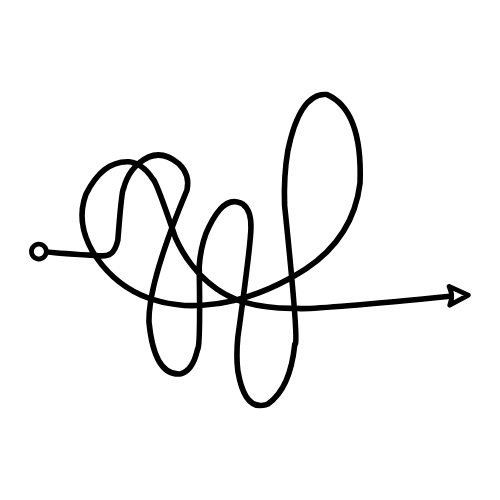
The reality: grief is often messy and non-linear
While each person’s experience is unique, common emotions such as anger, shock, guilt, and sadness often arise alongside practical difficulties like troubled sleep or recurring painful memories. Learning to navigate these experiences and finding strategies to manage them can be an essential part of the healing process.
🔎 Other models of grief to explore
Grief touches everyone differently, and over time, many ways of understanding it have been developed. The models below offer gentle ways to think about what you might be feeling and how people find their own ways to live with loss. There’s no single path through grief – only the one that feels right for you.
Alongside the well-known Five Stages of Grief, other approaches explore how we adapt, stay connected, and rebuild meaning after loss. Click on any of the models below to learn more, or visit our Models of Grief page for an overview of them all.
💫 Dual Process Model of Grief (Stroebe & Schut)
This model suggests that it’s natural to move between focusing on your loss and focusing on everyday life.
May be helpful if… you feel torn between remembering your loved one and trying to get on with daily life.
Dual Process Grief Model – further reading
👉 Dual Process Model of Grief – The Loss Foundation Overview
👉 Stroebe, M. & Schut, H. (1999). The Dual Process Model of Coping with Bereavement.

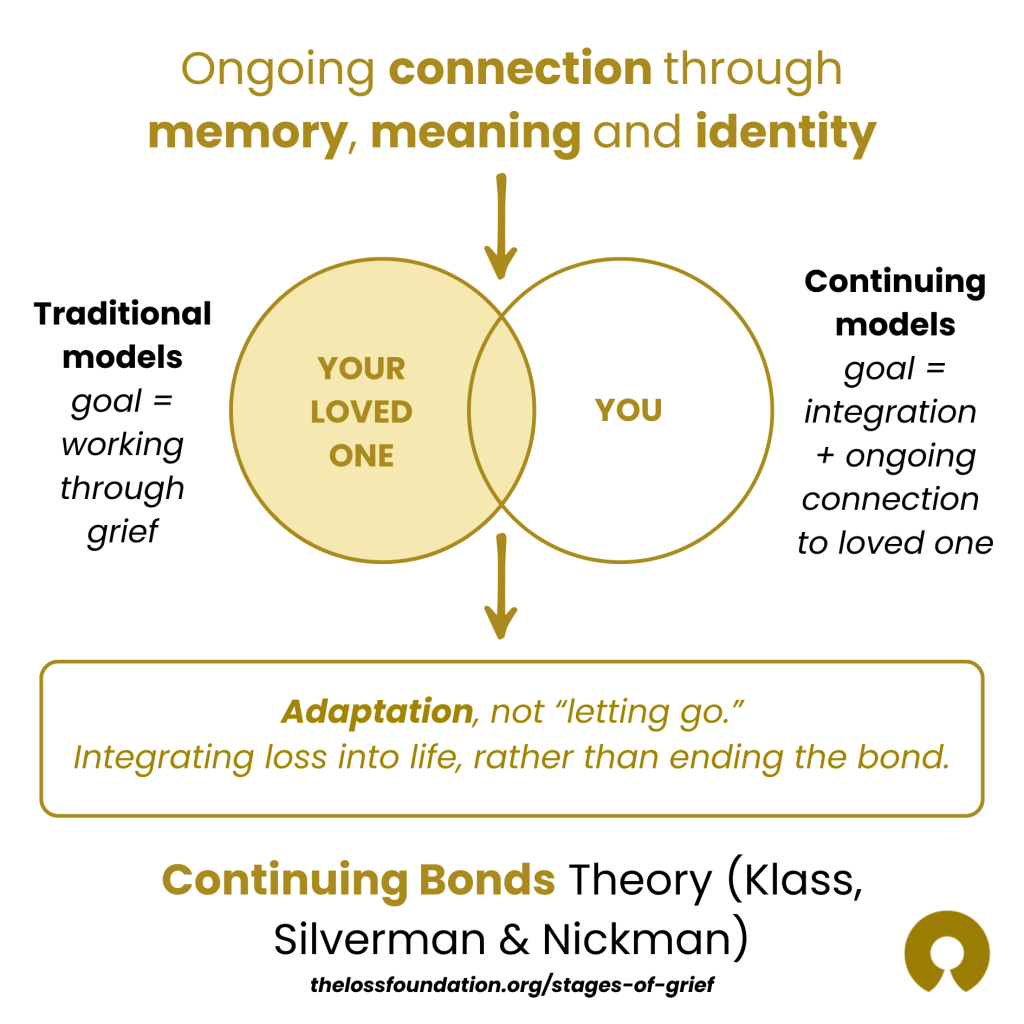
🌉 Continuing Bonds Theory (Klass, Silverman & Nickman)
This model suggests that maintaining a connection with your loved one, through memories or rituals, can be a healthy part of grieving.
May be helpful if… you find comfort in keeping memories alive or want ways to honour your relationship.
Continuing Bonds – further reading
👉 Continuing Bonds Theory in Grief Counselling
👉 Continuing Bonds Theory – The Loss Foundation Overview
👉 Klass, D., Silverman, P., & Nickman, S. (1996). Continuing Bonds: New Understandings of Grief.
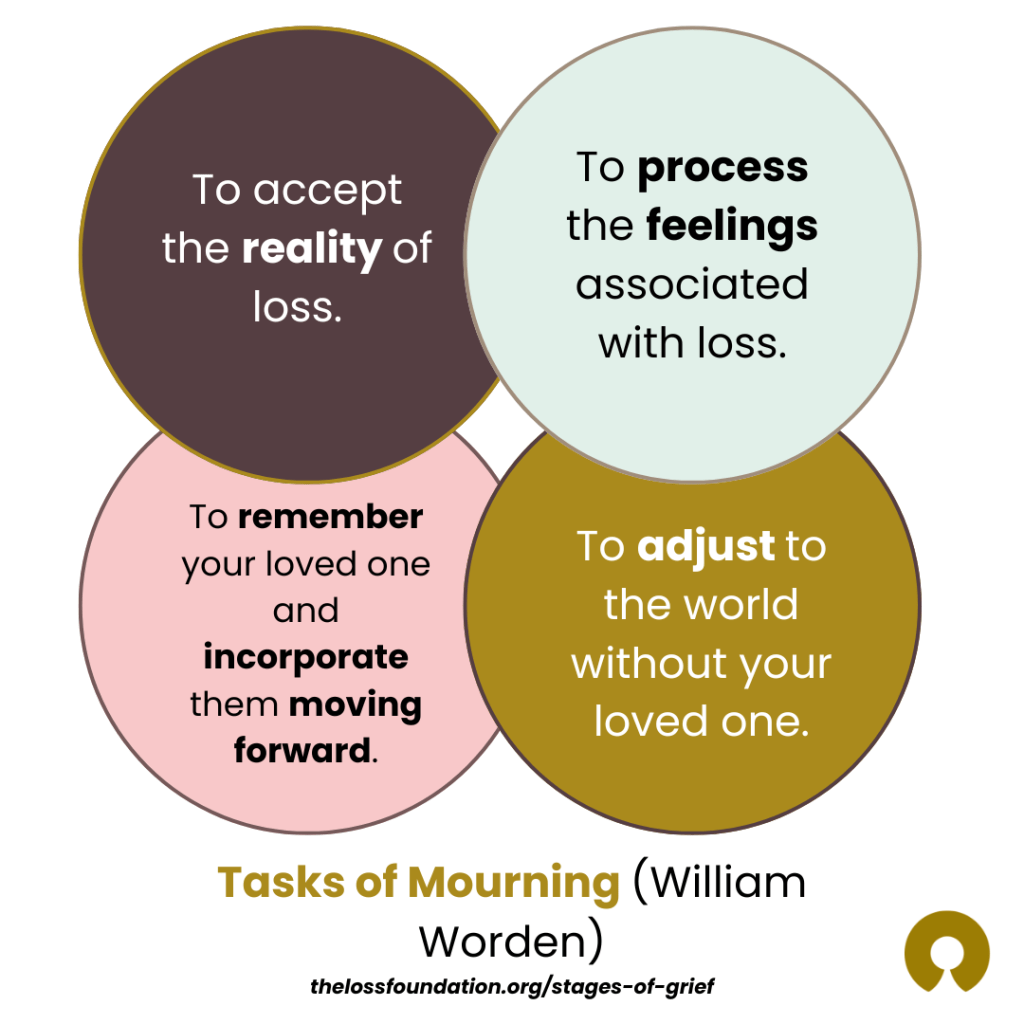
🪞 Tasks of Mourning (William Worden)
This model outlines gentle tasks, like accepting the loss and adjusting to life afterward, that can help you navigate grief.
May be helpful if… you want a step-by-step approach to understanding and working through your feelings.
Tasks of Mourning – further reading
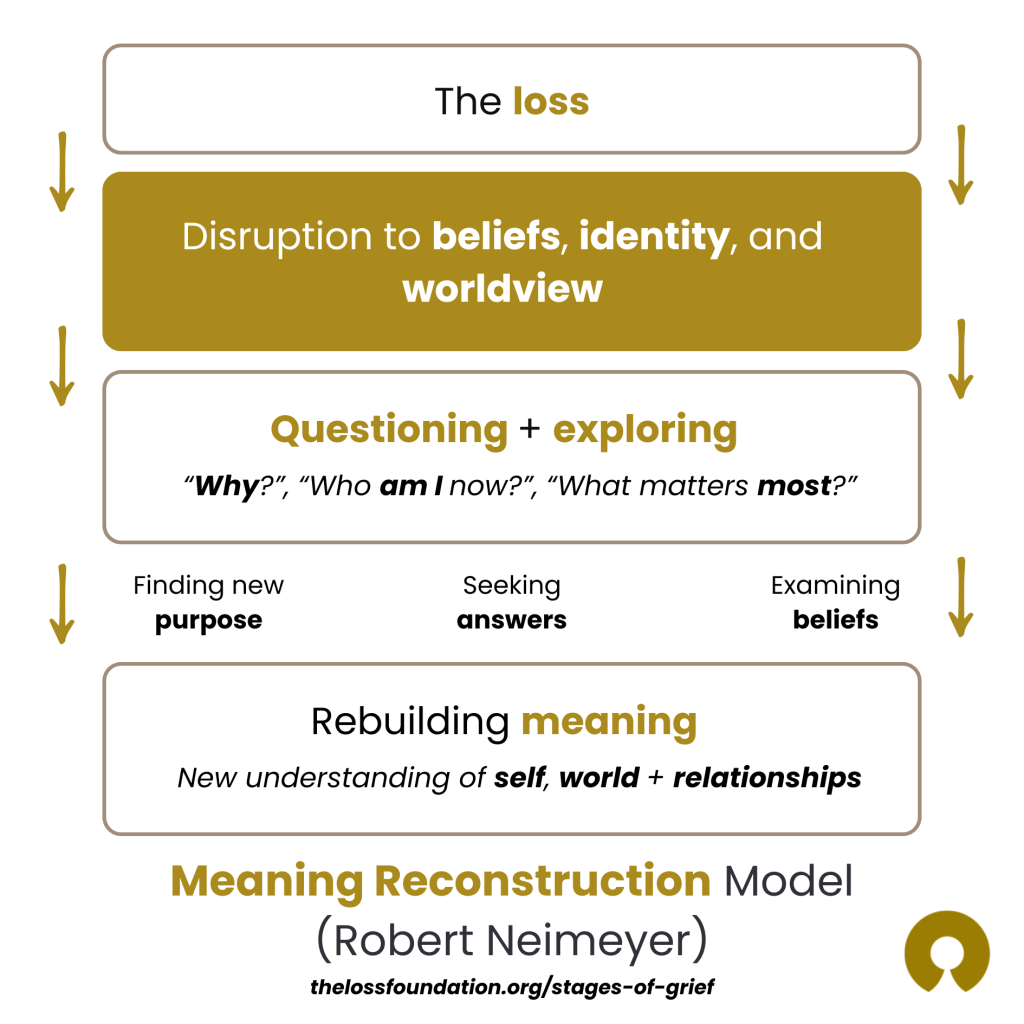
🔍 Meaning Reconstruction Model (Robert Neimeyer)
This model suggests that you can rebuild your sense of self and find new meaning after a bereavement.
May be helpful if… you’re looking for ways to make sense of your loss or to grow from the experience.
Meaning Reconstruction – further reading
👉Meaning Reconstruction Model (Robert Neimeyer) – The Loss Foundation Overview
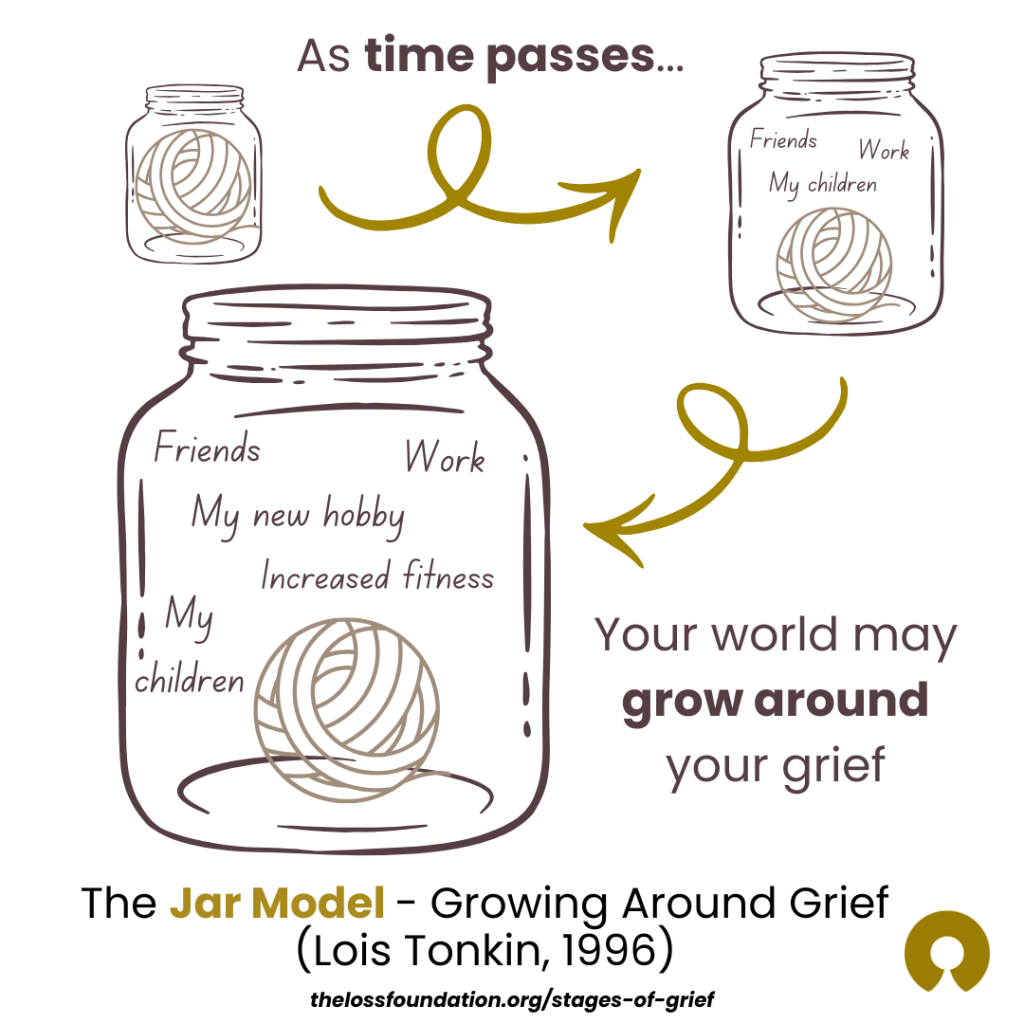
🫙 The Jar Model of Grief – Growing Around Grief (Lois Tonkin)
This model shows that grief doesn’t shrink, but your life gradually expands around it. May be helpful if… you feel like your grief is overwhelming and need a comforting way to visualise adapting over time.
Jar Model of Grief – further reading
👉Griffin, T. (2019). The Ball in the Box: Understanding Grief Over Time.
🤝 Attachment Theory and Grief (John Bowlby)
This model suggests that grief is a natural response to losing an important emotional bond.
May be helpful if… you want to understand why your loss feels so intense and why your feelings are normal.
Attachment Theory and Grief – further reading
👉Attachment Theory and Grief (John Bowlby) – The Loss Foundation Overview
👉Love and Loss – The Roots of Grief and its Complications, By Colin Murray Parkes

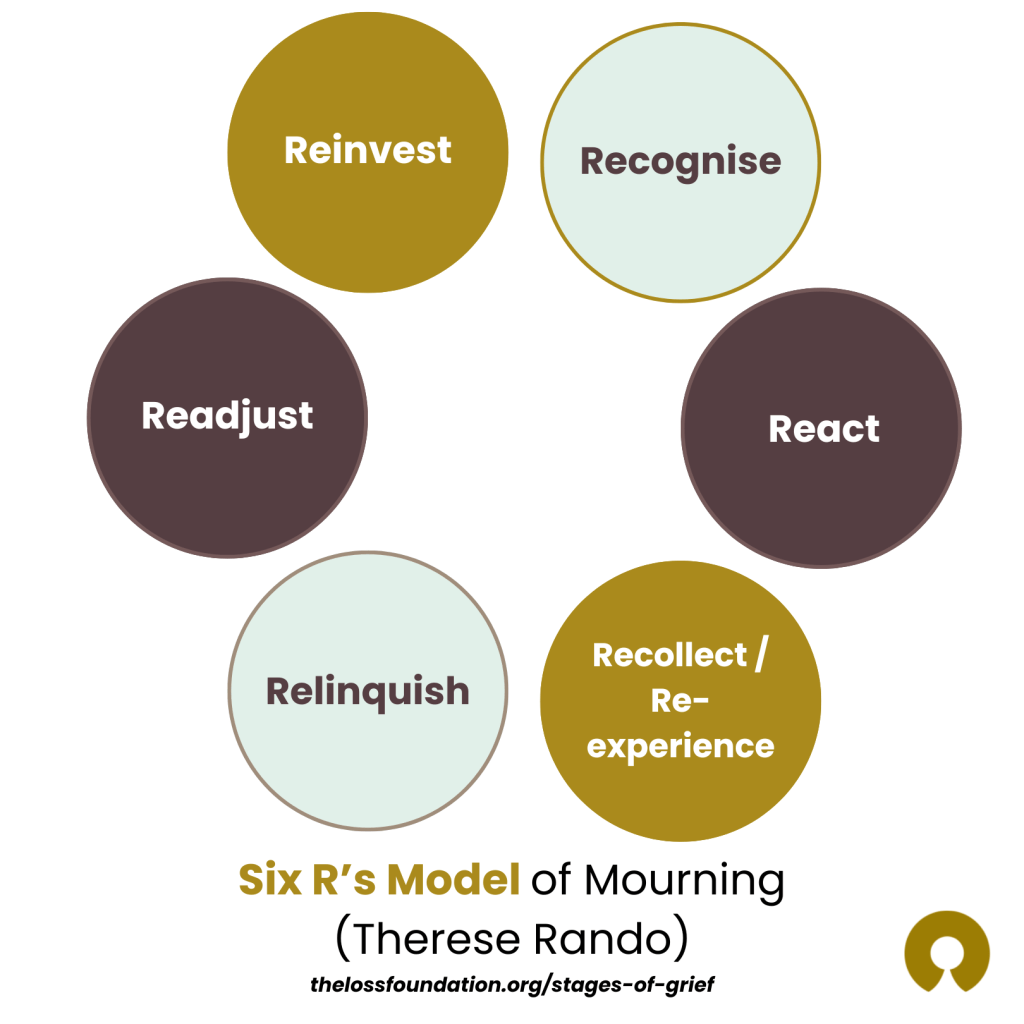
🌱 Six R’s Model of Mourning (Therese Rando)
This model describes processes such as recognising the loss, reacting, and gradually readjusting to life.
May be helpful if… you want a flexible framework to guide your grieving journey without feeling pressured to follow strict steps.
Six R’s Model of Mourning – further reading
👉The Six R’s Model of Mourning – The Loss Foundation Overview
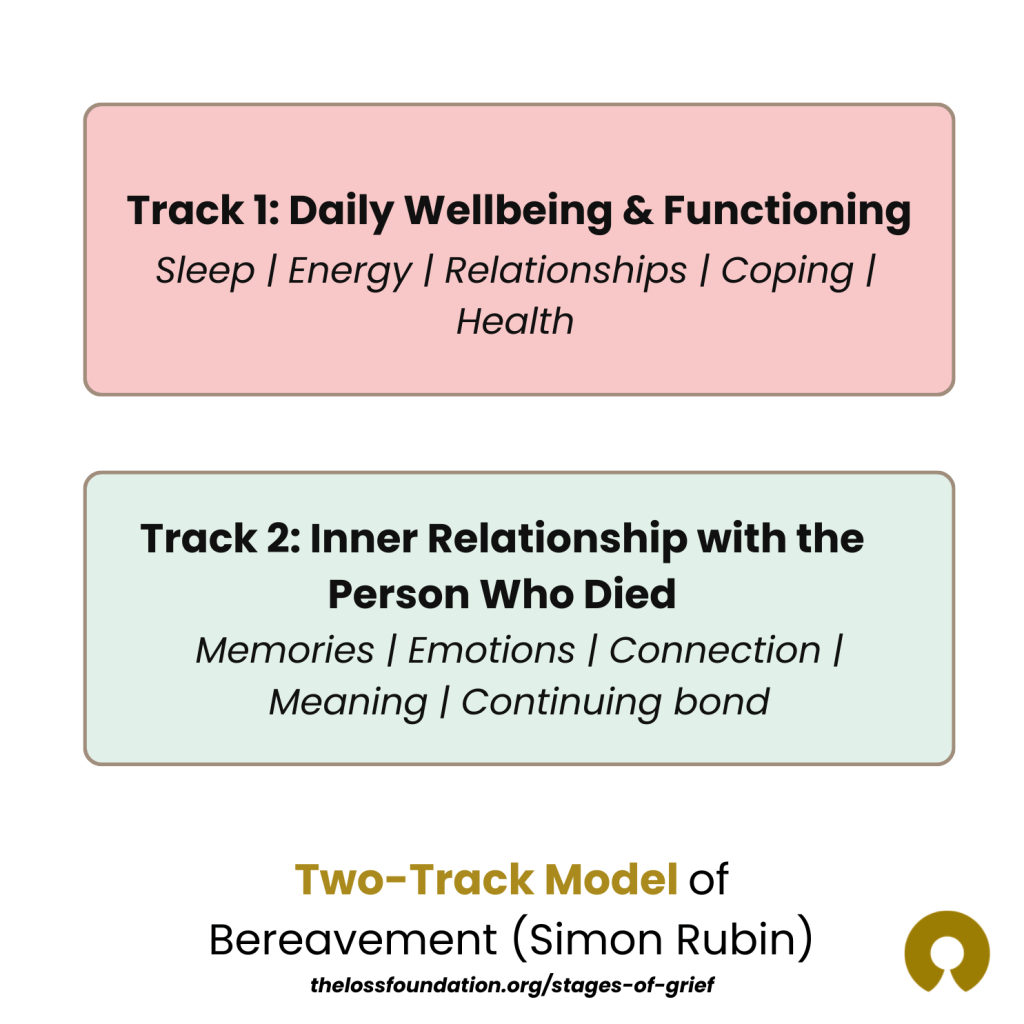
🛤️ Two-Track Model of Bereavement (Simon Rubin)
This model suggests that grief involves both your daily functioning and your ongoing relationship with the person who has died.
May be helpful if… you struggle to balance practical responsibilities with the emotional aspects of grief.
Two-Track Model of Bereavement – further reading
👉 The Two-track Model of Grief – The Loss Foundation
👉The Two-track Model of Bereavement: Overview, Retrospect, and Prospect
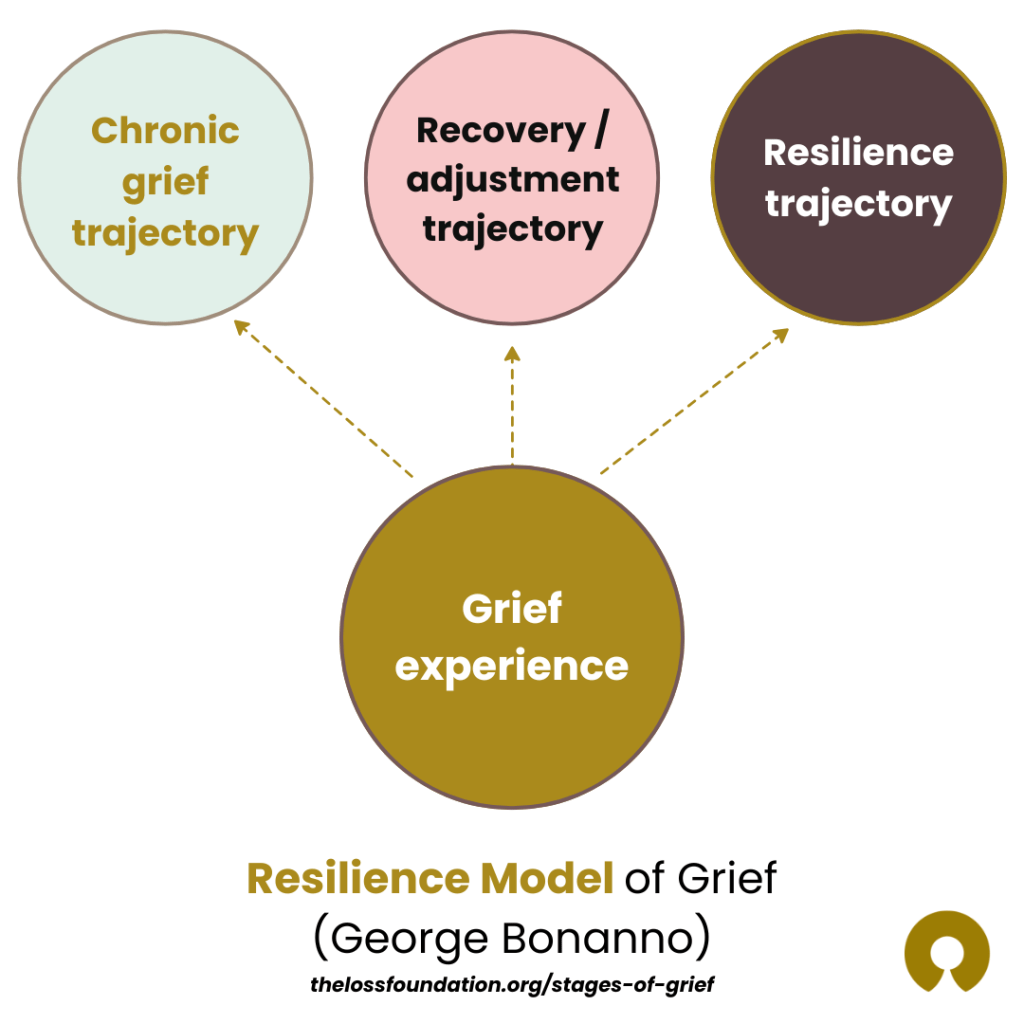
🦋 Resilience Model of Grief (George Bonanno)
This model highlights that many people adapt in their own way, even through deep sadness.
May be helpful… if you want reassurance that resilience doesn’t mean avoiding pain, but continuing despite it.
Resilience Model of Grief – further reading
👉Remarkable Resiliency: George Bonanno on PTSD, Grief, and Depression
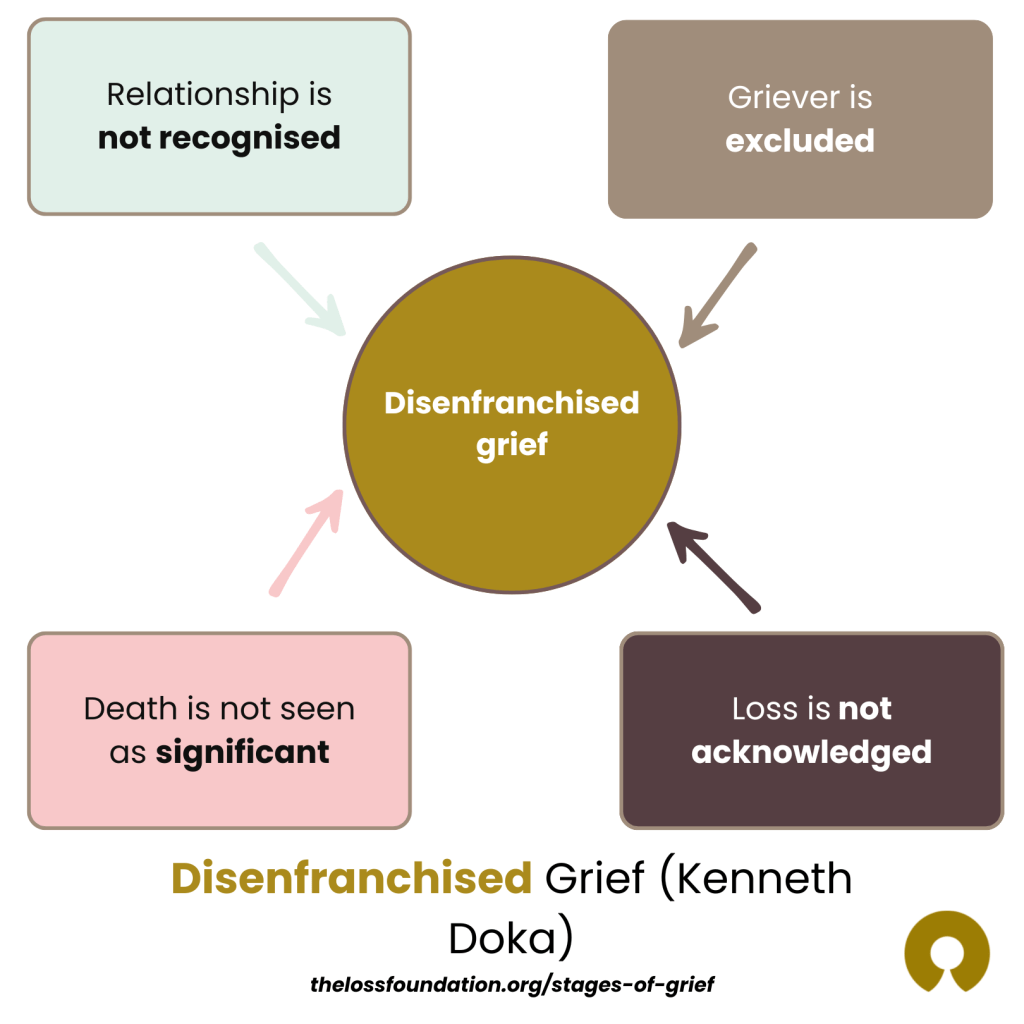
🕯️ Disenfranchised Grief (Kenneth Doka)
This model suggests that some grief isn’t openly acknowledged or supported by others.
May be helpful… if you’ve experienced a loss that others don’t recognise or understand.
Disenfranchised Grief – further reading
💔 Emotions and Challenges in Grief
Grief brings a wide range of emotions and challenges, and our resources are here to help you navigate them. You can learn about anger in grief and how to manage it in healthy ways, explore why anxiety often increases after loss, and find guidance for coping with grief-related depression.
We also share strategies for dealing with difficult memories, improving sleep during grief, and addressing the everyday struggles that can make recovery feel overwhelming.
👉 Anger in grief
👉 Anxiety in grief
👉 Depression
👉 Difficult memories
👉 Troubled sleep
👉 Everyday struggles
Stages of grief worksheets
Our Grief Journey Workbook focuses on concepts related to the ‘Five Stages of Grief’, as well as four other grief models…
⚖️ The Dual Process Model Grief Worksheet – balancing grief with everyday life.
🫙 The Jar Model Grief Worksheet – showing how grief stays the same, but life grows around it.
🛤️ The Tasks of Mourning Grief Worksheet – guiding steps for processing loss.
🔗 Attachment Theory Grief Worksheet – exploring how our bonds shape grief.
🌊 The Kübler-Ross Five Stages of Grief Worksheet – outlining denial, anger, bargaining, depression, and acceptance as common responses to loss.

❓ Stages of Grief FAQs
There’s no single correct number of stages. The most well-known model – Elisabeth Kübler-Ross’s – describes five stages of grief: denial, anger, bargaining, depression, and acceptance.
Other models, such as the seven-stage model of grief, expand on these ideas to include emotions like shock or guilt. In truth, grief isn’t linear – people move back and forth between feelings in their own time.
Further reading 👉Why Grief Isn’t Just Five Stages: Understanding How We Really Experience Loss
Grief isn’t a one-size-fits-all experience. However we sometimes hear that the hardest moments come when the reality and permanence of the loss feels most present. Practising self-compassion can help you cope and process your loss. There’s no “right” or “wrong” way to grieve – emotions naturally ebb and flow as you adjust to a new world.
Further reading 👉 When Grief Feels Hardest: Why Some Days Hurt More Than Others
Grief can profoundly change how we see ourselves and the world.
Many people describe shifts in identity, priorities, empathy, and resilience. These changes don’t mean you’ve lost yourself; rather, they reflect the deep love and meaning behind your grief. Managing your grief often involves integrating those changes into your life story.
Further reading 👉 How Grief Changes Us: Finding Meaning and Identity After Loss
There’s no set timeline for grief. Some feelings ease within months, while others ebb and flow over years.
What matters is not how long you grieve, but how supported you feel while adapting to loss. Grief often becomes less consuming with time, but love and memory remain.
Further reading 👉 Does Grief Ever End? Understanding How Grief Changes Over Time
Acceptance doesn’t mean forgetting or “moving on.”
It means learning to live with the reality of the loss – finding ways to remember, love, and continue living. Acceptance is a gradual process of integrating your grief, not erasing it.
Further reading 👉 What Acceptance Really Means in Grief (It’s Not “Moving On”)