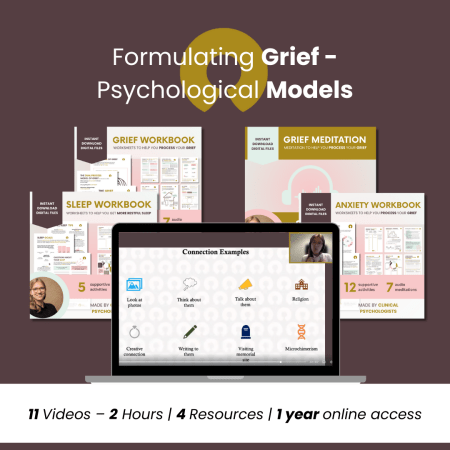

Grief is an inevitable part of life, yet one of the most complex and personal experiences we face. Whether it’s the loss of a loved one, the end of a significant relationship, or a life-changing event, grief takes on many forms and doesn’t follow a linear path. Psychological models of grief provide structured frameworks that offer insights into how people process loss, helping mental health professionals, grief counsellors, and caregivers better support those in mourning. In this blog, we will explore the importance of these models and how our Formulating Grief – Psychological Models course can equip you with the tools to apply them effectively.
Why Psychological Models Matter in Grief Support
Grief is unique to each individual, and there is no one-size-fits-all approach. However, understanding established psychological models helps clinicians and caregivers create a more personalised and empathetic approach to grief support. These models offer a blueprint for understanding the emotional, cognitive, and physical aspects of grief. They give professionals tools to assist clients in making sense of their emotions and encourage them to feel heard, supported, and understood.
Some widely-known grief models that have shaped how we understand bereavement include:
- Kübler-Ross’s Five Stages of Grief – The five-stage model, consisting of Denial, Anger, Bargaining, Depression, and Acceptance, was originally developed to describe the emotional responses of individuals facing their own mortality, particularly those in palliative care. While these stages are not necessarily experienced in a linear order, they provide a framework for understanding the emotional turmoil associated with approaching the end of life.
- The Dual Process Model of Grief – Developed by Stroebe and Schut, this model suggests that individuals need to balance their grief-related emotions (loss-oriented grief) with the need to adapt to life after the loss (restoration-oriented grief). It emphasises the fluidity of grief and the necessity of integrating both aspects for healing.
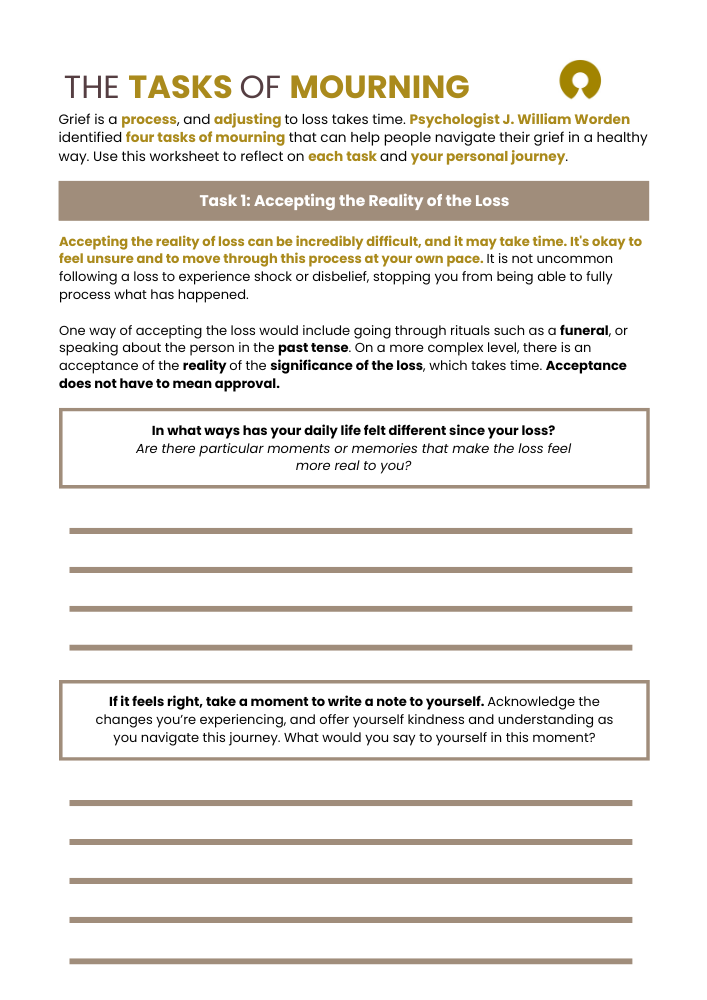
- Worden’s Tasks of Mourning – A more proactive framework that helps individuals adapt to life after loss through four tasks: Accepting the reality of the loss, Processing the pain of grief, Adjusting to a world without the deceased, and Finding an enduring connection with the deceased.


Exploring Grief in Our Course
Learn how to use a range of psychological models in working with bereavement and supporting grief.
Price: £79.99 Sale price: £59.99
6 Videos – 2 Hours | 4 Resources | One Year Online Access
Our Grief Models course takes a comprehensive look at the key grief models and their application in real-world situations. Through six video lessons, four downloadable resources, and lifetime access, this course helps mental health professionals, grief counsellors, and anyone who supports individuals in mourning understand and apply various psychological theories of grief.
This course is designed to benefit anyone working therapeutically with people grieving any type of loss, providing valuable tools and insights for those supporting others through difficult times.
Here’s a closer look at what you’ll learn in the course:
Chapter 1: Introduction to Webinar and Grief
This chapter provides an overview of the grieving process and how psychological models can offer structure and clarity to both the person experiencing grief and the professional providing support.
Chapter 2: Anticipatory Grief
Before loss occurs, people may experience anticipatory grief. Understanding the emotions and reactions in this phase, including anxiety, fear, and even guilt, is crucial for offering support.
Chapter 3: Psychological Models
A detailed exploration of well-established grief theories, including Kübler-Ross’s Five Stages of Grief, the Dual Process Model, and Worden’s Tasks of Mourning, along with others. This chapter will guide you in understanding how these frameworks can be applied in different grief scenarios.
Chapter 4: Case Studies
Real-world examples demonstrate how these psychological models can be used to help people navigate different types of loss. These case studies provide practical insights into the complexities of grief and how to tailor support.
Chapter 5: Continuing the Bond
This chapter delves into the idea of maintaining an emotional connection with the deceased. Rather than “letting go,” many individuals find comfort in continuing a bond with their loved one. Learn how this process supports healthy grieving.
Chapter 6: What Support is Recommended?
This section offers evidence-based strategies for grief support, including counselling techniques, interventions, and resources to help individuals cope with their emotions.
Beyond Theory: Practical Application of Grief Theories
While understanding grief models is essential, the true value of this course lies in its practical application. Grieving individuals need support that meets their unique emotional needs, and these psychological frameworks offer guidance on how to do that. For example, the Dual Process Model is particularly helpful in recognising that grief isn’t a linear process but one that involves both loss and restoration. By understanding this, you’ll know how to encourage individuals to honour their grief while also helping them navigate their new reality.
If you want to better understand the grieving process and gain practical insights into supporting those in mourning, this course is for you.
By enrolling, you’ll gain lifetime access to a comprehensive learning experience, expert insights, and real-world case studies to enhance your grief support skills. Whether you’re new to grief counselling or looking to deepen your expertise, this course will equip you with the knowledge to support individuals through one of life’s most challenging experiences.
Grief doesn’t follow a single trajectory, and no two people experience it in the same way. By understanding multiple psychological models, professionals can create tailored support strategies that meet the diverse needs of those who are grieving. Whether you are a therapist, counsellor, or anyone supporting individuals through loss, the Formulating Grief – Psychological Models course provides the knowledge and tools you need to assist others in navigating their grief journey with compassion and understanding.
Read more about the ‘Stages of Grief’
Our Stages of Grief page explores how people experience loss through the lens of Elisabeth Kübler-Ross’s influential model. It traces the origins of the Five Stages, their historical background, and how they continue to shape modern understandings of grief and healing.
Photo by Angel Luciano on Unsplash
🌱 Grow with our courses
Explore our courses – including Mental Health: Supporting Ourselves and the Grief Journey Workbook – on our dedicated Grief & Mental Health Training page.