

Grief is a deeply personal experience, and no single model can fully capture its complexity. While many are familiar with the five stages of grief introduced by Elisabeth Kübler-Ross, other frameworks expand on this, recognising additional emotional responses. The six-stage model of grief includes key phases that acknowledge both the initial shock of loss and the gradual process of adaptation.
What Are the 6 Stages of Grief?
This model typically includes the following stages:
- Shock and Disbelief – The immediate reaction to loss, often marked by numbness, denial, or an inability to comprehend what has happened.
- Denial – A defence mechanism that helps cushion the initial blow, making it feel as though the loss isn’t real.
- Anger – Feelings of frustration, helplessness, or even resentment, sometimes directed at oneself, others, or the situation itself.
- Bargaining – Attempts to regain control, often involving “if only” statements or thinking about ways the loss could have been prevented.
- Depression and Sadness – A period of deep sorrow, reflection, and withdrawal, as the reality of the loss fully sets in.
- Reconstruction and Adjustment – The gradual process of learning to live with the loss, finding ways to adapt while still honouring the person who is gone.
This model highlights the emotional and cognitive shifts that can occur as people process their grief.
How Does This Model Compare to Other Grief Frameworks?
The six-stage model builds upon earlier frameworks by adding more nuance to the experience of loss. While the five-stage model ends with “acceptance,” this version acknowledges that grief involves ongoing adaptation and reconstruction. It also places greater emphasis on the early emotional responses, such as shock and disbelief.
Your Grief Journey Workbook
Grief is not a linear journey, and everyone experiences it differently. This workbook provides guidance and helpful tools for your journey.
📖 73 pages, 20 supportive activities & 8 audio meditations
🧠 Created by our Clinical Psychologists
✍️ A blend of reflection, practical exercises & coping strategies
💛 Designed for those grieving or supporting others
-
 Your Grief Journey Workbook¥3,200
Is the 6-Stage Model Right for You?
Grief doesn’t follow a universal pattern, and not everyone will experience all six stages—or in this exact order. Some may cycle through certain emotions multiple times, while others may not resonate with specific stages at all. What’s most important is finding a way to understand and process your grief in a way that feels right for you.
Final Thoughts
The six stages of grief provide a structured way to explore the emotional journey of loss. They emphasise that while grief can be overwhelming, adaptation and meaning-making are possible. No matter how your grief unfolds, what matters most is allowing yourself to feel, seeking support when needed, and recognising that there is no “right” way to grieve.
At The Loss Foundation, we recognise that grief is not a predictable sequence of stages.
Instead, it is a fluid experience, marked by waves of emotion that come and go. Some may resonate with structured models, while others may find them too rigid. However you process loss, know that your journey is unique, and there is no wrong way to grieve.
Chapter spotlight: The Five Stages of Grief & Other Models
The Five Stages of Grief model is well known, but it is just one way of looking at loss. Originally developed by Elisabeth Kübler-Ross, it outlines denial, anger, bargaining, depression, and acceptance as key phases of grief. While helpful for some, this model has been criticised for implying a linear progression, whereas grief is often unpredictable and personal. In The Grief Journey Workbook, we explore this model in detail alongside a broader perspective to help you find what resonates with your experience.
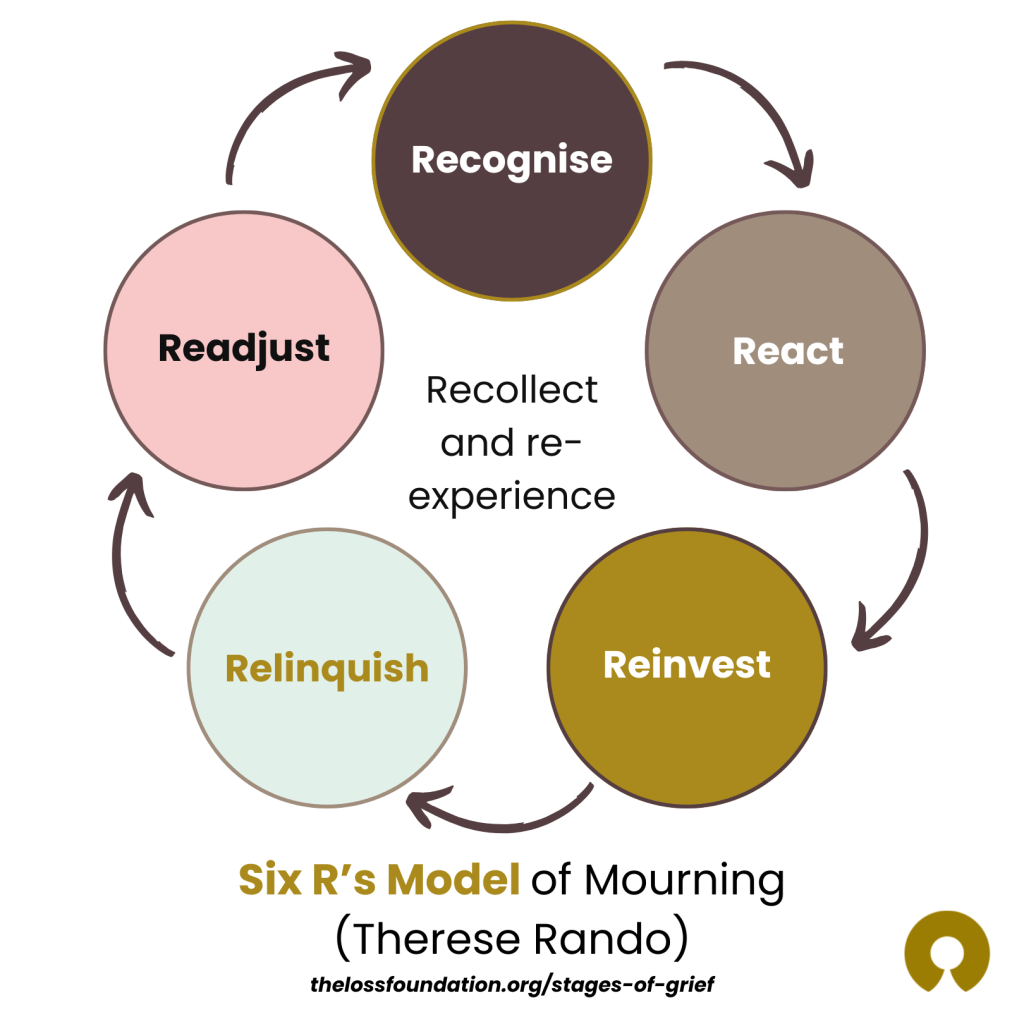
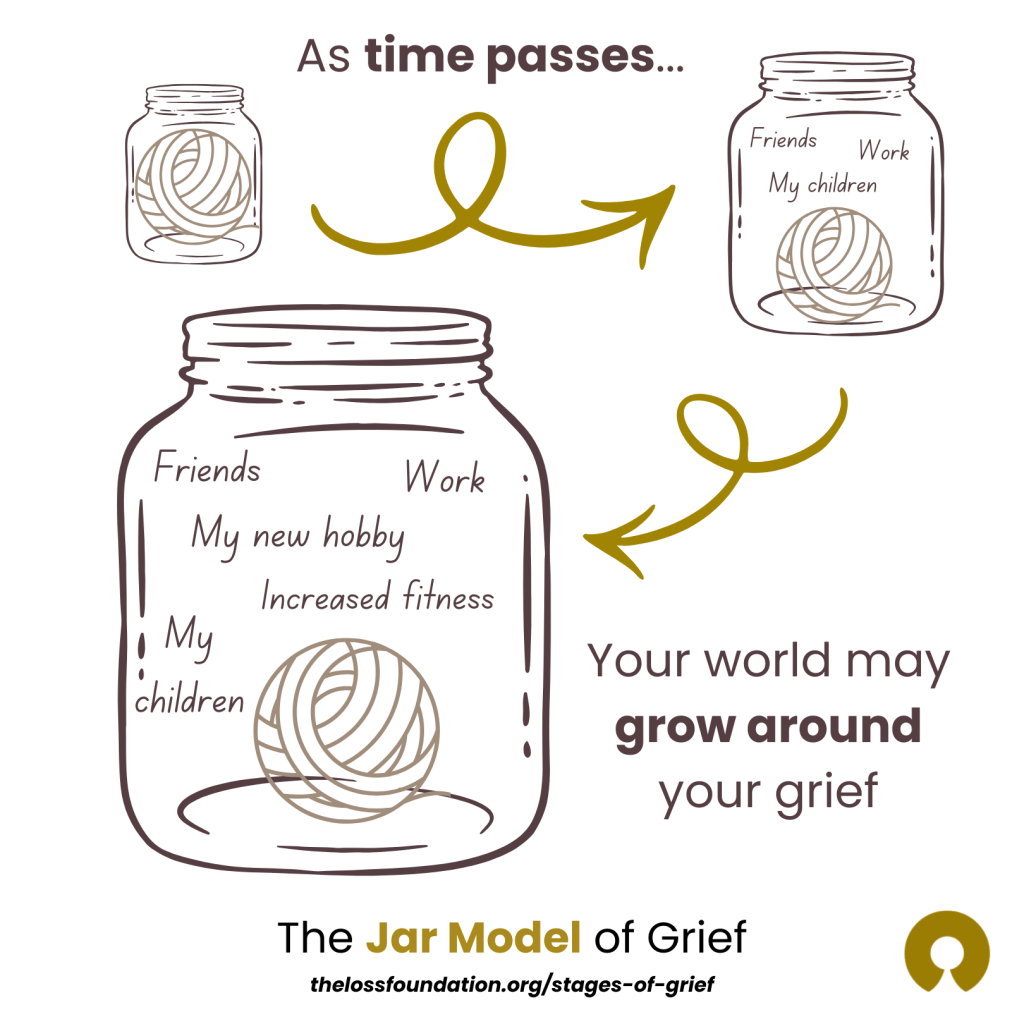
Some other key grief models explored in the workbook include:
- The Dual Process Model – balancing grief with everyday life.
- The Jar Model – showing how grief may stay the same, but life grows around it.
- The Tasks of Mourning – providing guiding steps for processing loss.
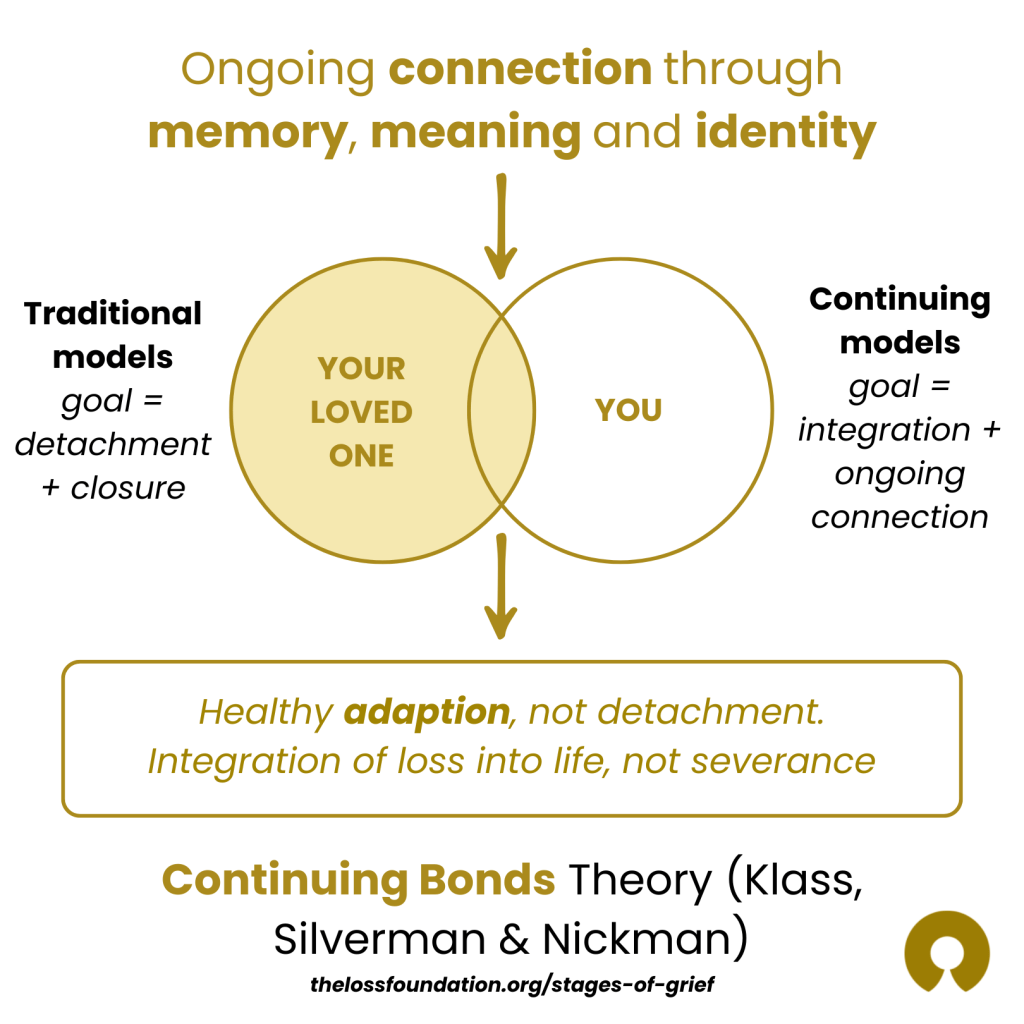
- Attachment Theory – exploring how our bonds might shape our grief.
Each of these offers insight into the grieving process, and we also explore the Five Stages of Grief in more detail too, providing an in-depth look at how they can help you navigate your own grief journey.
Read more about the ‘Stages of Grief’
This page offers an in-depth overview of the grieving process through the framework of Elisabeth Kübler-Ross’s Five Stages of Grief. It examines the model’s origins, historical influence, and ongoing impact on the way professionals and the public understand bereavement.
🧠 Explore How the ‘Stages of Grief’ Work
The “stages” of grief are one of the most familiar frameworks people turn to when trying to understand loss – yet they’re often interpreted too literally.
Our Stages of Grief guide breaks down where the model came from, what each stage represents, and how it can offer insight without suggesting grief moves in tidy steps.
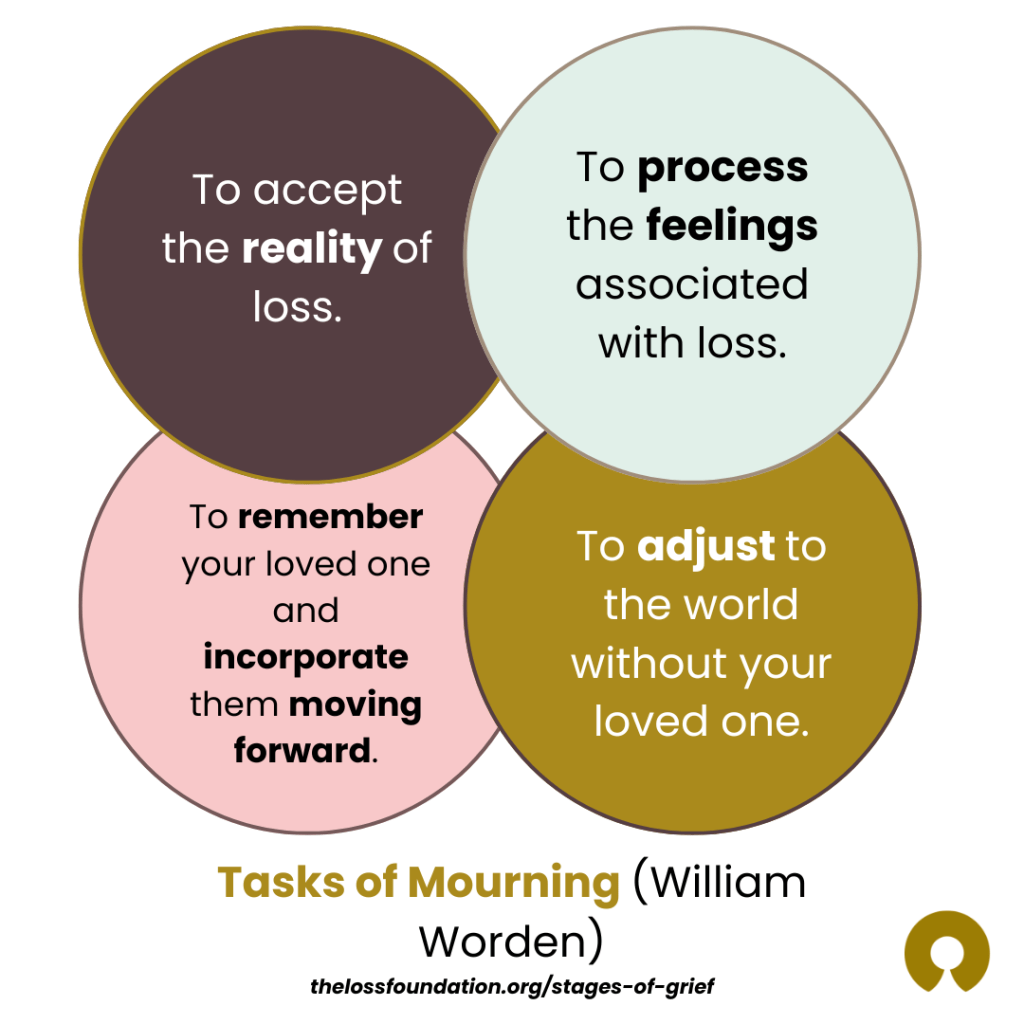
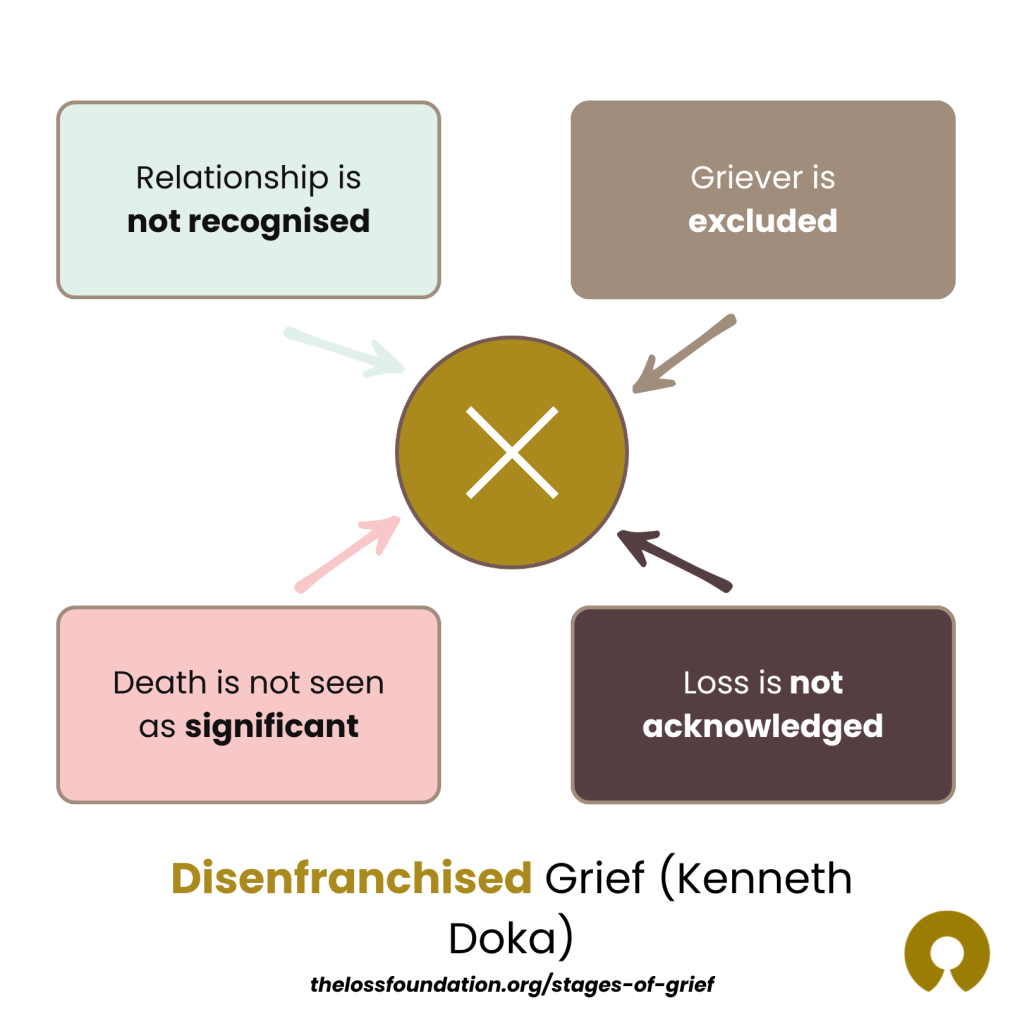
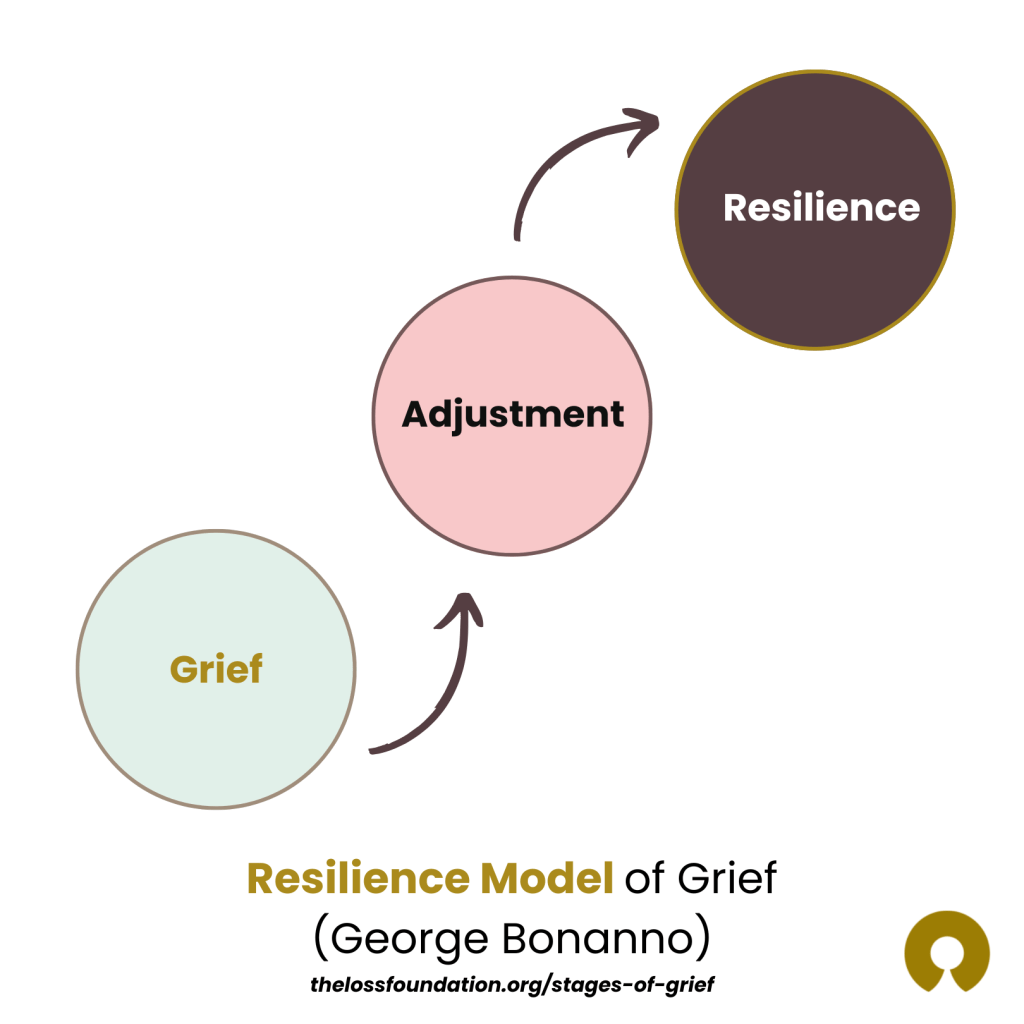



Explore the page to learn:
📘 A clear explanation of what the Five Stages do – and don’t – mean
🧭 Why grief shifts over time rather than progressing in order
🌊 How emotions can rise and fall in waves
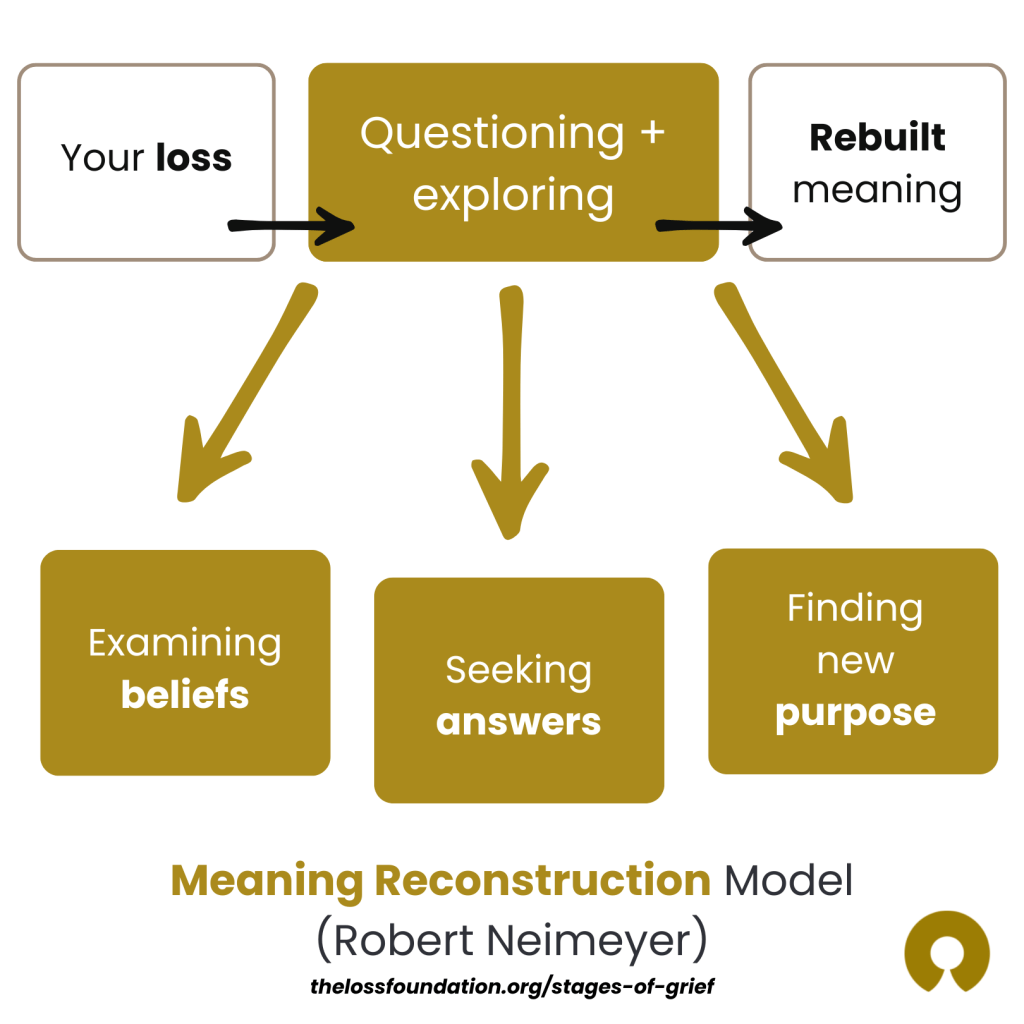
🧩 Other grief models that may resonate more deeply with your experience
Photo by Jonny Caspari on Unsplash