

Grief is not a linear journey, and everyone experiences it differently. That’s why we’ve created The Grief Journey Workbook – a compassionate resource to guide and support you amid the challenges and complexities of loss.
Your Grief Journey Workbook
Grief is not a linear journey, and everyone experiences it differently. This workbook provides guidance and helpful tools for your journey.
📖 73 pages, 20 supportive activities & 8 audio meditations
🧠 Created by our Clinical Psychologists
✍️ A blend of reflection, practical exercises & coping strategies
💛 Designed for those grieving or supporting others
Donate What You Can – whether you donate nothing or something, our aim is to support you. If you donate, you’ll enable someone to attend a Support Group meeting (thank you).
-
 Your Grief Journey Workbook$29.00
Why This Workbook?
Whether you are navigating your own grief or supporting someone else, this workbook offers a structured yet flexible approach to learning about grief, processing loss and manages the many challenges all of this brings. It provides tools to help you reflect, process emotions, and develop coping strategies tailored to your personal experience.
What’s Inside?
📖 73 pages of insightful content
🧠 Expertly crafted by our Clinical Psychologists
✍️ 20 supportive activities to help process grief
🎧 8 audio meditations for comfort and reflection
💛 A blend of reflection, practical exercises & coping strategies
Donate What You Can
We believe in making support accessible. Whether you choose to donate or not, this workbook is here for you. Any contributions help others access our Support Group meetings, offering comfort and connection to those in need.
“This group has given me more relief, release, and comfort than anything else since my wife passed away.”
– Support Group Attendee
Download your copy today and take the next step on your journey with support, understanding, and guidance. 💛
Your Grief Journey Workbook
Grief is not a linear journey, and everyone experiences it differently. This workbook provides guidance and helpful tools for your journey.
📖 73 pages, 20 supportive activities & 8 audio meditations
🧠 Created by our Clinical Psychologists
✍️ A blend of reflection, practical exercises & coping strategies
💛 Designed for those grieving or supporting others
Donate What You Can – whether you donate nothing or something, our aim is to support you. If you donate, you’ll enable someone to attend a Support Group meeting (thank you).
-
Your Grief Journey Workbook$29.00
Chapter spotlight: The Five Stages of Grief & Other Models
The Five Stages of Grief model is well known, but it is just one way of looking at loss. Originally developed by Elisabeth Kübler-Ross, it outlines denial, anger, bargaining, depression, and acceptance as key phases of grief. While helpful for some, this model has been criticised for implying a linear progression, whereas grief is often unpredictable and personal. In The Grief Journey Workbook, we explore this model in detail alongside a broader perspective to help you find what resonates with your experience.
Some other key grief models explored in the workbook include:
- The Dual Process Model – balancing grief with everyday life.
- The Jar Model – showing how grief may stay the same, but life grows around it.
- The Tasks of Mourning – providing guiding steps for processing loss.
- Attachment Theory – exploring how our bonds might shape our grief.
Each of these offers insight into the grieving process, and we also explore the Five Stages of Grief in more detail too, providing an in-depth look at how they can help you navigate your own grief journey.
🧠 Understand the ‘Stages’ of Grief
The idea of “stages” is one of the most widely recognised ways people make sense of grief – but it’s often misunderstood.
Our Stages of Grief page explains where the model came from, what the stages really mean, and how they can help (without implying grief follows a neat, linear path).
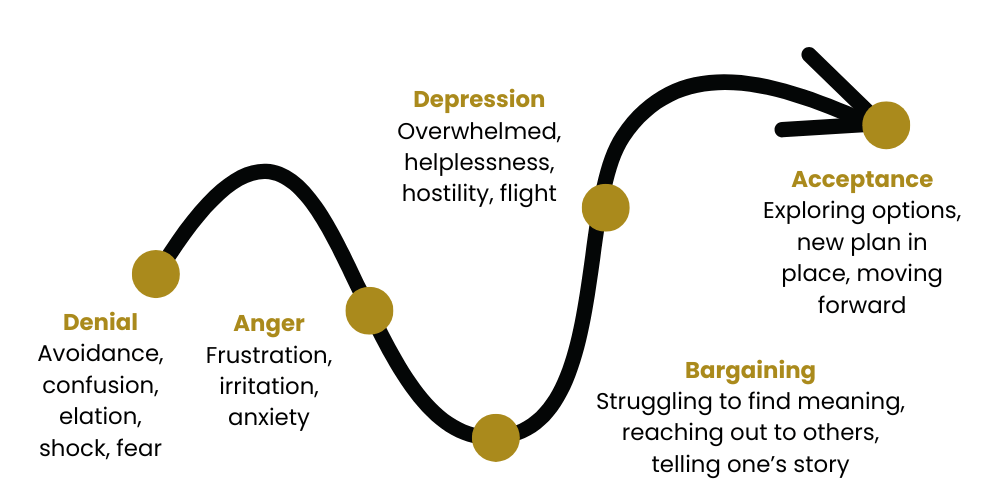
Explore the page to learn:
📘 What the Five Stages really are (and aren’t)
🧭 Why grief doesn’t follow a straight line
🌊 How emotions can come in waves
🧩 How different grief models may help you
Photo by Susan Q Yin on Unsplash