

Processing grief and big emotions can be challenging for young children, especially when they do not yet have the words to explain how they feel. Our Prompted Drawing worksheets offers children a safe and creative way to express emotions, recall memories, and process feelings. Designed for ages 3–6, this activity helps children express themselves in a gentle, structured way.
Prompted Drawing gives children open-ended opportunities to draw, colour, or write about their feelings. By responding to simple prompts, children can reflect on experiences, remember happy or meaningful moments, and share emotions that may be difficult to communicate verbally.
What Prompted Drawing Does
- Encourages emotional expression: Children can safely explore feelings such as sadness, anger, confusion, or happiness through drawing.
- Supports memory recall: Prompts guide children to think about meaningful experiences, helping them process memories in a healthy way.
- Builds coping skills: Expressing emotions creatively allows children to release feelings, gain perspective, and feel understood.
- Promotes emotional literacy: By labeling or reflecting on their drawings, children learn to recognise and communicate emotions.
Why Prompted Drawing Is Important for Ages 3–6
Children in early childhood are concrete thinkers who often struggle to articulate complex emotions. Grief can feel overwhelming, and without tools to express it, children may act out, withdraw, or feel anxious. Prompted Drawing helps children by:
- Providing a safe outlet for emotions: Drawing and coloring allow children to communicate feelings without pressure or judgment.
- Encouraging reflection on memories: Prompts can help children process experiences of loss or significant change.
- Fostering self-understanding: By identifying emotions through drawings, children develop emotional awareness and resilience.
Research shows that creative, non-verbal activities like drawing are especially effective for helping young children navigate grief and emotional stress, providing a foundation for healthy coping throughout life.
Tips for Using Prompted Drawing
- Offer a variety of materials: Crayons, markers, colored pencils, and stickers help make the activity engaging and fun.
- Follow your child’s pace: Let them draw or respond to prompts in their own way; avoid over-explaining or interpreting their artwork.
- Use gentle guidance: Questions like “What does this part of your picture show?” or “How did you feel in this moment?” can support reflection.
- Integrate comfort and reassurance: Pair the activity with a quiet, safe environment to help children feel secure while expressing themselves.
Supporting Children Through Grief
Prompted Drawing is more than just a creative activity – it’s a tool to help young children explore, express, and process complex emotions. By providing a structured space for expression, this worksheet helps children navigate grief, build coping skills, and develop a healthy understanding of their feelings. Over time, these early experiences of reflection and self-expression contribute to emotional resilience and confidence.
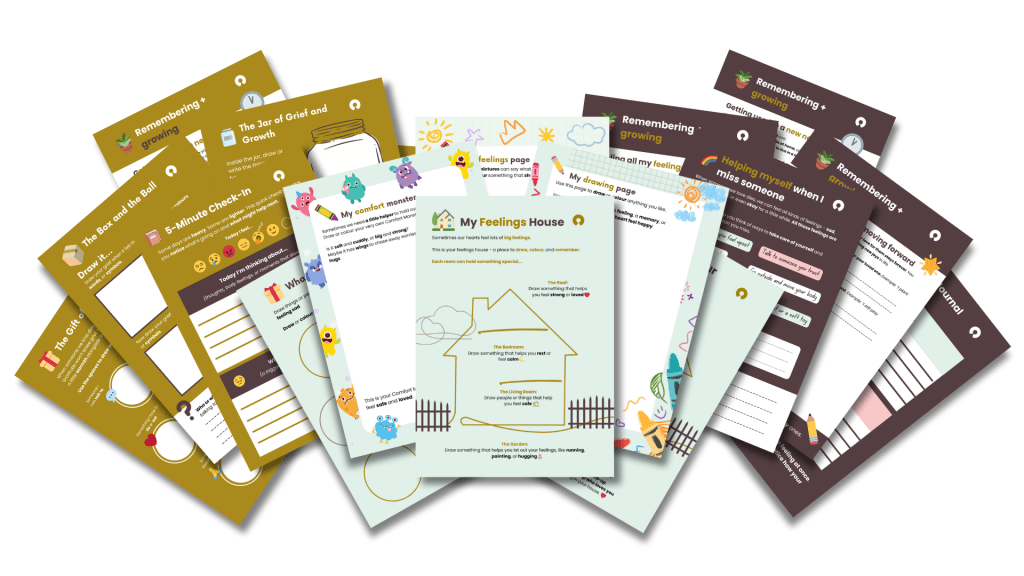
Discover practical tools to support children through grief at every age. Our Childhood Grief Worksheets page offers a range of guided activities and free PDF guides for parents, carers, and teachers, helping children express feelings, build coping skills, and feel safe.