
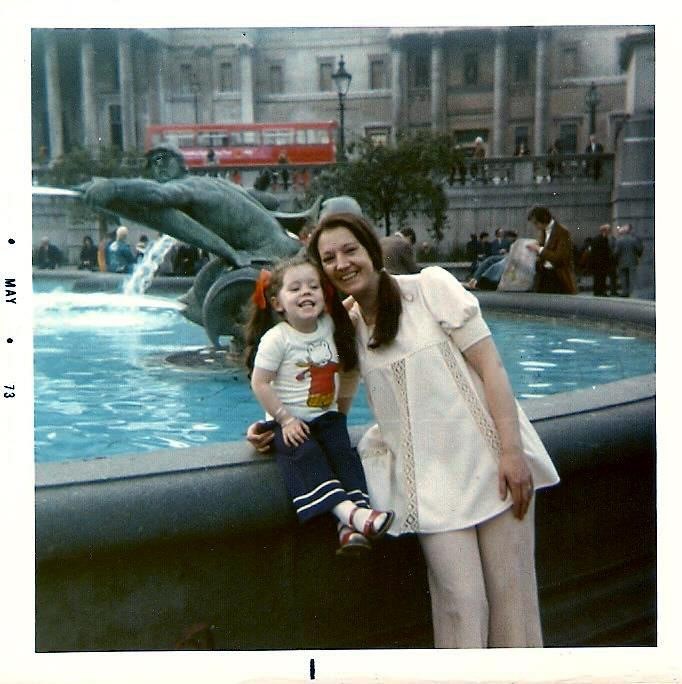
Mum died in 2010, shortly after a cancer diagnosis; the whole thing was a massive shock for everyone.
The hospital, the GP, everybody had been treating her for a mere
cracked rib.
Eventually, the pain from her rib got so bad she was admitted to hospital
for further investigation. It soon became clear that cancer had grown
from her lungs through her ribs and into her breast; she did indeed have
a cracked rib, caused by this massive tumour.
A week or so later, I got call to say that mum had suffered a heart attack
and was being transferred to one of the bigger hospitals in Glasgow. I
flew to Scotland (I live in London) and saw mum in the hospital. She had
a heart attack every day for five days, every morning, heart attacks
caused by the tumour pressing on her heart.
On the day of the final heart attack, we were told that mum was likely to
be dead by lunchtime. Never one to be told what to do, about 2 o’clock
she woke up and asked for some ice cream.
I stayed with her in the hospital, sleeping in a chair next to her. After five
days, mum said to me, “I think you should go back to London, you’ve got
a job, and people waiting for you, it’s time to go home”.
I didn’t want to leave.
You never want to leave your mum in hospital, but
she was adamant that my place was in London, and she sent me
packing. It didn’t feel real that I was leaving her for the last time.
I left her in that hospital bed. How do you walk away from somebody
you’ve known your entire life, never to see them again?
My mum died on the 20th of October, 2010, of cancer, and it had a huge
impact on me, as it would with anybody.
I had moved to London when I was 19, but stayed close to my mum. I
would call her at least three, maybe more, times a week on the walk
from the tube station to the house. We would talk about life, we’d talk
about what was for dinner, she would know when I was in pain with my
back, and we just talked. I miss these conversations and the
companionship of our bond.
When she died, I really didn’t know how to deal with my grief, and so
looked for my own way to cope with the loss.
I just wanted to talk to her.
So, I picked up a notebook and I started writing her letters. These letters
were mirrors of our conversations, about work, family and life… I even
wrote to tell her the date my niece started potty training! I wrote on
Mother’s Day and birthdays, and I went through my dad’s subsequent
cancer diagnosis and death with her, all through these letters in my
notebook.
It felt that I was still able to have conversations with her, even though it
was one way, I could hear her responding. I still keep that notebook in a
drawer, next to my bed, and every now and then, I’ll just drop her a note,
because sometimes I just want to tell her how things are going.
I think of her often, I remember the laughs we had, and the times I’d roll
my eyes when she told me about her latest diet. I can still hear her
introducing me to her friends. I get scared I’ll forget the sound of her
voice, but the letters give me the opportunity to have conversations with
her, to keep her somehow present in my life, despite her absence.
Rose’s experience of losing her mum – the story she shares above – inspired her to create Cabaret vs Cancer, a charity that raises funds and awareness to support those affected by cancer and grief. Since then, she and her team have been long-standing supporters of The Loss Foundation, helping us provide vital services, including our Connect programme, and soon, new resources for grieving children.
Through their dazzling cabaret shows, unique charity auctions, and unwavering dedication, they’ve turned creativity into compassion, making a real difference to those navigating the pain of loss. We’re deeply grateful for their continued partnership and the hope they help us bring to others.
👉 Learn more about Cabaret vs Cancer
🧠 Understand the ‘Stages’ of Grief
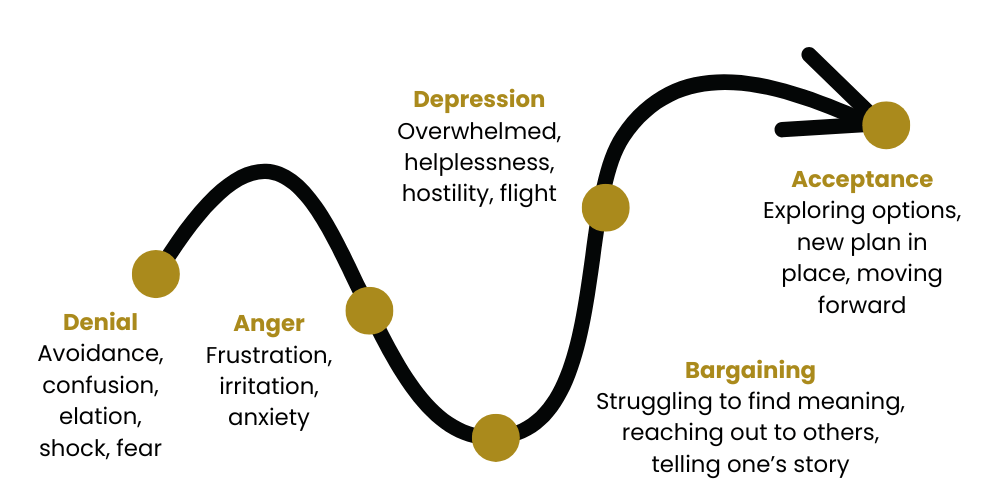
The idea of “stages” is one of the most widely recognised ways people make sense of grief – but it’s often misunderstood.
Our Stages of Grief page explains where the model came from, what the stages really mean, and how they can help (without implying grief follows a neat, linear path).
Explore the page to learn:
📘 What the Five Stages really are (and aren’t)
🧭 Why grief doesn’t follow a straight line
🌊 How emotions can come in waves
🧩 How different grief models may help you