
Grief looks different for every child. Some might talk, others might draw, play, or stay quiet. The most important thing is to help them feel safe, seen, and listened to. You don’t need perfect words – just your calm presence and honesty. 💛
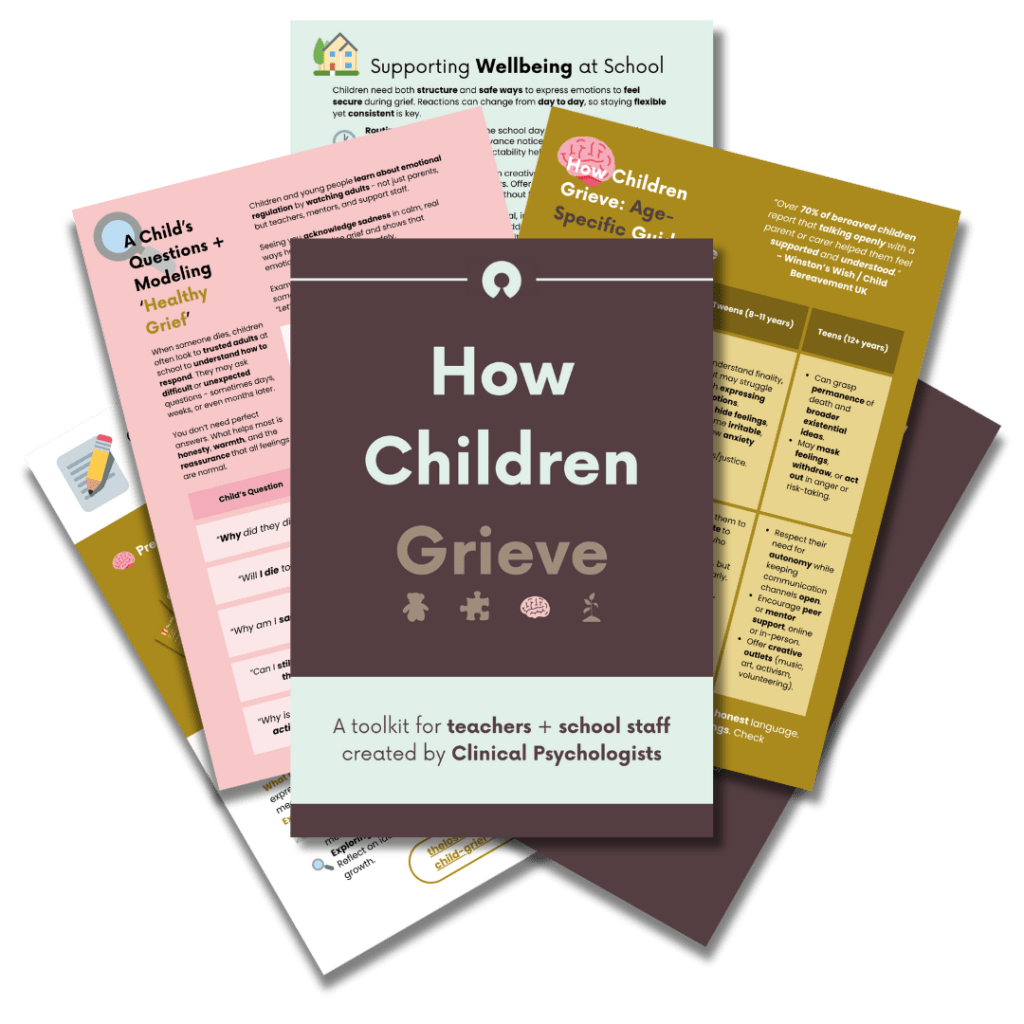
Our free PDF guides for parents, carers, and teachers offer simple, practical ways to support children of all ages as they navigate loss.
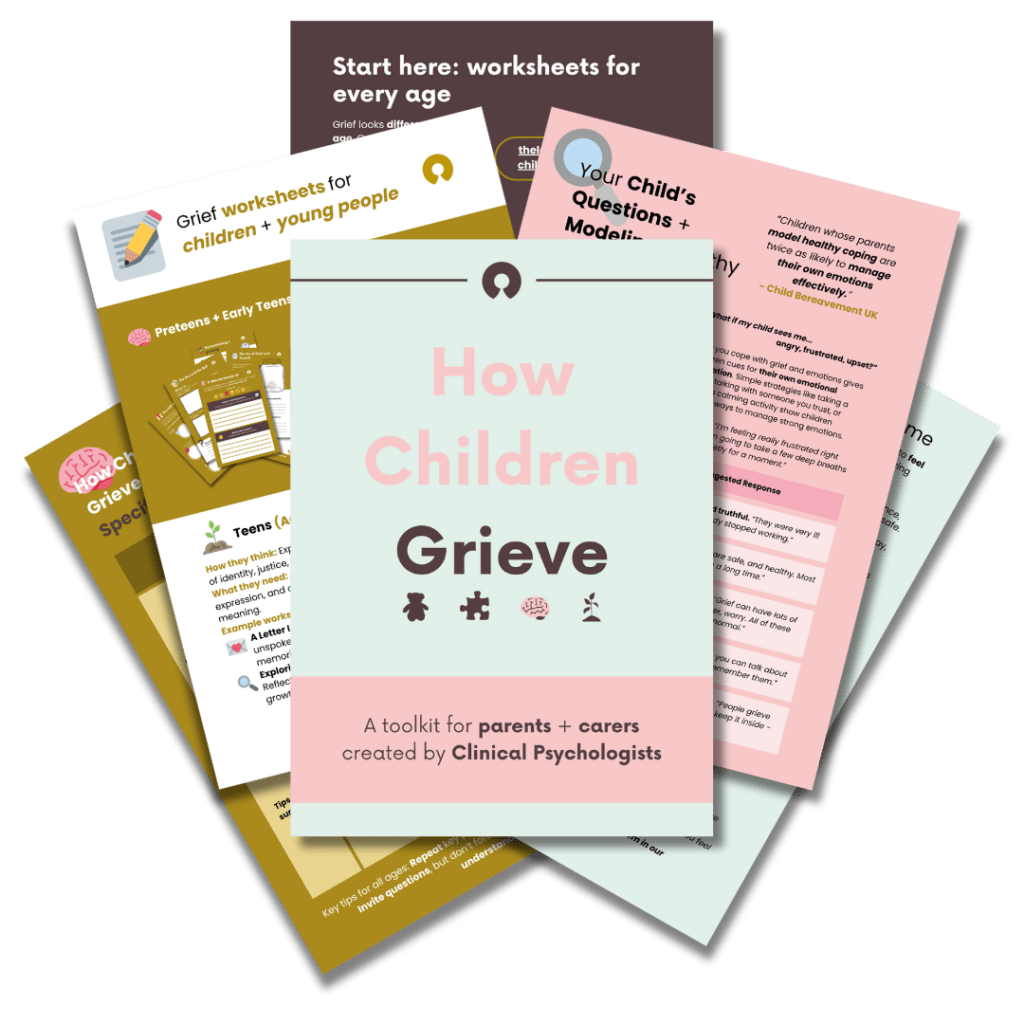
📘 Inside the Guides:
🧠 Understanding how children experience grief
💬 What to say (and what to avoid)
🏠 Creating safety and routine after loss
🎨 Encouraging healthy expression through play and creativity
🧭 Supporting yourself while helping your child
Together, these resources build confidence and connection – so no one has to face grief alone.
The loss of a loved one can profoundly affect a young person’s mental health, often leading to various emotional struggles. Recognising these potential effects is essential for supporting bereaved children and teenagers following the death of their loved one.
Emotional and Psychological Effects
- Anxiety and Fear: Following a loss, children may develop fears of losing others or becoming ill themselves. This can manifest as clinginess, nightmares, or reluctance to leave loved ones.
- Depression: Some children and teenagers may experience prolonged sadness or emotional numbness, and feel disconnected from peers. Changes in appetite, sleep patterns, and energy levels are common.
- Anger and Guilt: Young people may struggle with feelings of anger, especially if the death was sudden. Guilt is also common, particularly if the child believes they could have done something to prevent the loss.
Behavioural Changes
- Withdrawal: A grieving young person may pull away from friends and family, becoming isolated as they process their emotions.
- Aggression or Acting Out: Children who cannot articulate their feelings may display anger or act out in class, at home, or socially.
- Regressive Behaviours: Younger children may regress to earlier developmental stages, such as bed-wetting or thumb-sucking.
📝 Explore our child grief worksheets
-
 Grief Worksheets (Ages 14 – 18)£10.00
 -
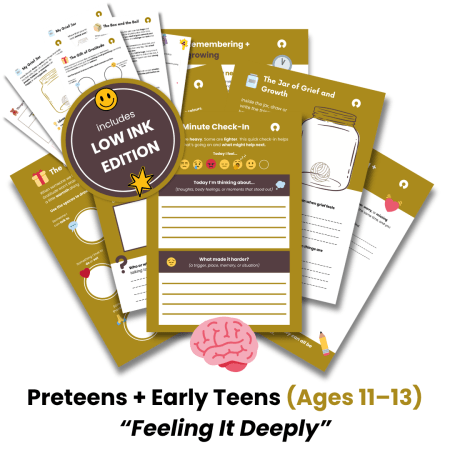 Grief Worksheets (Ages 11 – 13)£10.00
 -
 Grief Worksheets (Ages 7 – 10)£10.00
 -
 Grief Worksheets (Ages 3 – 6)£10.00
When to Seek Professional Help
While some emotional distress is normal, prolonged or severe symptoms may indicate the need for professional intervention:
- Unresolved Grief: If a child is struggling to accept the loss or continues to avoid discussing it after many months, it may be helpful to seek the support of a bereavement counsellor.
- Mental Health Disorders: Grief can trigger underlying mental health conditions or lead to issues such as depression, anxiety disorders, or even post-traumatic stress disorder (PTSD).
Supporting Mental Health During Grief
- Open Conversations: Encourage young people to talk about their feelings in a safe, non-judgmental environment. Normalise seeking help when they feel overwhelmed.
- Encourage Creative Expression: Journaling, art, and music can provide healthy outlets for children to express emotions they may find difficult to verbalise.
- Access to Counselling: Early intervention is key. Professional bereavement counselling through organisations like Cruse Bereavement Support can provide tailored mental health support.