

Grief support groups can be life-changing spaces – both for the people who attend and for those who facilitate them. If you’re stepping into the role of a facilitator for the first time, you may feel a mix of passion, responsibility, and nerves.
This guide will walk you through the essential steps to running a grief support group, whether in-person or online, so you can create a safe, supportive, and meaningful environment.
📢 Our Online Training is Now Live
Explore all of our courses, including How to Lead Support Groups, on our grief and mental health training page.
-
Product on sale
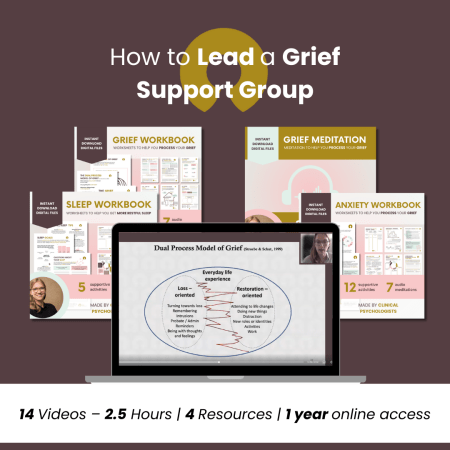 Original price was: $142.00.$101.00Current price is: $101.00.
-
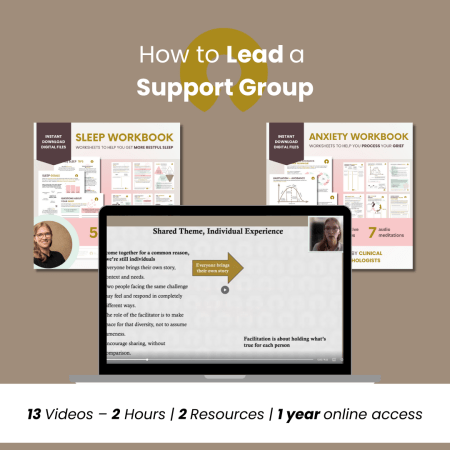 $81.00
Step 1: Understand the Purpose of a Grief Support Group


^ Example pages from our free grief group curriculum pdf for therapists and mental health professionals.
A grief support group is not therapy — it’s a peer-based, compassionate space where people can share their experiences, learn from others, and feel less alone in their loss.
Your role as facilitator is to:
- Provide structure and safety.
- Encourage participation while respecting silence.
- Keep the group focused on support, not advice-giving or debate.
Step 2: Define the Group’s Structure
Before your first meeting, decide:
- Format – open discussion, themed topics, or a mix.
- Duration – typically 60–90 minutes works well.
- Frequency – weekly, bi-weekly, or monthly.
- Type – open (anyone can join) or closed (same members for a set time).
A clear structure sets expectations and helps participants feel secure.
Grief worksheets
Explore the activities from our Grief Journey Workbook that focus on the Five Stages of Grief model, as well as four other grief models…
⚖️ The Dual Process Model Grief Worksheet – balancing grief with everyday life.
🫙 The Jar Model Grief Worksheet – showing how grief stays the same, but life grows around it.
🛤️ The Tasks of Mourning Grief Worksheet – guiding steps for processing loss.
🔗 Attachment Theory Grief Worksheet – exploring how our bonds shape grief.
🌊 The Kübler-Ross Five Stages of Grief Worksheet – outlining denial, anger, bargaining, depression, and acceptance as common responses to loss.

Step 3: Choose a Safe, Accessible Setting
- In-person: Select a private, comfortable space with minimal distractions (e.g., community room, library meeting space, counselling centre).
- Online: Use a reliable platform (Zoom, Teams) and establish privacy guidelines.
- Ensure accessibility for people with mobility, hearing, or vision needs.
Step 4: Prepare Ground Rules
Ground rules create the foundation for trust. Consider including:
- Confidentiality: “What’s shared in the group stays in the group.”
- Respect: No interrupting, judging, or giving unsolicited advice.
- Presence: Turn off phones, avoid side conversations.
- Choice: It’s okay to pass on sharing.
You can share a written version at the first session or revisit them regularly.
At The Loss Foundation, we recognise that grief is deeply personal and varies for everyone. Rather than a fixed path through set stages, we see it as a fluid process – waves of emotion that rise and fall over time, shaped by each individual’s unique experience and connection to their loss.
Step 5: Plan the First Meeting
The first meeting sets the tone.
- Welcome members warmly.
- Introduce yourself and explain your role.
- Review the purpose and ground rules.
- Invite brief introductions (share name, relationship to person lost, what brought them to the group).
- Keep the pace gentle – grief can make even small talk feel heavy.
Step 6: Facilitate, Don’t Dominate
Your role is to guide the conversation, not lead it like a lecture.
- Use open-ended questions: “What’s been on your mind since our last meeting?”
- Gently encourage quieter members to speak if they wish.
- Manage dominant voices respectfully.
- Validate feelings rather than offering solutions.
A Resource for Grief Support Workers
This workbook provides structured activities and practical tools to help individuals navigate loss, offering a blend of reflection, coping strategies, and therapeutic exercises.
📖 73 pages, 20 supportive activities & 8 audio meditations
🧠 Created by our Clinical Psychologists
✍️ A blend of reflection, practical exercises & coping strategies
-
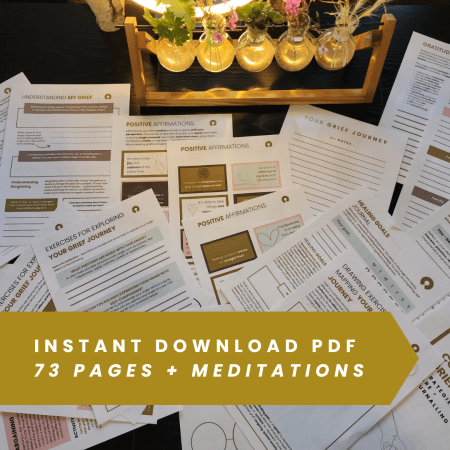 Your Grief Journey Workbook$21.00
“Supporting someone to navigate the complexities of grief can feel challenging. These worksheets aim to shed light on the grieving process and equip a person with tools to process loss, while looking after themselves in grief.“
Dr Erin Hope Thompson MBE – Founder and Director of The Loss Foundation
Step 7: Handle Challenges with Care
You may face:
- Silence – Allow it; sometimes, it’s when the deepest processing happens.
- Strong emotions – Acknowledge feelings and offer brief pauses.
- Conflict – Remind members of the group’s purpose and rules.
- Overwhelm – Check in privately with members who seem distressed.
Online Grief Counselling Courses
Formulating Grief – Psychological Models
Price: £79.99 Sale price: £59.99
6 Videos – 2 Hours | 4 Resources | One year online access
Learn how to use a range of psychological models in working with bereavement and supporting grief.
Chapter 1: Introduction to webinar and grief
Chapter 2: Anticipatory Grief
Chapter 3: Psychological models
Chapter 4: Case studies
Chapter 5: Continuing the Bond
Chapter 6: What support is recommended?
+ Workshop Resources
Compassion Focused Therapy (CFT) in Grief Work
Price: £104.99 Sale price: £74.99
9 Videos – 2.5 Hours | 3 Resources | One year online access
Learn about embracing CFT in supporting people who are grieving, covering: theory, exercises and what the evidence tells us is helpful in supporting grief with compassion.
Chapter 1: Introduction to webinar
Chapter 2: Introducing Compassion Focused Therapy
Chapter 3: Why use CFT in grief?
Chapter 4: Self-compassion model and formulation
Chapter 5: Compassionate Reasoning / Thinking
Chapter 6: Compassionate Attention
Chapter 7: Compassionate Imagery
Chapter 8: Compassionate Behaviour
Chapter 9: When to use compassion in grief work?
+ Workshop Resources
Step 8: Close Thoughtfully
End each session in a way that leaves members feeling grounded:
- Summarise key themes.
- Offer a moment of silence, breathing exercise, or uplifting thought.
- Share next meeting details.
- Thank participants for their trust.
Step 9: Care for Yourself as a Facilitator
Facilitating a grief group can be emotionally demanding.
- Debrief with a peer or supervisor.
- Keep boundaries between group time and personal life.
- Make space for your own self-care (walks, journaling, creative outlets).
Step 10: Keep Learning
Grief and facilitation are skills you can always deepen. Consider:
- Grief support group facilitator training.
- Reading on grief models like the Dual Process Model or Tonkin’s Model.
- Attending other groups to learn different styles.
Final Thoughts
Running a grief support group is both a privilege and a responsibility. With clear structure, compassionate facilitation, and ongoing self-reflection, you can create a space where people feel heard, understood, and supported as they navigate one of life’s hardest journeys.
The Loss Foundation’s Bereavement Training
The Loss Foundation’s Bereavement Training equips professionals with the tools to support grieving individuals effectively. Delivered by Clinical Psychologists, the training is tailored for nonprofits, businesses, healthcare providers, and nurses who encounter bereavement in their roles.

“She was so passionate about her work… which made learning from her interesting.” – Training Delegate
Dr. Erin Hope Thompson MBE, Founder and Director of The Loss Foundation, leads the content creation and delivery of our bereavement training.
As a Clinical Psychologist, she has extensive experience across the NHS, private, and third sectors. In 2022, Dr. Thompson was awarded an MBE for her services to bereaved families.
Contact us about our bereavement training

🧠 Understand the ‘Stages’ of Grief
Many people first encounter grief through the idea of “stages,” but the model is often simplified or misunderstood.
Our Stages of Grief page looks at where the framework began, what each stage represents, and how it can support understanding – without suggesting that grief unfolds in a tidy order.
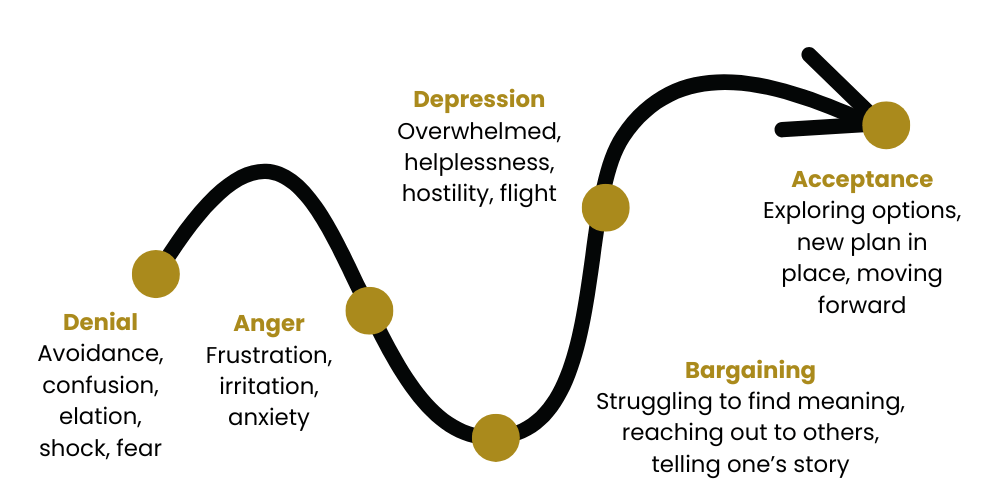
Explore the page to learn:
📘 A clear explanation of what the Five Stages are (and what they’re not)
🧭 Why grief rarely moves in a straight line
🌊 How feelings can rise and fall in waves
🧩 Other grief models that may resonate more with your experience
Photo by youssef naddam on Unsplash