
Understanding Different Models of Grief
Grief is deeply personal, and there’s no single “right” way to experience it. Over the years, researchers and practitioners have developed a variety of models to help us understand the many ways people cope with loss. Each model offers a different lens – some focus on the emotions we feel, others on the ways we maintain connection, and some on how we adapt to life after loss.
This page provides a clear overview of these grief models, what they can offer, and gentle reminders about what to keep in mind as you explore them. Use this as a guide, not a checklist – everyone’s journey is unique, and it’s okay to take what resonates and leave what doesn’t.


| Grief Model | Overview | What Can Help | What to Keep in Mind |
| 🌅 Five Stages of Grief (Kübler-Ross, 1969) | Introduces five emotional responses often experienced after a loss – Denial, Anger, Bargaining, Depression, and Acceptance. | Naming emotions can bring clarity and help you feel less alone in your experience. | The stages weren’t designed as a step-by-step process, and many people don’t experience them in sequence – or at all. |
| 💫 Dual Process Model of Grief (Stroebe & Schut, 1999) | Explains that people naturally move between focusing on their loss and focusing on everyday life. | Reminds you it’s okay to have good days and hard days – both are part of healing. | You might feel pressure to “balance” perfectly, but there’s no set rhythm. |
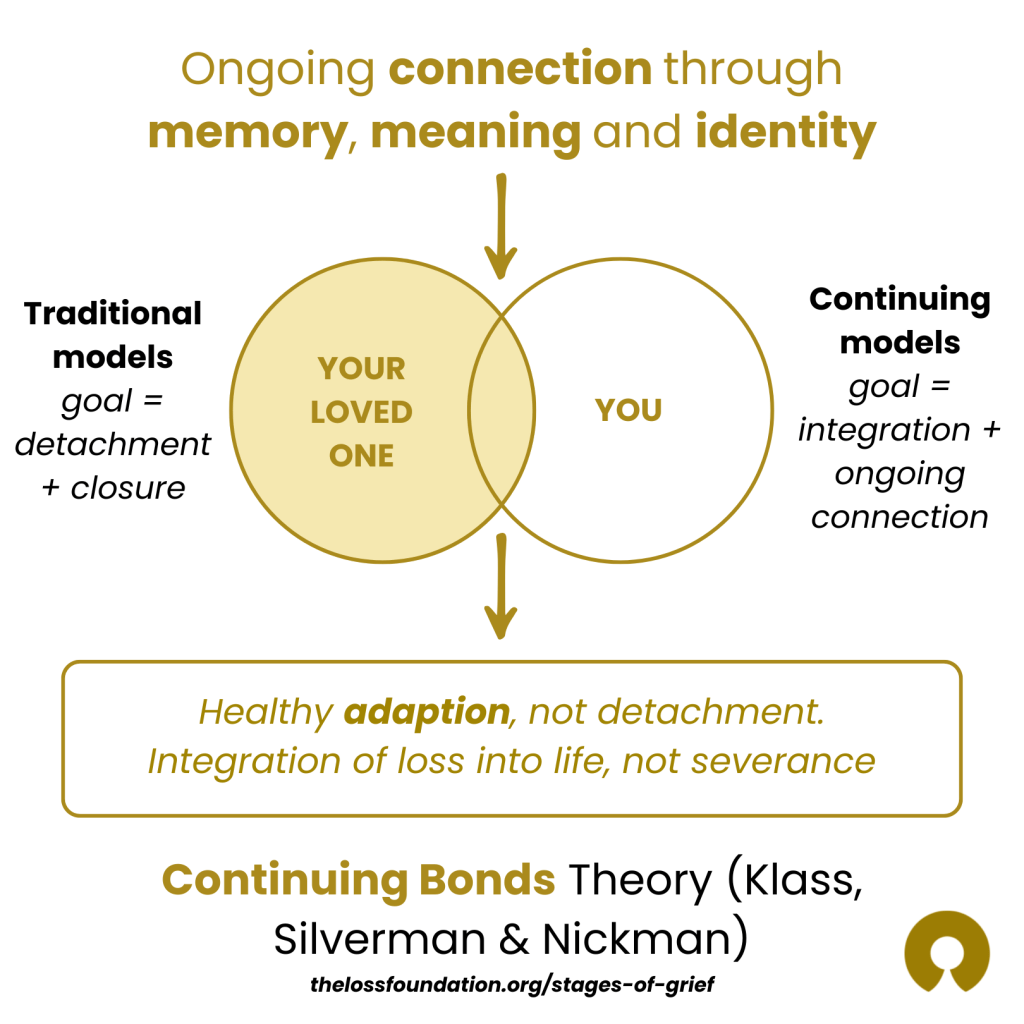
| 🌉 Continuing Bonds Theory (Klass, Silverman & Nickman, 1996) | Suggests we can stay connected to the person who has died in new ways. | Helps you keep memories, love, and traditions alive. | Others may not always understand this, but maintaining connection is healthy. |
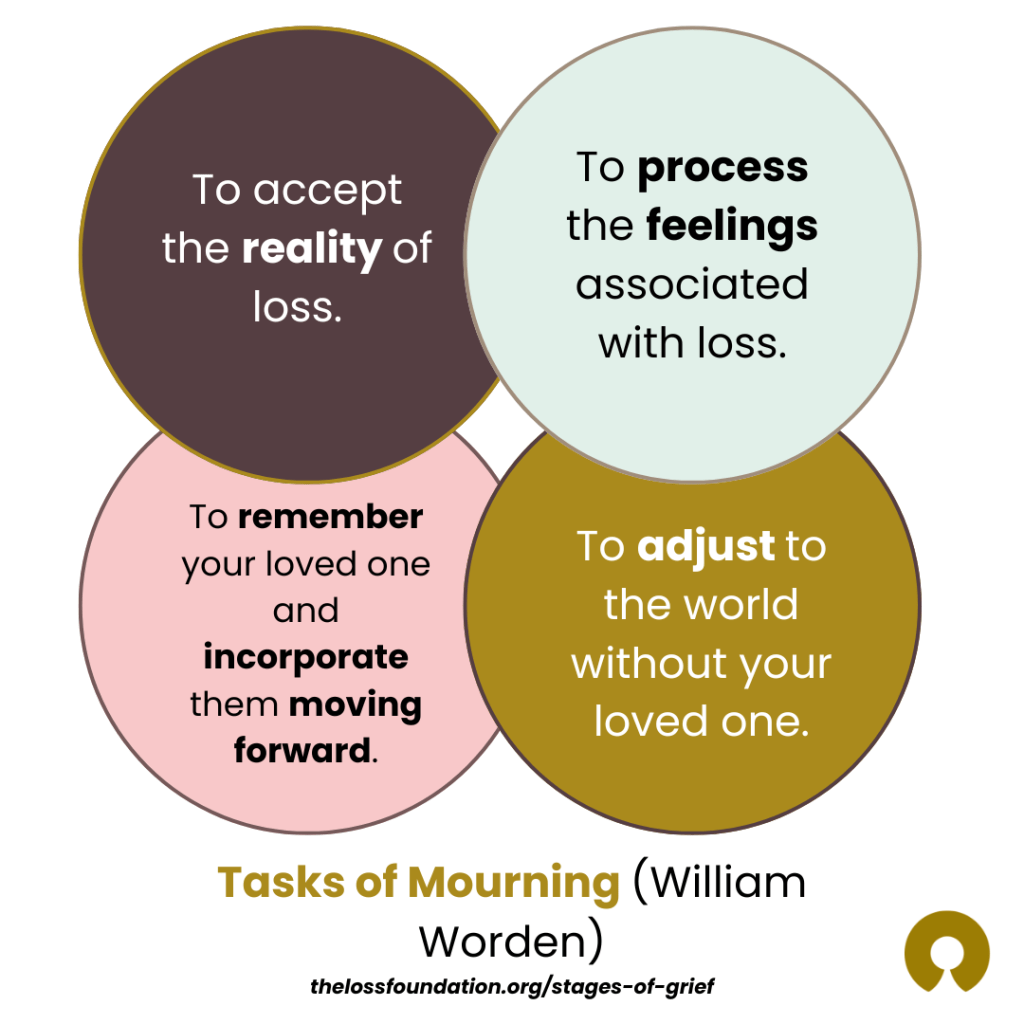
| 🪞 Tasks of Mourning (William Worden, 1982) | Describes grief as a series of gentle tasks, like accepting the loss and finding ways to adapt. | Gives a sense of direction without rules – small steps can help you adjust. | Everyone moves through these at their own pace; it’s not a checklist. |
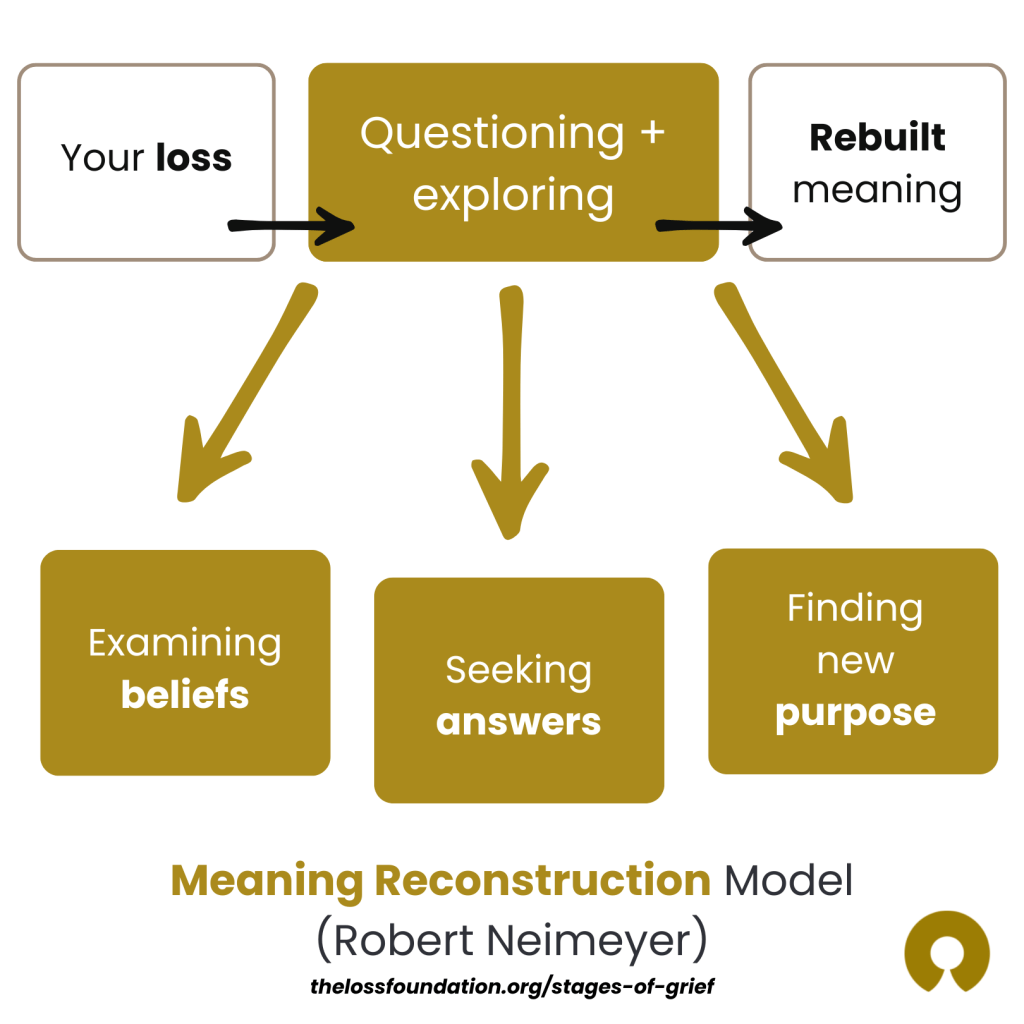
| 🔍 Meaning Reconstruction in Grief (Neimeyer, 2001) | Focuses on how you find new meaning and purpose after loss. | Encourages reflection and personal growth as you adapt to a changed world. | Some people may not be ready to explore meaning early on – and that’s okay. |
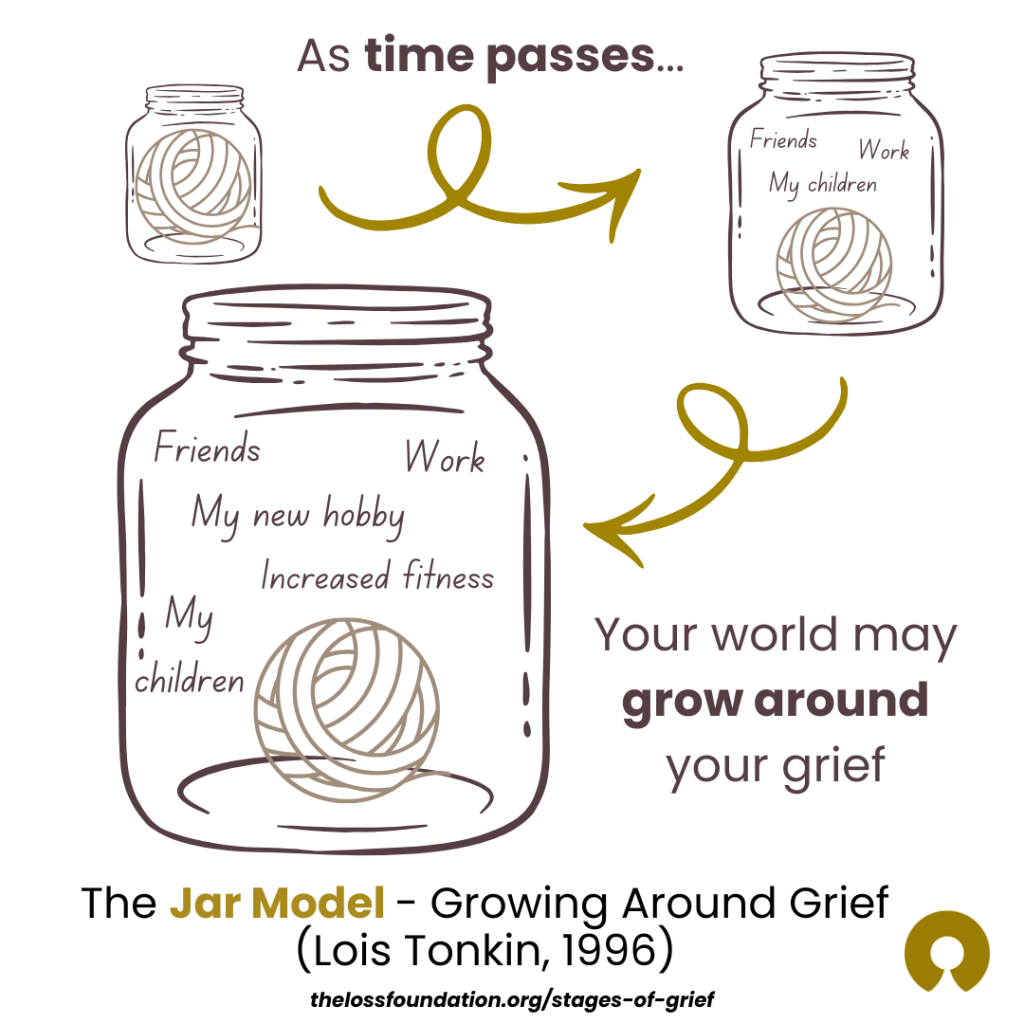
| 🫙 The Jar Model of Grief – Growing Around Grief (Lois Tonkin, 1996) | Shows that grief doesn’t shrink – instead, your life slowly grows around it. | Offers a comforting visual reminder that grief can stay but feel lighter over time. | It’s a metaphor – your experience may look or feel different. |
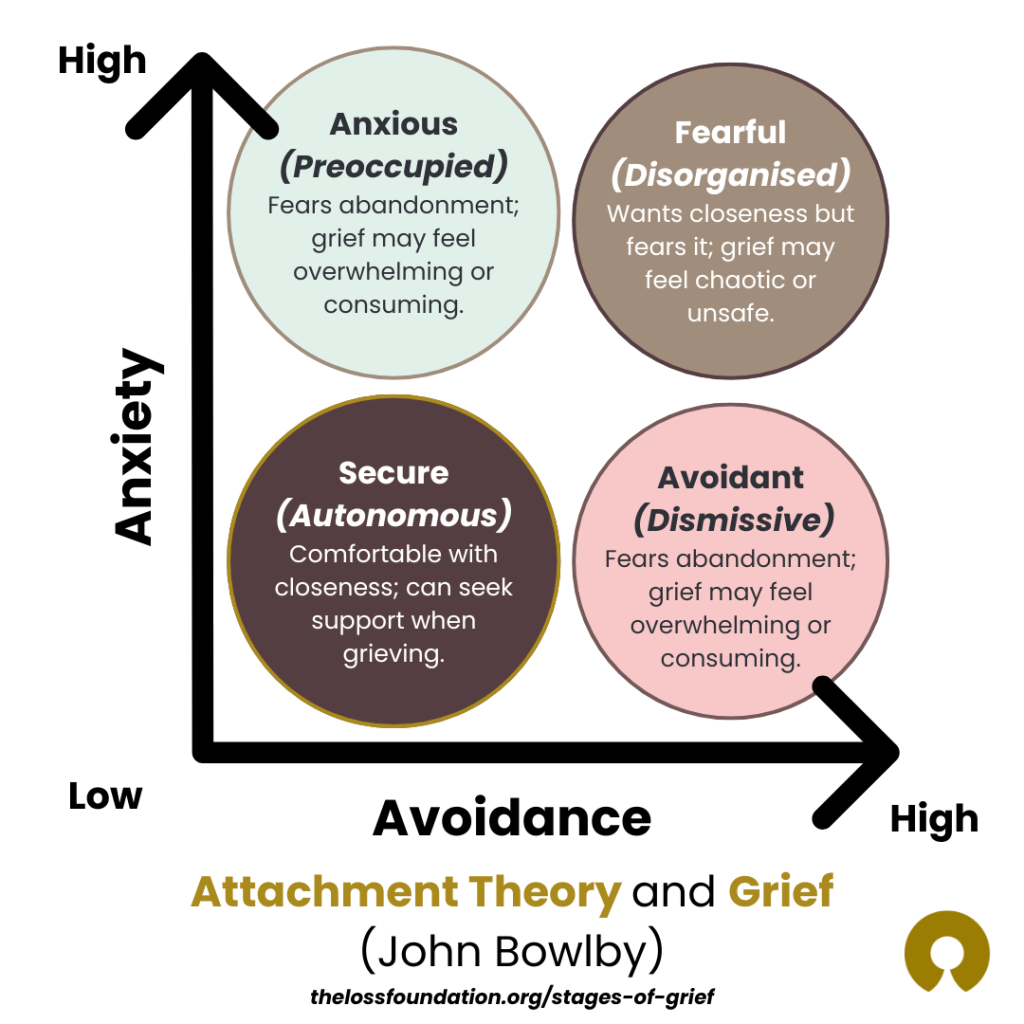
| 🤝 Attachment Theory and Grief (Bowlby 1969) | Explains that grief comes from the deep bonds of love and connection. | Helps you understand why your loss feels so painful and profound. | Sometimes focuses more on “why” we grieve than on what to do next. |
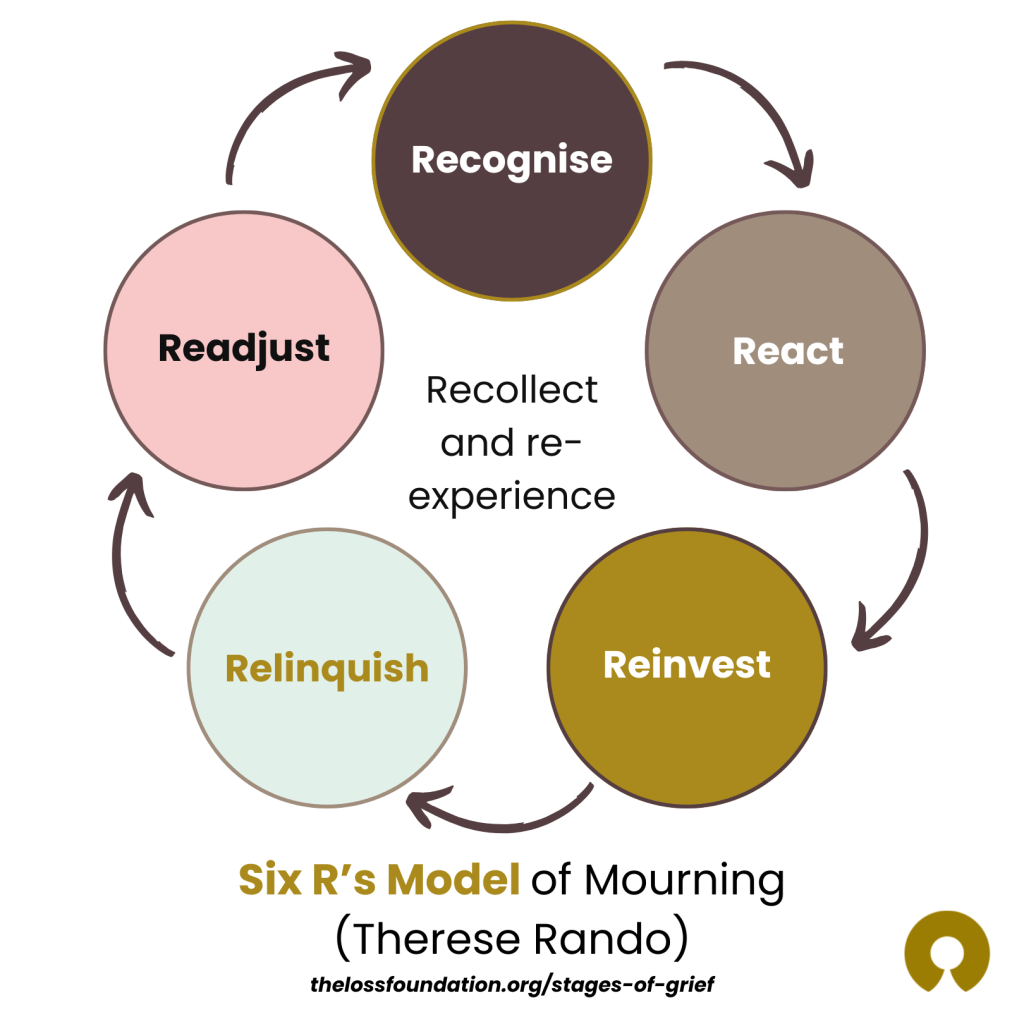
| 🌱 Six R’s Model of Mourning (Therese Rando, 1993) | Describes six processes of healing, such as recognising the loss and readjusting to life. | Can help you see healing as a journey with gentle stages of awareness and change. | It’s a guide, not a strict sequence – you might revisit some steps many times. |
| 🛤️ The Two-Track Model of Bereavement (Rubin, 1999) | Looks at both how you function day to day and your ongoing relationship with the person who has died. | Normalises having moments of sadness alongside moments of coping. | Can sound complex, but simply means that love and life can coexist. |
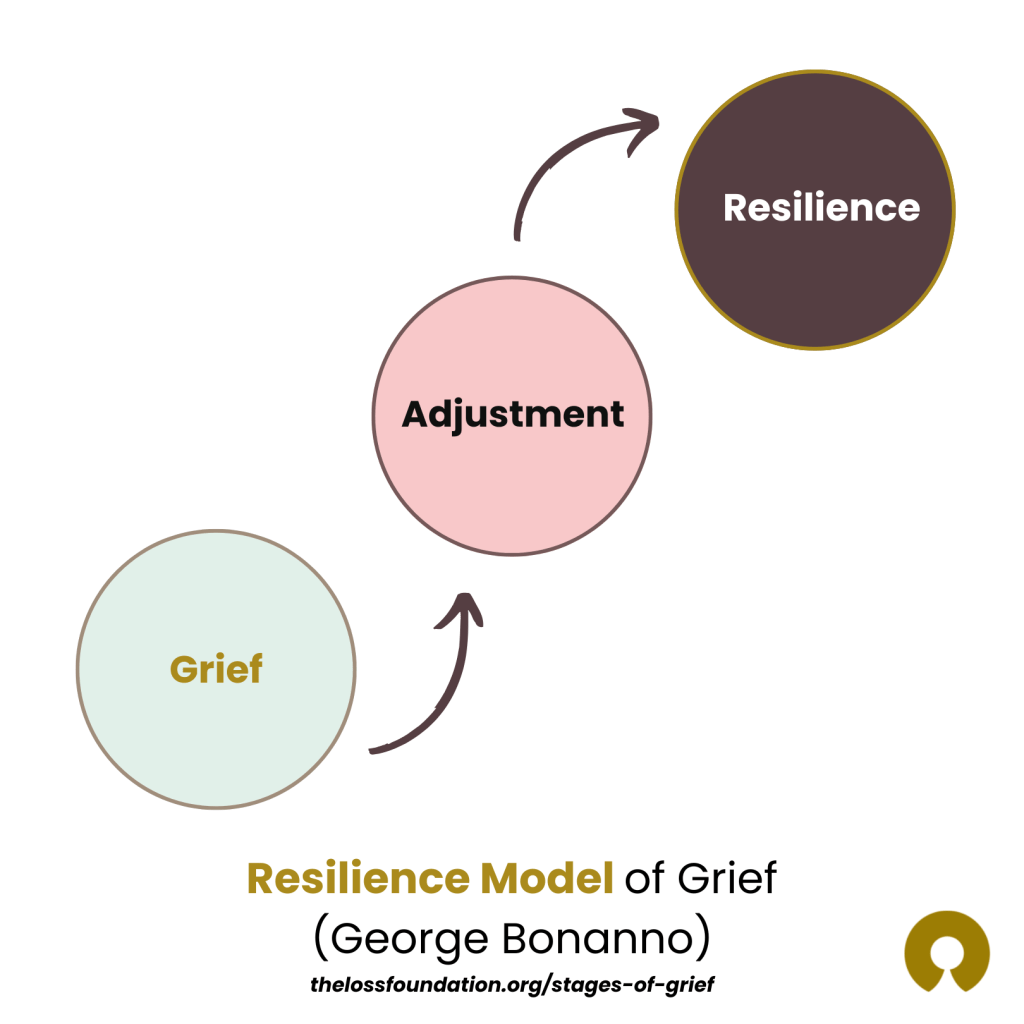
| 🦋 Resilience Model of Grief (George Bonanno, 2002) | Highlights how many people find ways to adapt, even through deep sadness. | Reminds you that strength doesn’t mean not crying – it means continuing, even when it’s hard. | Not everyone feels resilient all the time, and that’s completely normal. |
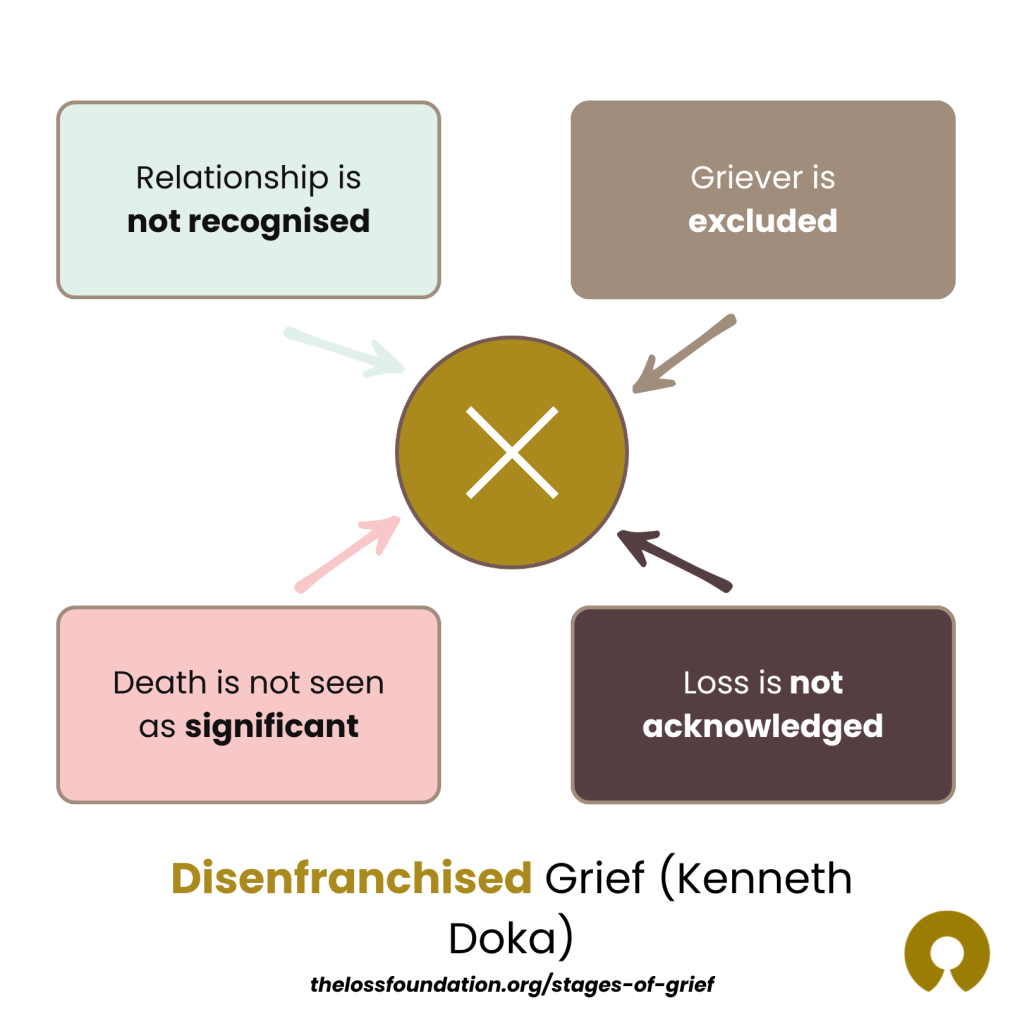
| 🕯️ Disenfranchised Grief (Kenneth Doka, 1989) | Describes grief that isn’t openly acknowledged or supported by others. | Validates your feelings if you’ve lost someone or something others don’t recognise as significant. | May require extra self-compassion and finding your own support network. |
❓ Stages of Grief FAQs
The most commonly recognised grief model is Kübler-Ross’s Five Stages of Grief: denial, anger, bargaining, depression, and acceptance. While widely known, it’s now understood as a description of common emotions rather than a strict sequence. Many professionals also use newer approaches – such as the Dual Process Model or Continuing Bonds – which reflect the non-linear nature of grief.
There’s no precise way to identify a “stage” of grief because grief isn’t linear. You may move between emotions like sadness, anger, disbelief, and acceptance in no set order. Instead of locating yourself in a stage, it can be more helpful to notice how your emotions change over time and use models as gentle guides, not fixed steps.
There is no single “best” grief theory, but widely used approaches include the Dual Process Model, Continuing Bonds, Meaning Reconstruction, and Worden’s Tasks of Mourning. Each offers a different lens – from adapting to daily life, to maintaining connection, to finding new meaning. The most helpful model is the one that fits a person’s unique experience and cultural background.
Kübler-Ross’s Five Stages of Grief has been criticised because people often misinterpret it as a linear process that everyone must follow. The model was originally based on people facing terminal illness, not bereavement. Modern research shows grief is far more individual, fluctuating, and non-sequential, which is why clinicians now use a range of more flexible grief models.
The best therapeutic approach for grief depends on the person, but commonly effective models include grief-focused CBT, meaning-centred therapy, narrative therapy, and attachment-informed approaches. Many clinicians also integrate models like the Dual Process Model or Continuing Bonds to support healthy adjustment. The most helpful therapy is one that feels safe, flexible, and tailored to individual needs.