
🦋 Resilience Model of Grief – Overview
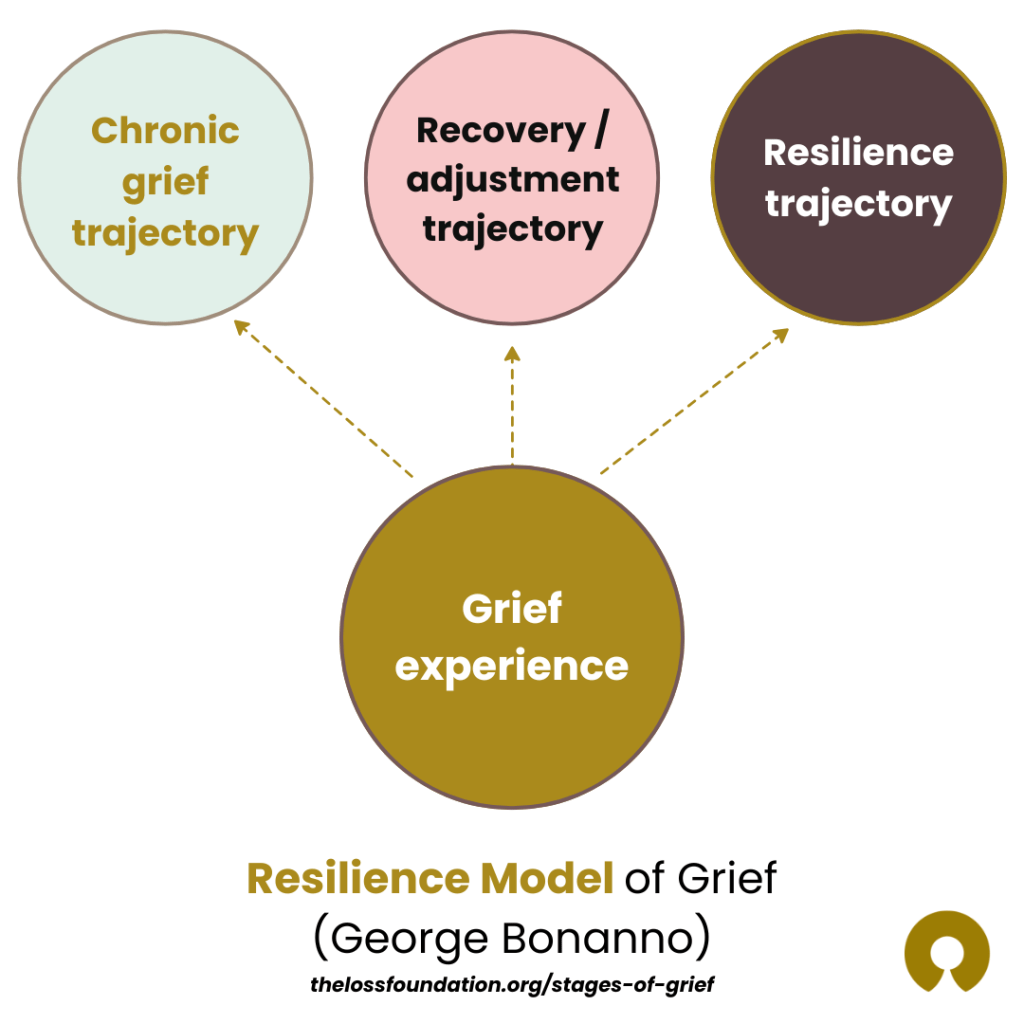
Psychologist George Bonanno introduced the Resilience Model of Grief (2004) to challenge the idea that everyone must pass through predictable “stages” of grief. In contrast to stage-based Grief models, his research showed that many people display natural resilience – the ability to adapt and find stability even after profound loss.
This model doesn’t suggest that grief is easy or that resilient people don’t feel pain. Instead, it recognises that humans have built-in coping mechanisms – support networks, humour, purpose, and flexibility – that help them recover in their own way and time.
His research showed that resilience is actually the most common outcome after loss – which means that adapting, laughing or functioning is not denial, but a normal human response.

Deepen your knowledge
Our grief models course for mental health professionals helps you support clients with confidence and compassion.
🙌 How It Helps
The Resilience Model of Grief offers hope and normalises different grieving styles. It helps you see that resilience isn’t about “bouncing back,” but about continuing to live, love, and function even with sadness present.
🤍 May Be Helpful If…
- You worry that you’re “not grieving right” because you’re coping better than expected.
- You want reassurance that it’s okay to laugh, work, or feel okay sometimes.
- You’re interested in understanding strength through grief, not in spite of it.
- You’re surprised by moments of steadiness or strength in yourself.
- You worry your grief reactions aren’t “intense enough”.
📌 Tips for Using This Model
- Notice small signs of your own strength and coping – these are resilience in action.
- Stay connected to people and routines that anchor you.
- Remember: resilience includes vulnerability; expressing pain is part of processing your loss.
📖 Further Reading
Remember: this model is simply one way of understanding grief. You are the expert in your own experience, and you never need to fit yourself into any single model.
Take what’s helpful and leave the rest.
Explore more models over on our Grief Models Hub 👉
❓Resilience Model of Grief FAQs
George Bonanno’s theory of resilience suggests that most people are naturally resilient and are able to maintain relatively stable psychological and emotional functioning after loss or trauma. Rather than moving through fixed stages, individuals may experience a range of grief responses, with many showing resilience or recovery over time.
There is no single agreed set of “four models” of resilience, but resilience is often understood through several broad approaches, including trait-based resilience (personality factors), process-based resilience (adaptation over time), outcome-based resilience (successful recovery), and ecological resilience (influence of social and environmental systems). These perspectives together show resilience as multi-dimensional rather than fixed.
George Bonanno is a clinical psychologist and researcher known for his work on grief, trauma, and resilience. He is best known for challenging traditional stage-based models of grief and for demonstrating that many people show natural resilience following loss.
The 5 pillars of resilience are commonly described as self-awareness, mindfulness, self-care, positive relationships, and purpose or meaning. These factors support an individual’s ability to adapt, cope with stress, and recover from difficult life events, including bereavement.
