
Grief looks different for every child. Some might talk, others might draw, play, or stay quiet. The most important thing is to help them feel safe, seen, and listened to. You don’t need perfect words – just your calm presence and honesty. 💛
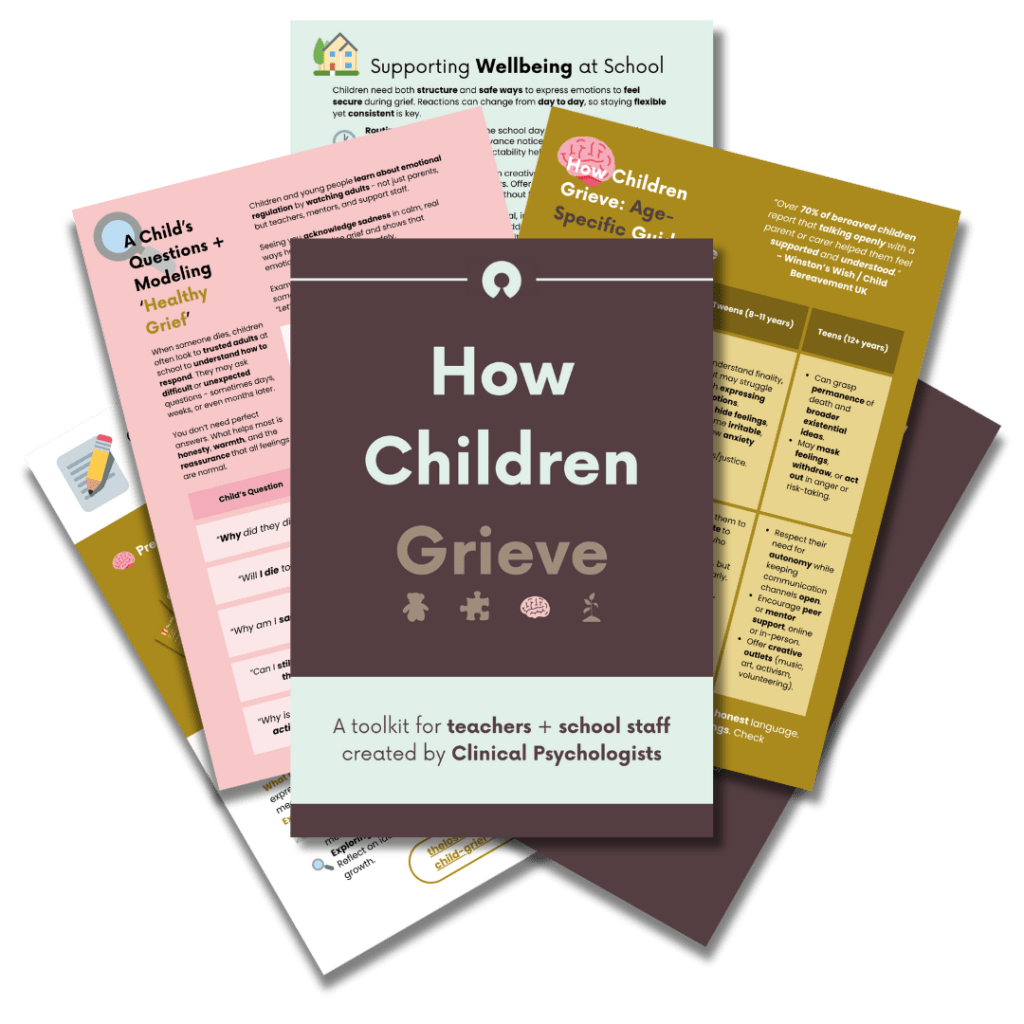
Our free PDF guides for parents, carers, and teachers offer simple, practical ways to support children of all ages as they navigate loss.
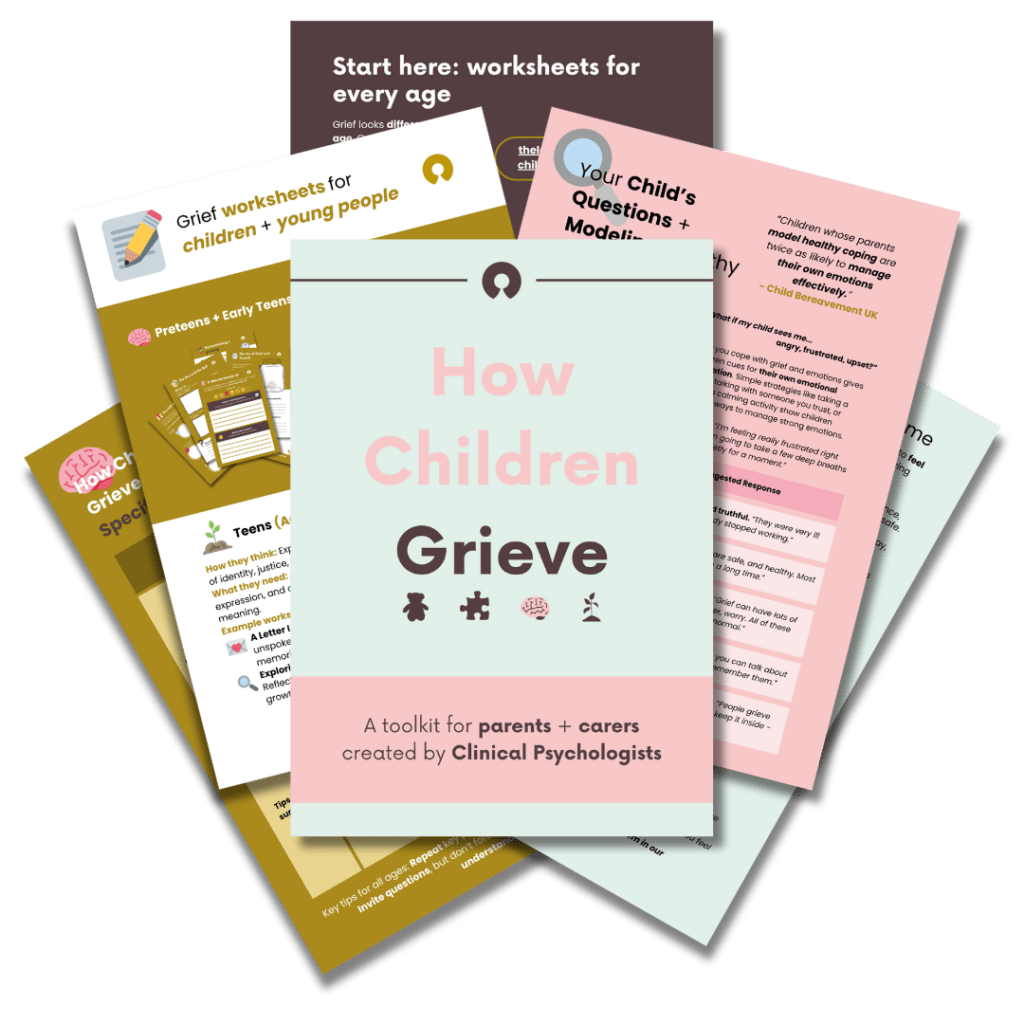
📘 Inside the Guides:
🧠 Understanding how children experience grief
💬 What to say (and what to avoid)
🏠 Creating safety and routine after loss
🎨 Encouraging healthy expression through play and creativity
🧭 Supporting yourself while helping your child
Together, these resources build confidence and connection – so no one has to face grief alone.
Understanding Grief in Children and Young People
Grief affects children and young people in different ways depending on their age, developmental stage, and personality. It’s important to acknowledge that there’s no ‘right’ way to grieve, and each child’s experience will be unique. Here are some common reactions and ways to support grieving children and teenagers:
1. Common Reactions to Grief by Age Group
Young Children (Aged 8-12)
Young children may struggle to understand the permanence of death. They might ask questions repeatedly and need simple, clear explanations. They may also show signs of clinginess, anxiety, or changes in behaviour, such as irritability or trouble sleeping.
Tip for Support: Encourage open communication and reassure them it’s okay to feel sad, confused, or angry. Offer lots of comfort, and try to maintain routines as much as possible to provide a sense of security.
Teenagers (Aged 13-18)
Teenagers may experience more complex emotions and might distance themselves as a coping mechanism. They may feel guilty, angry, or even relieved depending on their relationship with the deceased, which can lead to feelings of confusion and isolation.
Tip for Support: Give teenagers space when needed but also let them know you are available to talk. Encourage them to express their feelings, whether through talking, journaling, or creative activities.
2. Signs a Child or Teenager May Need Extra Support
While grief is a normal response to loss, sometimes children and young people need additional help. Look out for the following signs:
– Withdrawal from friends and activities.
– Ongoing trouble sleeping or frequent nightmares.
– A decline in school performance.
– Persistent sadness or irritability lasting several months.
If these signs persist, seeking professional help from a bereavement counsellor can make a huge difference.
📝 Explore our child grief worksheets
-
 Grief Worksheets (Ages 14 – 18)£10.00
 -
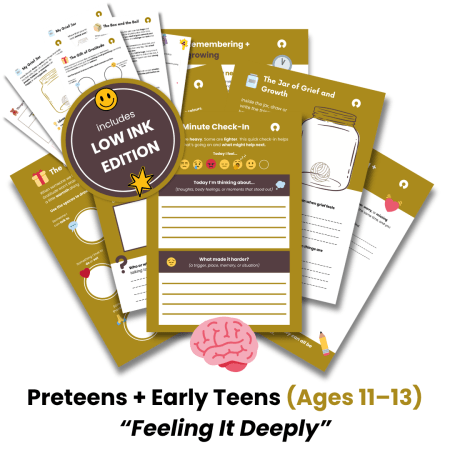 Grief Worksheets (Ages 11 – 13)£10.00
 -
 Grief Worksheets (Ages 7 – 10)£10.00
 -
 Grief Worksheets (Ages 3 – 6)£10.00
Practical Tips for Supporting a Grieving Child
Supporting a grieving child or young person can feel overwhelming, but there are small steps you can take to help them process their emotions:
1. Encourage Open Conversations
Let your child know it’s okay to talk about the person who died and ask questions about death. Use simple, age-appropriate language, and answer their questions honestly. Avoid using euphemisms like “passed away,” which can be confusing for younger children.
2. Create a Safe Space for Emotions
Children may have a wide range of emotions, from sadness and anger to relief or guilt. It’s essential to let them know that all feelings are valid. Acknowledge their emotions and reassure them that it’s okay to cry, laugh, or even feel numb.
3. Maintain Routines
Routines provide a sense of security and normality for grieving children. While flexibility is important, keeping regular activities like school, mealtimes, and bedtime routines can help children feel more grounded.
4. Memorialise the Person Who Died
Encouraging children to keep memories alive can help with their grieving process. This could include creating a memory box, looking at photos together, or lighting a candle on special anniversaries.
UK Bereavement Support Services
While supporting your child at home is important, professional bereavement services can offer additional guidance and support. Below are some UK-based organisations providing support for bereaved children, young people, and their families:
Child Bereavement UK
Child Bereavement UK offers specialised support for grieving children and young people. They provide a range of resources, including counselling, group sessions, and educational tools for families.
Visit: www.childbereavementuk.org
Winston’s Wish
Winston’s Wish supports children and teenagers after the death of a parent or sibling. They offer a free helpline, online support, and group therapy sessions.
Visit: Winston’s Wish
Cruse Bereavement Support
Cruse offers counselling and emotional support for bereaved people of all ages. Their services include one-on-one support and local bereavement groups across the UK.
Visit: Cruse Bereavement Support