

What Are the 3 C’s That Concern Children When They Are Losing a Loved One?
When someone close dies, children often have questions they can’t always put into words. Beneath the sadness and confusion, three deep worries usually appear – known as the 3 C’s of child grief: Cause, Catch, and Care.
These questions help us understand what children are really asking for when they seek comfort and clarity.

1. Cause – “Did I cause it?”
Many children, especially those under 10, believe their thoughts or behaviour can cause events. After a death, they might secretly wonder if something they did – being cross, saying something mean, or wishing someone would “go away” – made it happen.
How to help:
- Gently reassure them that nothing they said, did, or thought caused the death.
- Use clear language: “It’s not anyone’s fault. The illness made Grandma’s body stop working.”
- Encourage questions, even repeated ones – repetition helps replace guilt with truth.
When children understand they didn’t cause the loss, shame and fear begin to lift.
2. Catch – “Can I catch it?”
Younger children often think death or illness is contagious, especially if the loved one died after being sick. This can lead to anxiety about becoming ill themselves or losing other family members.
How to help:
- Explain clearly: “You can’t catch death. Grandma’s illness was something that only happened to her body.”
- Offer reassurance about health and safety routines.
- Keep regular doctor or school routines to show life continues normally.
Removing this fear gives children back a sense of physical and emotional safety.
Free PDF guides to support a grieving child
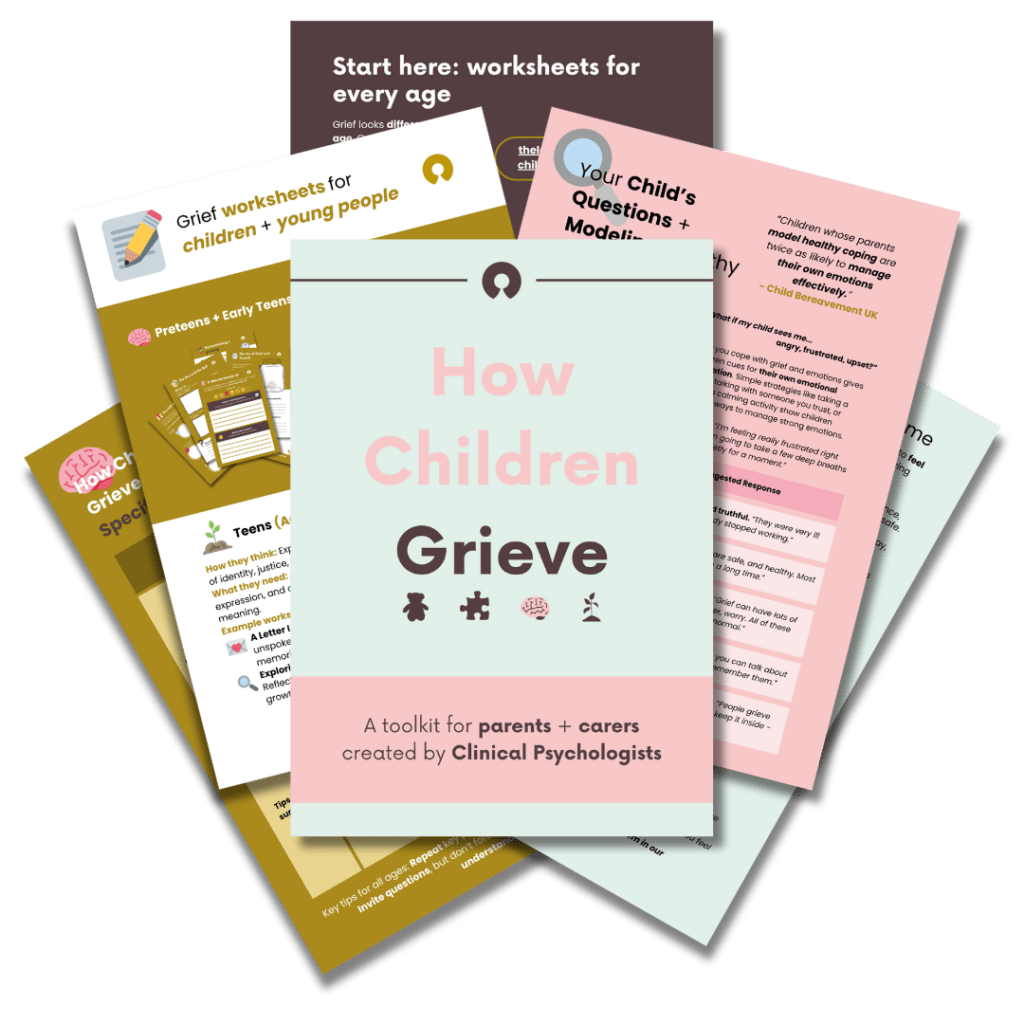
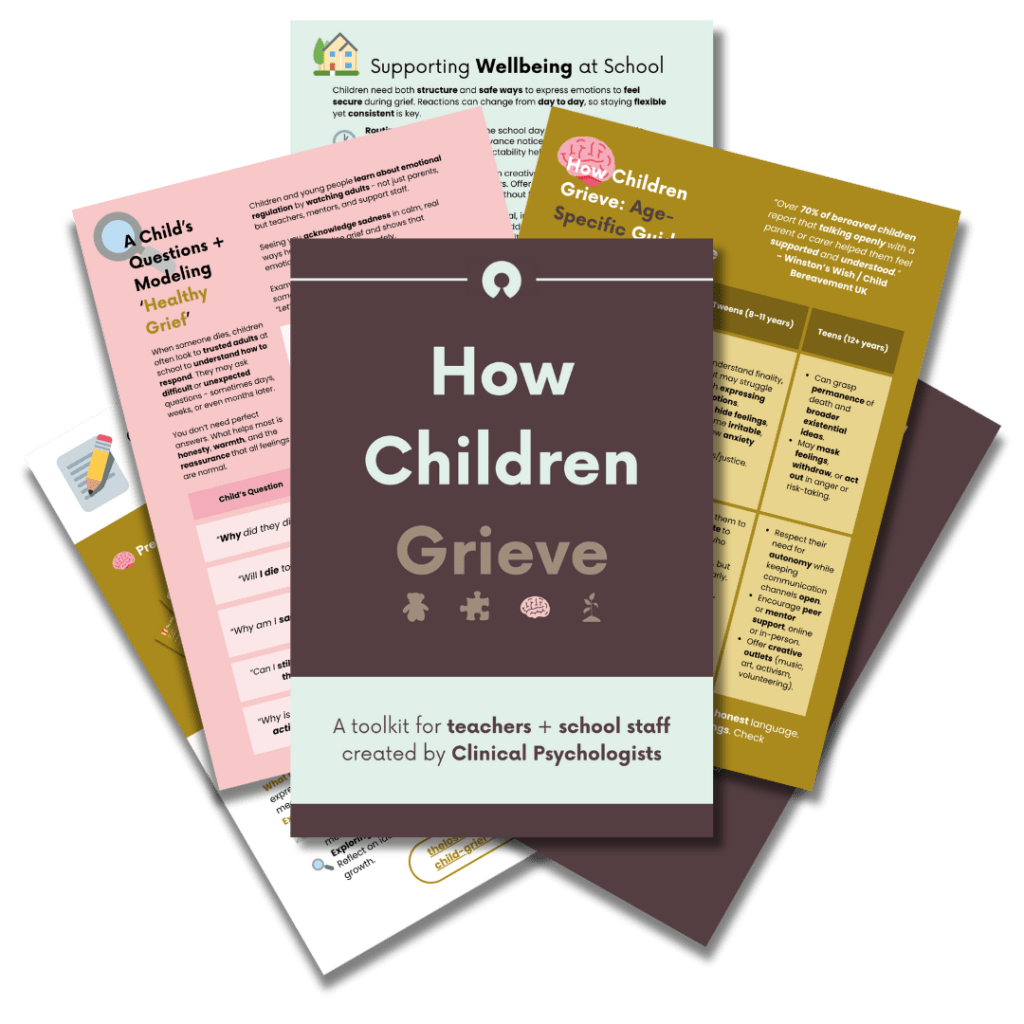
Our free PDF guides for parents, carers, and teachers offer simple, practical ways to support children through loss.
📘 Inside:
🧠 How children experience grief
💬 What to say (and what to avoid)
🏠 Creating safety and routine
🎨 Encouraging expression through play
🧭 Supporting yourself too
These resources build confidence and connection — so no one faces grief alone.
3. Care – “Who will care for me?”
After a major loss, especially if a parent or grandparent has died, children naturally wonder who will look after them. Even when the answer seems obvious, they need to hear it said out loud.
How to help:
- Offer specific reassurance: “I’ll always take care of you. You’ll still live here with us.”
- Keep routines consistent so words match actions.
- If care arrangements have changed, explain what will happen step by step.
Knowing who will care for them allows a grieving child to relax and begin to trust the world again.
Why the 3 C’s matter
The 3 C’s reveal that children’s greatest fears during grief are about safety and responsibility.
Once those fears are answered honestly and kindly, emotional healing can begin. Talking openly about Cause, Catch, and Care builds a foundation of trust that helps children express feelings and remember their loved one without fear.
How to support the 3 C’s in daily life
- Use calm, truthful explanations and repeat them when needed.
- Keep routines predictable.
- Encourage expression through drawing, storytelling, or gentle conversation.
- Show affection and patience; consistency brings comfort.
These simple actions reassure children that although someone has died, their world remains safe and full of love.
Further reading
You may also be interested in:
Closing note: answering the questions beneath the questions
When a child asks, “Was it my fault?” or “Who will look after me now?” they’re really asking, “Am I still safe?”
By answering the 3 C’s with honesty and love, you show them that even in loss, they are cared for, protected, and never alone.
For creative activities and conversation prompts that help explore these feelings gently, visit our Child Grief Worksheets – a resource designed by psychologists to help children find comfort, safety, and understanding through expression and play.
-
 Grief Worksheets (Ages 14 – 18)£10.00
 -
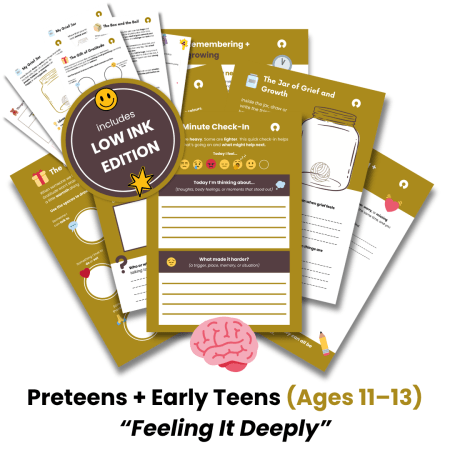 Grief Worksheets (Ages 11 – 13)£10.00
 -
 Grief Worksheets (Ages 7 – 10)£10.00
 -
 Grief Worksheets (Ages 3 – 6)£10.00
Photo by Richard Stachmann on Unsplash