

When a child loses someone they love, their world can suddenly feel uncertain and confusing. They may not understand what death means or how to make sense of the emotions that follow. Every child’s grief is unique, but there are a few core things all children need when they grieve: honesty, safety, and connection.
1. Honest, gentle communication
Children cope best when adults are truthful and calm. Use clear, simple language — “died” rather than “gone to sleep” — to help them understand what has happened. It’s okay to show emotion while staying composed. Honesty builds trust, and children who feel informed tend to feel less frightened and alone.
If your child asks difficult questions, answer at their level. It’s fine to say, “I don’t know, but we can think about it together.” What matters most is showing that questions are always welcome.
2. Safety through routine and reassurance
Grief can make the world feel unpredictable. Keeping familiar routines — school runs, mealtimes, bedtime — offers children comfort and stability.
You might say, “Things are different now, but we’ll keep doing our usual breakfast together.”
Predictability reassures children that even though life has changed, they are still safe and cared for.
3. Permission to feel every emotion
Children need to know it’s okay to feel sad, angry, confused, or even happy after someone dies. They might switch between emotions quickly, which is completely normal. Validate their feelings rather than trying to fix them:
- “It’s okay to cry.”
- “You seem angry — that makes sense.”
- “It’s fine to laugh; we can remember them with smiles too.”
Acknowledging emotions helps children learn that grief is not something to hide.
4. Connection to the person who died
Remembering and honouring a loved one helps children stay emotionally connected in healthy ways. Encourage memory-keeping activities like:
- Looking at photos or sharing stories
- Creating a scrapbook or memory box
- Lighting a candle on special days
- Writing letters or drawing pictures
These gentle rituals remind children that love continues, even when someone is gone.
5. Supportive adults who model healthy grief
Children learn by watching. When you talk about your own sadness or coping strategies — taking deep breaths, talking to a friend, writing down memories — you show them grief can be managed safely.
You might say, “I miss them too, but it helps me to talk about it.”
Your openness teaches them emotional resilience.
6. Space to express themselves
Some children need to talk; others prefer play, art, or quiet time. Offer different ways to express grief: drawing, music, role-play, or journalling. Let them lead the pace. Silence doesn’t always mean avoidance — sometimes children are processing internally and need gentle presence, not pressure.
7. Consistent love and belonging
More than anything, children need to know that love remains. Extra hugs, patient listening, and being together in everyday moments all communicate safety and care. Grief softens over time when surrounded by steady affection.
You might remind them, “You are safe, and I’m here for you.” Those words become anchors they can return to again and again.
When to seek extra support
If your child shows ongoing distress — nightmares, extreme withdrawal, physical complaints, or difficulty at school — professional bereavement support can help. Organisations such as Winston’s Wish, Grief Encounter, or your GP can connect you with child therapists trained in loss and trauma.
Further reading
You may also like:
Closing note: building safety, love, and understanding
Children don’t need perfect words or quick fixes — they need steady love, honesty, and time. When adults create spaces where feelings are accepted and memories are honoured, children learn that grief can be carried safely and gently.
For creative, age-appropriate activities to help children explore feelings and find comfort, visit our Child Grief Worksheets — a resource designed by psychologists to support healing through understanding and connection.
-
 Grief Worksheets (Ages 14 – 18)£10.00
 -
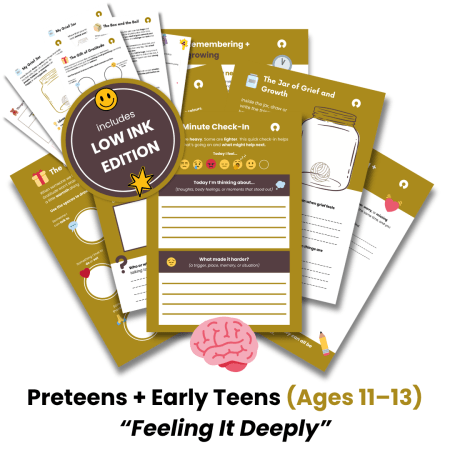 Grief Worksheets (Ages 11 – 13)£10.00
 -
 Grief Worksheets (Ages 7 – 10)£10.00
 -
 Grief Worksheets (Ages 3 – 6)£10.00
Photo by Kelly Sikkema on Unsplash