

Supporting employees through grief is essential for fostering a compassionate and resilient workplace. When a staff member experiences a loss, the way an organisation responds can significantly impact their well-being, productivity, and long-term engagement. This guide explores key aspects of workplace bereavement support, including advocacy, training, and best practices for helping employees navigate grief.

Workplace Bereavement Advocacy
Advocating for bereavement support in the workplace ensures that employees receive the compassion and flexibility they need during a difficult time.
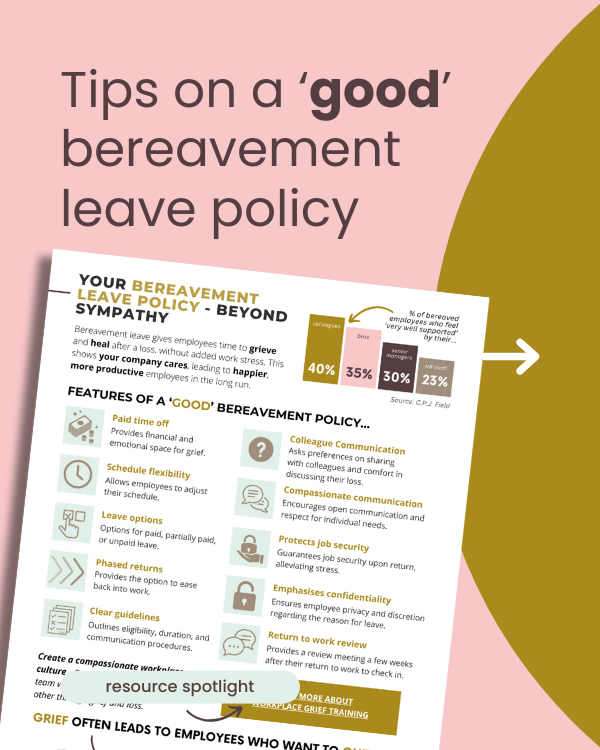
A strong advocacy approach begins with developing clear bereavement policies that outline paid leave duration, flexible working arrangements, and additional support options. Policies should be easily accessible and communicated to all employees to prevent uncertainty when a bereavement occurs.
Managers and HR professionals should receive training on how to recognise grief-related challenges and respond with empathy. Encouraging an open environment where employees feel safe discussing their needs will help reduce the stigma around grief in the workplace.
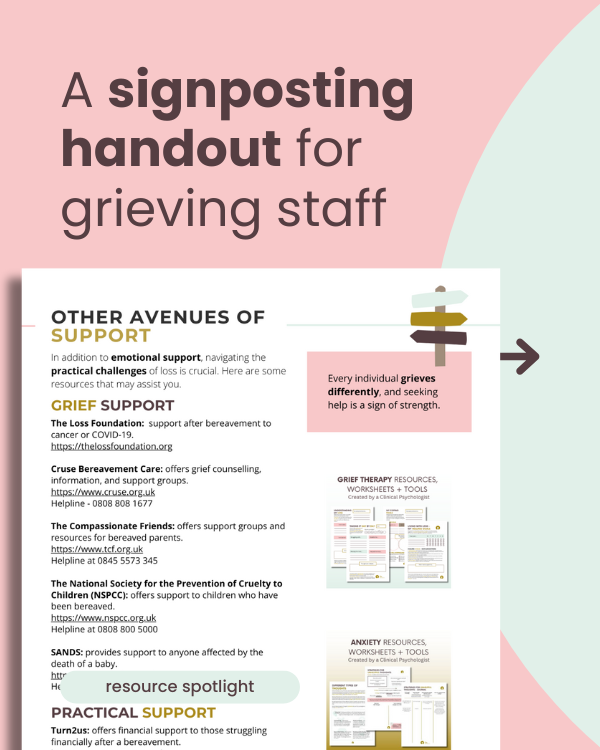
Providing tangible resources is another key component of bereavement advocacy. Organisations can offer grief counselling services, peer support groups, and access to mental health professionals. Ensuring employees have these tools available can make a meaningful difference in their ability to cope with loss while maintaining their professional responsibilities.
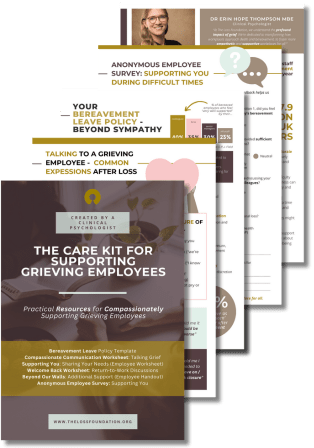
FREE DOWNLOAD
Workplace Care Kit for Grieving Employees
Leave your email and we’ll send you our PDF guide. By providing your email, you also consent to receive information about our training and grief support in the workplace.
Inside you’ll find…
Bereavement Leave Policy Template
Compassionate Communication Worksheet
Sharing Your Needs Worksheet
Return-to-Work Worksheet
Signposting Handout
Anonymous Employee Survey Handout
Benefits of Bereavement Training
Bereavement training for staff equips employees with the knowledge and skills to support grieving colleagues and manage bereavement situations professionally and empathetically.
Recognising signs of grief is a critical first step. Grief manifests in different ways – some employees may withdraw, while others may struggle with concentration, motivation, or mood changes. Understanding these signs helps colleagues and managers offer appropriate support without making assumptions.
Providing compassionate support involves more than simply expressing condolences. Staff should learn practical ways to assist grieving employees, such as checking in regularly, adjusting workloads, or allowing time for personal reflection. Maintaining professionalism while showing empathy ensures that employees feel supported without feeling pressured to discuss their grief if they are not ready.
Handling difficult conversations is another essential skill covered in training. Learning how to navigate discussions about grief with respect and care ensures that interactions are meaningful and not intrusive. Providing employees with information about external grief support services is also a vital part of bereavement training, as some individuals may require professional help beyond what the workplace can offer.
How Do You Handle Bereavement in the Workplace?
Handling bereavement in the workplace requires a structured yet compassionate approach. First, acknowledging the loss in a personal and respectful way is crucial. A simple expression of condolences can help grieving employees feel seen and supported.
Clear communication of bereavement policies should follow, ensuring the affected employee understands their leave options, available support, and any flexible work arrangements that may be provided. Once the employee returns to work, creating a welcoming reintegration plan can ease their transition. Adjusting workload expectations and allowing additional flexibility can help employees balance their grief with workplace responsibilities.
A Grief Resource for Social Workers Supporting Clients
This workbook provides structured activities and practical tools to help individuals navigate loss, offering a blend of reflection, coping strategies, and therapeutic exercises.
📖 73 pages, 20 supportive activities & 8 audio meditations
🧠 Created by our Clinical Psychologists
✍️ A blend of reflection, practical exercises & coping strategies
-
 Your Grief Journey Workbook$30.00
How to Support Employees Through Grief and Loss
Employers can play a vital role in supporting grieving employees by implementing thoughtful policies and resources. Here are some key ways to provide meaningful support:
- Implement flexible work arrangements to help employees balance emotional needs and work responsibilities – options may include reduced hours or remote work during early bereavement stages.
- Offer bereavement leave beyond the statutory minimum to show commitment to employee well-being.
- Provide structured return-to-work plans to ease employees back into the workplace without overwhelming them.
- Ensure access to mental health resources, such as:
- Counselling services
- Peer support networks
- Employee assistance programs
- Train managers to support grieving employees professionally and compassionately, preventing isolation and ensuring adequate support.
“Supporting someone to navigate the complexities of grief can feel challenging. These worksheets aim to shed light on the grieving process and equip a person with tools to process loss, while looking after themselves in grief.“
Dr Erin Hope Thompson MBE – Founder and Director of The Loss Foundation
How Do You Help Someone Grieving at Work?
Helping a grieving colleague requires sensitivity and awareness. One of the most important things to do is simply listen. Giving employees space to talk about their loss – without pressure or expectation – can provide immense comfort.
Offering practical assistance, such as helping with workload adjustments or daily tasks, can be another meaningful way to support them. Even small gestures, like allowing them to step away for breaks or providing a quiet space, can make a difference.
Respecting boundaries is essential. Some employees may want to share their feelings, while others may prefer to keep their grief private. Being available without being intrusive is key.
Encouraging self-care is also important. Reminding employees to take breaks, seek support, or use available mental health resources can help them navigate their grief in a healthy way.





Bereavement Training UK & Online Options
Investing in bereavement training strengthens workplace culture and provides tangible benefits to both employees and the organisation. A well-supported workforce is more resilient, with employees feeling valued and cared for during difficult times.
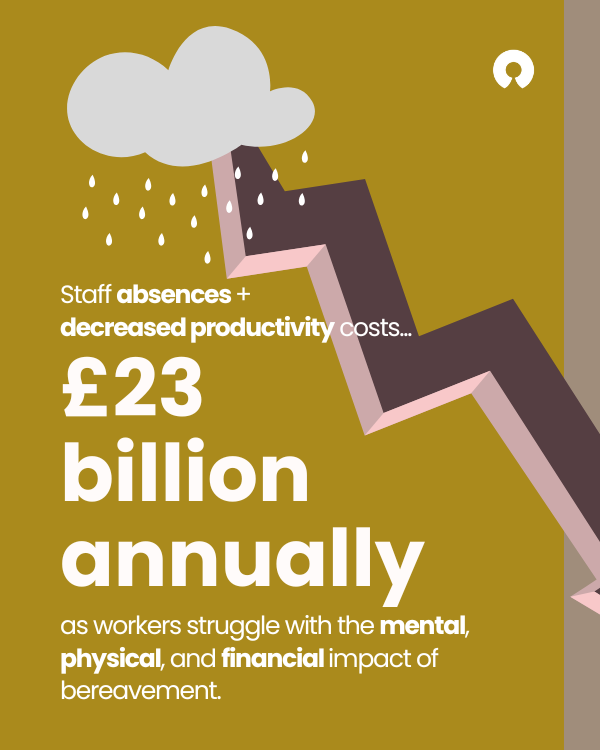
Bereavement training also reduces workplace stress by preventing grief-related burnout and absenteeism. Employees who receive appropriate support are more likely to stay engaged and productive, reducing long-term disruptions.
Effective bereavement policies and training enhance workplace communication. When employees and managers know how to approach grief with empathy, difficult conversations become easier, fostering a more inclusive and compassionate work environment.
By prioritising bereavement training, organisations improve job satisfaction and long-term employee commitment, ensuring that workplace culture remains one of care and understanding.
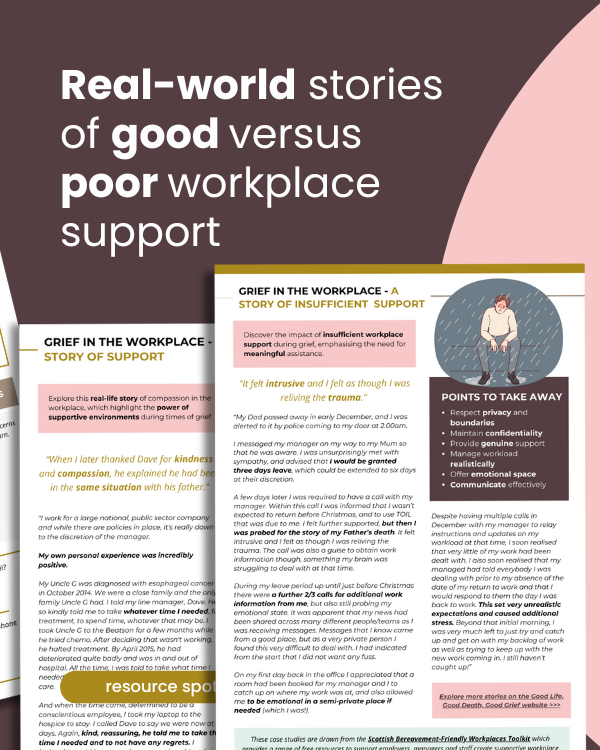
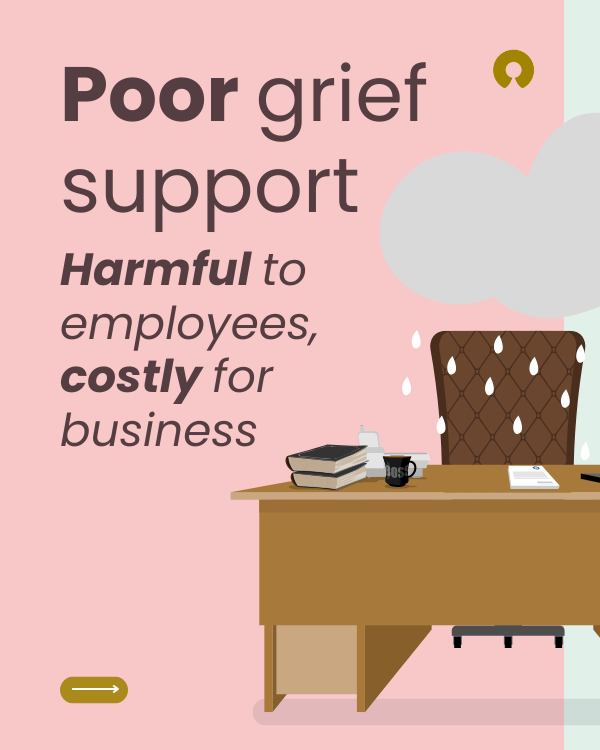
The impact of inadequate support versus the benefits of quality bereavement care




Handling bereavement in the workplace requires a compassionate and informed approach. By providing workplace bereavement training, advocating for supportive policies, and fostering a culture of empathy, organisations can help grieving employees navigate their loss while maintaining a healthy and productive work environment.
The Loss Foundation’s Bereavement Training
The Loss Foundation’s Bereavement Training equips professionals with the tools to support grieving individuals effectively. Delivered by Clinical Psychologists, the training is tailored for nonprofits, businesses, healthcare providers, and social workers who encounter bereavement in their roles.

“She was so passionate about her work… which made learning from her interesting.” – Training Delegate
Dr. Erin Hope Thompson MBE, Founder and Director of The Loss Foundation, leads the content creation and delivery of our bereavement training.
As a Clinical Psychologist, she has extensive experience across the NHS, private, and third sectors. In 2022, Dr. Thompson was awarded an MBE for her services to bereaved families.
Bereavement in the workplace
By investing in Bereavement Training, you can develop the skills and confidence needed to guide individuals through their grief with empathy and professionalism.

Key outcomes of our training include:
- Greater emotional resilience when supporting grieving individuals
- Able to manage sensitive situations and provide empathetic support
- Communication skills for handling difficult conversations with confidence
- Skills for personal wellbeing while supporting others
- Problem-solving and decision-making skills when addressing grief-related challenges
Contact us about bereavement in the workplace

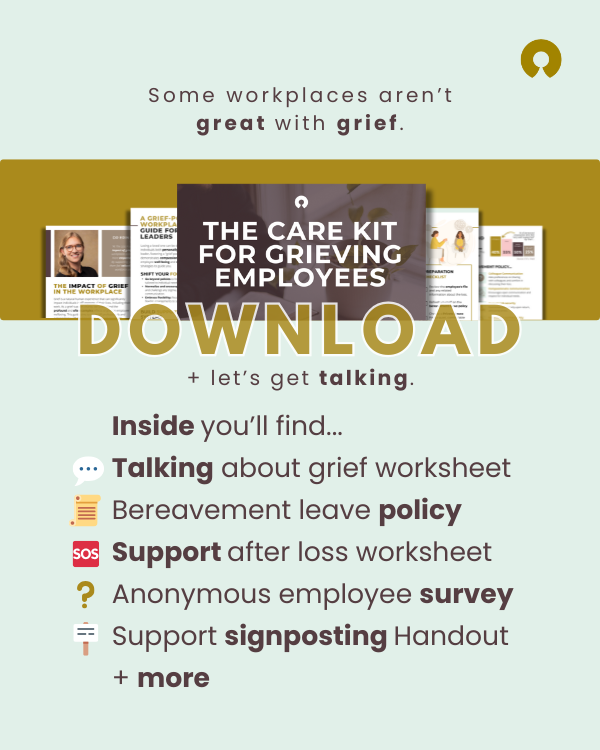
Download: The Care Kit for Grieving Employees
Foster compassionate communication, support employee needs, and ease their return to work.
Inside you’ll find…
- Bereavement Leave Policy Template
- Communication Worksheet
- Sharing Your Needs Worksheet
- Return-to-Work Worksheet
- Signposting Handout
- Anonymous Employee Survey Handout
Provide your email address to receive our PDF guide. By doing so, you are also consenting to receive information regarding our training and services.
Photo by Alejandro Escamilla on Unsplash
🌱 Grow with our courses
Explore our courses – including Mental Health: Supporting Ourselves and the Grief Journey Workbook – on our dedicated Grief & Mental Health Training page.
