
Volunteering to support individuals through grief is a deeply meaningful and compassionate role. Whether you want to assist those who have lost a loved one, support hospice patients, or work within a bereavement charity, bereavement volunteer training equips you with the skills needed to provide emotional and practical support.
🌱 Grow with our courses
Explore our courses – including Mental Health: Supporting Ourselves and the Grief Journey Workbook – on our dedicated Grief & Mental Health Training page.
What is Bereavement Volunteer Training?
Bereavement volunteer training prepares individuals to offer support, empathy, and guidance to those who are grieving. This training typically covers:

- Understanding the grieving process and how people experience loss differently.
- Active listening skills to provide comfort and emotional support.
- Boundaries and self-care for volunteers to prevent burnout.
- Ethical considerations and confidentiality in grief support.
- Communication techniques for sensitive conversations with bereaved individuals.
Many organisations offer bereavement volunteer training online, making it accessible for those who prefer flexible learning options.
Bereavement volunteer training prepares individuals to support those who are grieving. This training provides essential skills in active listening, grief awareness, and crisis response. Volunteers learn about the emotional, psychological, and sometimes spiritual aspects of loss, helping them provide compassionate support while maintaining appropriate boundaries.
What Does Bereavement Volunteer Training Cover?
Training programs vary, but they typically include:
- Understanding Grief and Loss – Learning about grief theories, stages of bereavement, and how different people experience loss.
- Active Listening and Communication Skills – Techniques to provide a safe space for the bereaved to express their emotions.
- Cultural and Religious Sensitivity – Understanding how diverse backgrounds shape grief experiences.
- Self-Care for Volunteers – Managing emotional well-being while supporting others.
- Ethical and Professional Boundaries – Maintaining respectful and appropriate relationships with those receiving support.
- Crisis Intervention and When to Refer – Recognising signs of complicated grief or mental health concerns that require professional intervention.
Bereavement Volunteer Training Online
For those who prefer flexible learning, bereavement volunteer training online provides a convenient way to gain the necessary skills. Many organizations offer virtual programs, allowing participants to complete training at their own pace. Online courses often include video lessons, reading materials, interactive exercises, and virtual role-playing scenarios.

Some benefits of online training include:
✅ Accessibility from anywhere
✅ Self-paced learning options
✅ Recorded lectures from grief specialists
✅ Virtual and peer discussions
The Loss Foundation has created a number of grief tools
A Resource for Social Workers Supporting Clients
This workbook provides structured activities and practical tools to help individuals navigate loss, offering a blend of reflection, coping strategies, and therapeutic exercises.
📖 73 pages, 20 supportive activities & 8 audio meditations
🧠 Created by our Clinical Psychologists
✍️ A blend of reflection, practical exercises & coping strategies
-
Product on sale
 Your Grief Journey WorkbookOriginal price was: £15.00.£10.00Current price is: £10.00.
How Do Social Workers Help with Grief?
Social workers provide comprehensive support to those experiencing grief by addressing emotional, psychological, and practical needs. Their role includes:
1. Emotional Support
- Offering a safe space for individuals to express feelings of loss and sadness.
- Providing validation and reassurance that grief responses are normal and unique to each individual.
- Using therapeutic interventions like cognitive behavioral therapy (CBT) and narrative therapy to help individuals process loss.
2. Practical Assistance
- Connecting clients with bereavement support groups, community resources, and professional services.
- Assisting with practical matters such as funeral planning, legal issues, and financial support.
- Supporting families in navigating changes in family dynamics after a loss.
3. Advocacy and Policy Support
- Helping clients access bereavement leave and workplace accommodations.
- Promoting grief-informed policies within organisations and communities.
- Ensuring that individuals from marginalised communities receive culturally competent bereavement support.
“Supporting someone to navigate the complexities of grief can feel challenging. These worksheets aim to shed light on the grieving process and equip a person with tools to process loss, while looking after themselves in grief.“
Dr Erin Hope Thompson MBE – Founder and Director of The Loss Foundation
Bereavement Training for Social Workers
The Importance of Bereavement Training
Bereavement Training is crucial for social workers to enhance their ability to provide compassionate and effective grief support. Given the complexity of grief, professional training equips social workers with the necessary skills to:
- Understand the different grief models and how they apply to real-world situations.
- Recognise complicated or prolonged grief that may require specialised interventions.
- Develop emotional resilience to prevent burnout while supporting grieving individuals.
- Improve communication skills to handle sensitive conversations with empathy.
- Gain confidence in addressing grief-related challenges in diverse professional settings.
Bereavement Training UK & Online Options
For professionals seeking Bereavement Training UK, several organisations offer specialised programs tailored to regional and national bereavement policies. Additionally, Bereavement Training Online provides flexible learning options, allowing social workers to enhance their knowledge and skills at their own pace.
Who Benefits from Bereavement Training?
- Social workers supporting clients experiencing grief and loss.
- Healthcare professionals such as nurses, hospice workers, and mental health practitioners.
- Educators and school counselors assisting grieving students and families.
- Workplace managers and HR professionals navigating bereavement policies and employee support.
- Community support workers providing grief services in various settings.
How Can a Social Worker Help Someone Emotionally?
Social workers play a vital role in emotional support by implementing evidence-based strategies to help individuals cope with grief. Some key approaches include:
1. Active Listening and Validation
- Encouraging individuals to talk about their feelings without fear of judgment.
- Using reflective listening techniques to ensure clients feel heard and understood.
- Recognising that grief is non-linear and validating a range of emotional responses.
2. Emotional Regulation Strategies
- Teaching mindfulness and relaxation techniques to help manage overwhelming emotions.
- Encouraging expressive activities such as journaling, art, or music therapy.
- Introducing structured coping mechanisms like goal-setting to facilitate emotional stability.
3. Group Support and Peer Connection
- Organising bereavement support groups for shared experiences and mutual encouragement.
- Providing psychoeducation on grief and loss to normalise the grieving process.
- Encouraging social engagement and community involvement to combat isolation.
The Loss Foundation’s Bereavement Training
The Loss Foundation’s Bereavement Training equips professionals with the tools to support grieving individuals effectively. Delivered by Clinical Psychologists, the training is tailored for nonprofits, businesses, healthcare providers, and social workers who encounter bereavement in their roles.

“She was so passionate about her work… which made learning from her interesting.” – Training Delegate
Dr. Erin Hope Thompson MBE, Founder and Director of The Loss Foundation, leads the content creation and delivery of our bereavement training.
As a Clinical Psychologist, she has extensive experience across the NHS, private, and third sectors. In 2022, Dr. Thompson was awarded an MBE for her services to bereaved families.
Why Choose The Loss Foundation’s Bereavement Training?
- Expert-Led Learning: Training is developed and delivered by Clinical Psychologists with extensive experience in grief and bereavement.
- Customisable Content: Programs are tailored to meet the specific needs of different professional settings, ensuring relevant and practical applications.
- Practical Post-Training Resources: Participants receive a comprehensive workbook with tools and action plans to reinforce learning.
- Flexible Training Delivery: Sessions are available in-person and online, accommodating diverse schedules and learning preferences.
Grief training for social workers
Social workers are in a unique position to offer meaningful, compassionate support to those experiencing loss.

By investing in Bereavement Training, you can develop the skills and confidence needed to guide individuals through their grief with empathy and professionalism.
Key outcomes of our training include:
- Greater emotional resilience when supporting grieving individuals
- Able to manage sensitive situations and provide empathetic support
- Communication skills for handling difficult conversations with confidence
- Skills for personal wellbeing while supporting others
- Problem-solving and decision-making skills when addressing grief-related challenges
Additional Support for Participants
Beyond training, The Loss Foundation offers ongoing support to ensure that participants can integrate their learning effectively. This includes:
- Access to mental health resources curated by Clinical Psychologists.
- Industry-specific strategies for applying bereavement training in different workplaces.
- A community of professionals dedicated to improving grief support practices.
Contact us about our bereavement training for social workers


🧠 Understand the ‘Stages’ of Grief
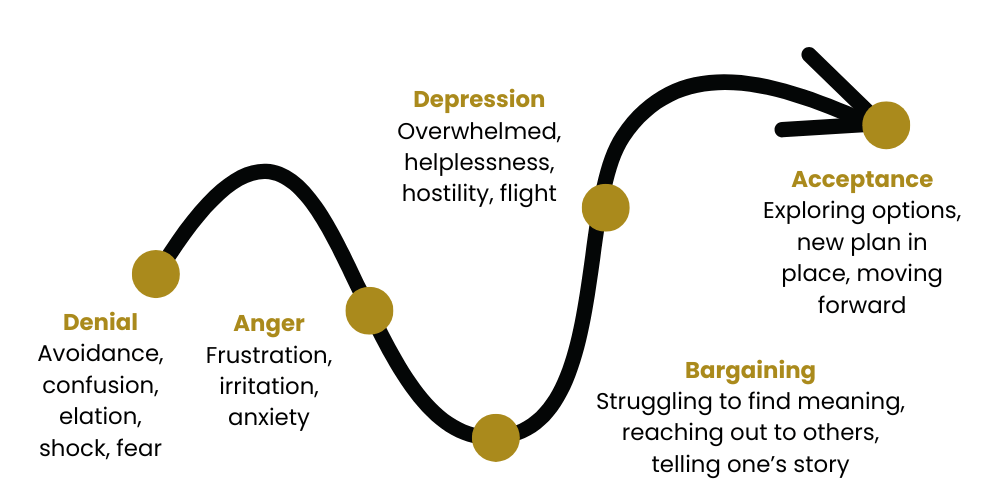
Many people first encounter grief through the idea of “stages,” but the model is often simplified or misunderstood.
Our Stages of Grief page looks at where the framework began, what each stage represents, and how it can support understanding – without suggesting that grief unfolds in a tidy order.
Explore the page to learn:
📘 A clear explanation of what the Five Stages are (and what they’re not)
🧭 Why grief rarely moves in a straight line
🌊 How feelings can rise and fall in waves
🧩 Other grief models that may resonate more with your experience
Photo by Neil Thomas on Unsplash