
Grief@Work
Helping organisations support grief with confidence, compassion and practical guidance.
Workplace grief can feel difficult to navigate – for managers, colleagues and grieving employees alike. Our Grief@Work hub provides practical guidance, workplace training, downloadable toolkits and expert grief-informed resources from The Loss Foundation.
On this page…

Managers
Conversations, leave, return-to-work planning and compassionate leadership.

HR Teams
Policies, workplace culture, legal guidance and grief-aware workplaces.

Colleagues
Practical guidance on supporting grieving coworkers compassionately.

Employees
Bereavement leave, workplace conversations and returning to work while grieving.
Grief often leads to employees who want to quit…

Our toolkits help provide the support your grieving employee needs…
Our practical workplace toolkits help managers, HR teams and organisations support grieving employees with more confidence, compassion and clarity.
-
Product on sale
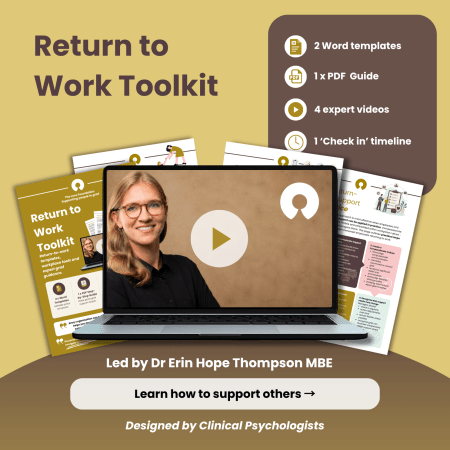 Return to Work ToolkitOriginal price was: £59.00.£39.00Current price is: £39.00.
 -
Product on sale
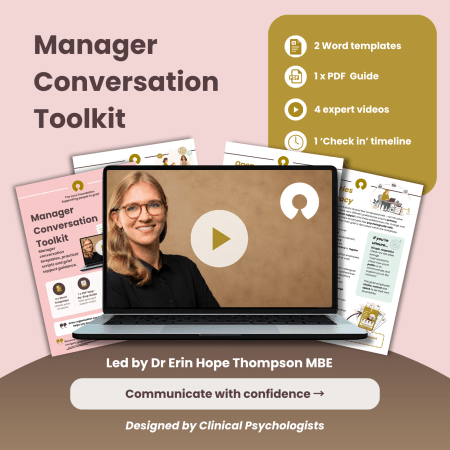 Manager Conversation ToolkitOriginal price was: £59.00.£39.00Current price is: £39.00.
 -
Product on sale
 Bereavement Policy + Manager Support ToolkitOriginal price was: £59.00.£39.00Current price is: £39.00.
📄 Return-to-Work Toolkit
Help employees feel supported when returning after bereavement leave.
✔ Return-to-work planning templates
✔ Phased return guidance
Workplace adjustment ideas
✔ Manager checklists + communication support
✔ Guidance on workload, flexibility and wellbeing
✔ Tools to reduce anxiety around return-to-work conversations
🤝 Manager Conversation Toolkit
Practical guidance for supportive grief conversations at work.
✔ What to say (+ what not to)
✔ Open questions + check-in prompts
✔ Conversation examples for difficult situations
✔ Boundaries, privacy + communication
✔ Supporting employees without trying to “fix” grief
✔ Guidance for managers with no clinical background
🛠️ Bereavement Policy + Manager Support Toolkit
Build a more compassionate approach to grief.
✔ Editable bereavement policy templates
✔ Guidance on bereavement leave + legal considerations
✔ Confidentiality + colleague communication guidance
✔ Manager support frameworks
✔ Practical implementation advice
✔ Templates designed to save HR teams time and uncertainty
The Landscape of UK Bereavement Leave
While UK legislation does not specify a set number of days for bereavement leave (other than for an employee who loses a child under the age of 18, or who suffers a stillbirth after 24 weeks’ pregnancy), employers are encouraged to offer a reasonable amount of paid leave to eligible employees. This leave is crucial for employees to grieve, make funeral arrangements, and attend to personal matters during a difficult time.
Most employers grant bereavement leave ranging from 1 to 3 days, with the possibility of extension depending on individual situations. The question is whether such a short period is sufficient.
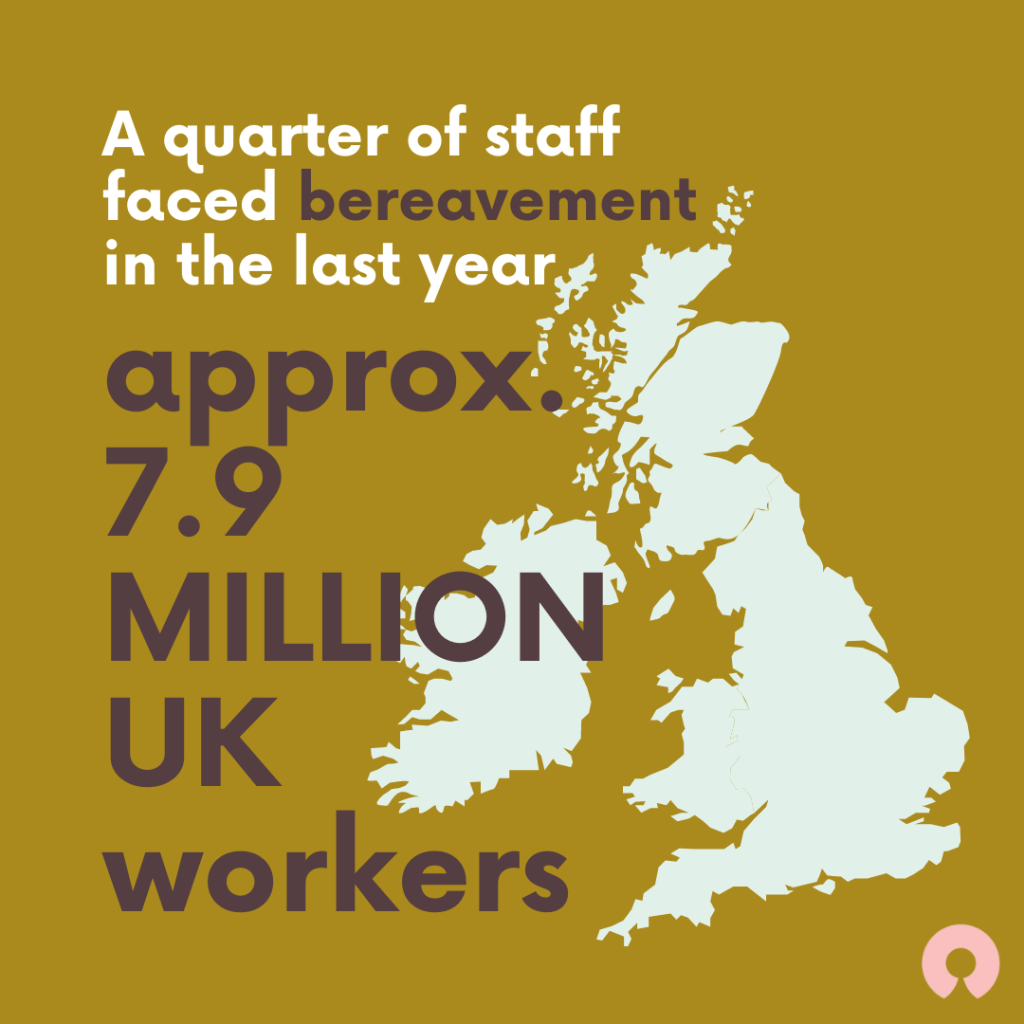
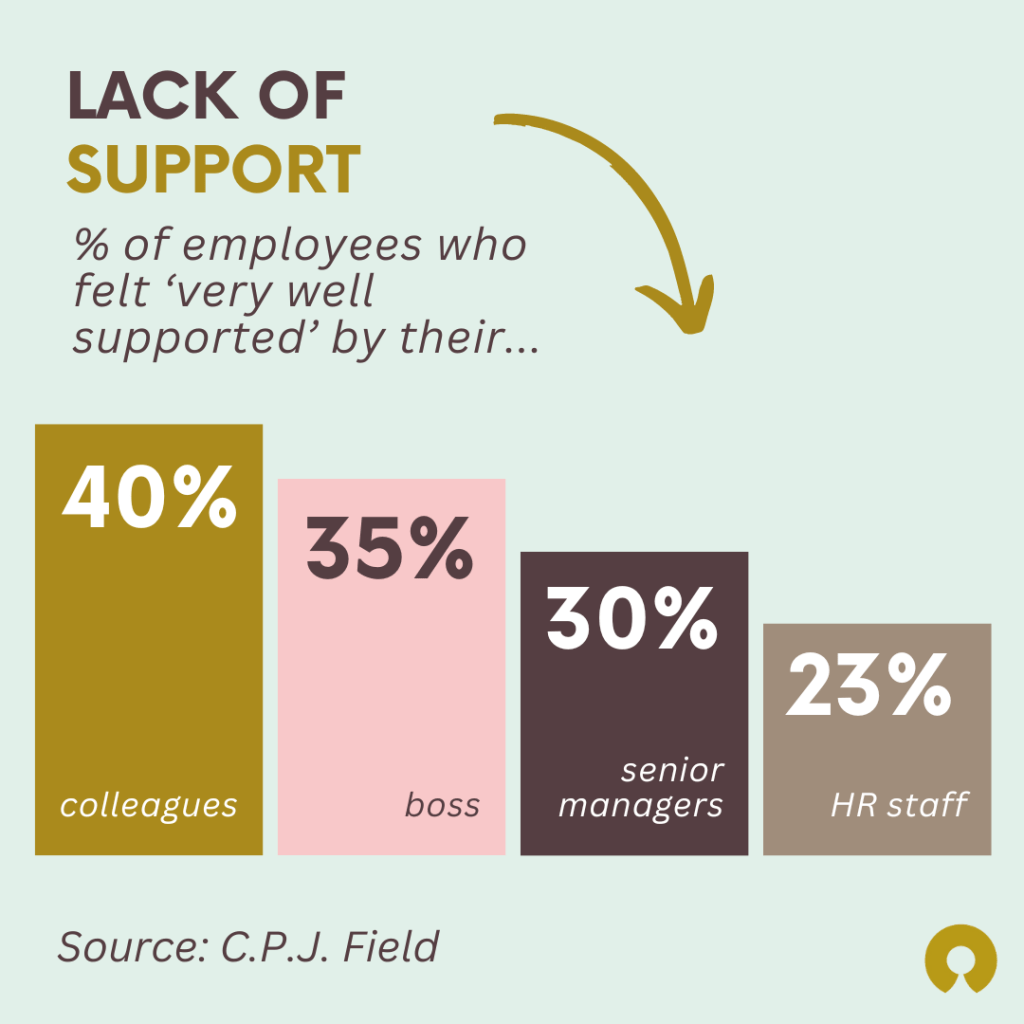
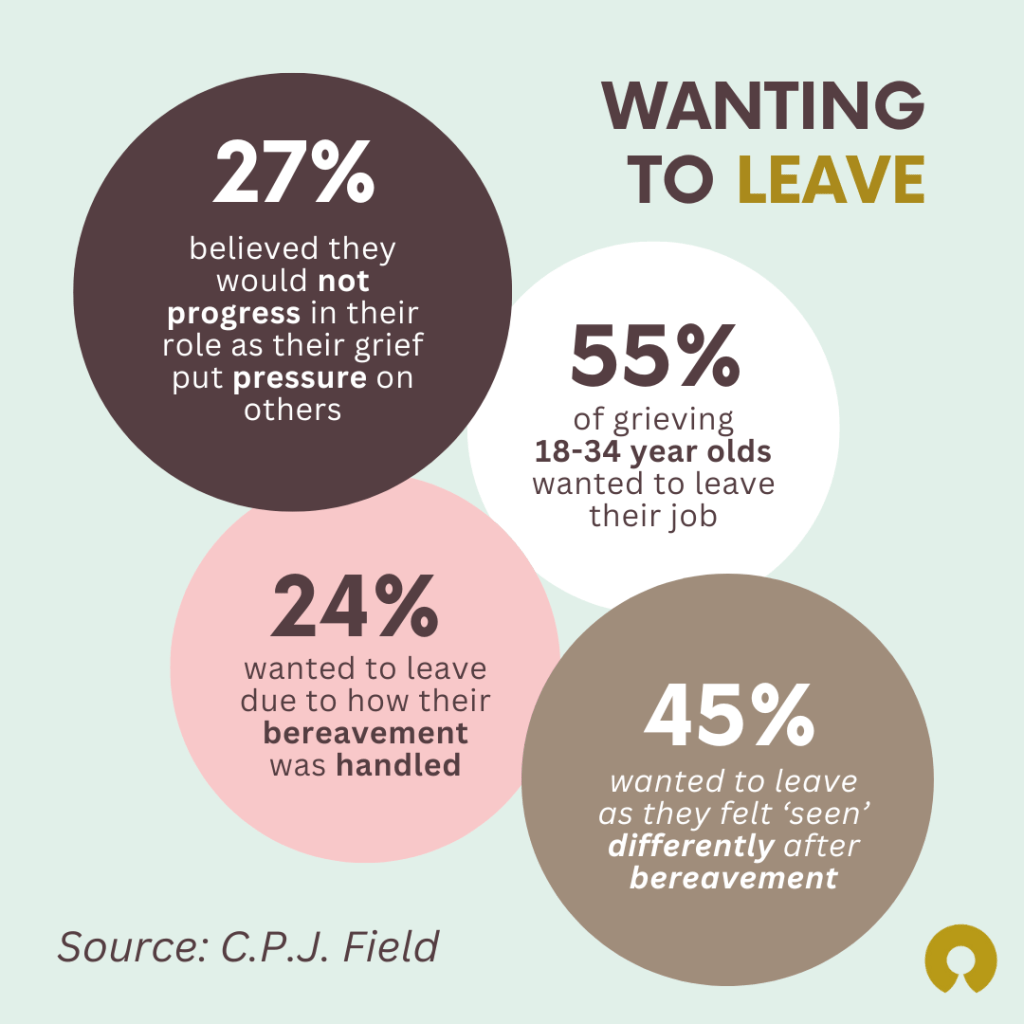
One landmark study found that the current approach to bereavement leave isn’t working – not for the person grieving, not for businesses, and not for the economy. The key takeaways are highlighted in these images.


💬 “How do I support someone at work who’s grieving — especially if they’re not ready to talk?”
This is one of the most common questions we hear.
🎥 In this video, Erin shares reflections from over 15 years supporting bereaved individuals – and what she’s learned from working with organisations who want to do better.
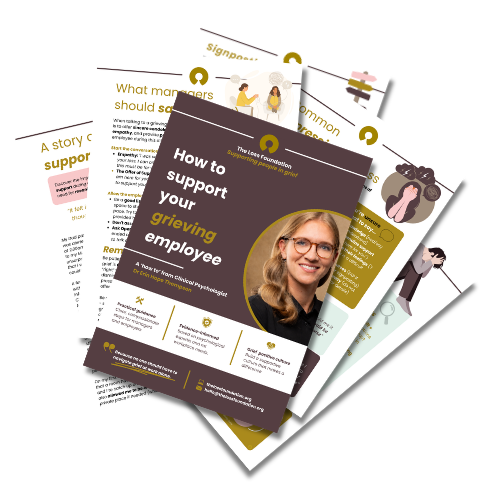
Free PDF Guide: How to Support Your Grieving Employee
Learn how to respond sensitively, communicate appropriately, and support bereaved employees in the workplace.
We’ll also send occasional updates, training opportunities, and workplace grief support resources. Unsubscribe anytime.
“Grief affects every person differently, and support should reflect that individuality. Compassionate workplaces understand that flexibility, patience and ongoing understanding matter far beyond the first few days after a loss. Even a small amount of protected time and meaningful support can make someone feel safer, seen and more able to cope during one of the hardest periods of their life.” — The Loss Foundation
UK Bereavement Leave – What Does the Law Say?
Those who lose a child under the age of 18 or who suffer a stillbirth (after 24 weeks’ pregnancy) are entitled to two weeks of paid leave under ‘Jack’s Law’ in England, Scotland, and Wales, with different regulations in place for Northern Ireland.
When an employee experiences the loss of a dependent, such as a child or parent, they are entitled to take compassionate leave. While there is no set duration for this leave and it does not have to be paid, it’s important for employers to understand and support their employees during this difficult time.
According to the Employment Rights Act 1996, employees typically have the right to reasonable unpaid time off for unforeseen matters or emergencies involving a dependent or immediate family, which includes arranging or attending a funeral.
A ‘dependent’ as defined by law encompasses a spouse, civil partner, child, parent, cohabitant (except for employees, tenants, or lodgers), or someone relying on the employee for care arrangements. This may also extend to individuals typically dependent on the employee for care or emergency assistance, like an elderly neighbour.
In cases where the deceased is not a dependent or immediate family member, specific rights may not apply. Whether leave is granted in such situations is at the discretion of the employer.
It’s crucial to be mindful of behaviours that may be perceived as bullying or harassment, such as pressuring employees to return to work prematurely after the loss of a loved one. Such actions can have a detrimental effect on employee morale and well-being.
Offering flexible working arrangements can be beneficial for employees coping with loss, allowing them to balance their work responsibilities with personal needs. Employers should be open to considering and accommodating flexible working requests within the bounds of organisational policies and statutory rights.
Employers must ensure that individuals with ‘protected characteristics’ are not subjected to unfair treatment or discrimination. These protected characteristics include age, gender reassignment, sex, marriage or civil partnership status, race, religion or belief, sexual orientation, and disability
Examples of discriminatory actions include:
- Refusing an employee’s request to participate in recognised cultural or religious customs related to bereavement.
- Failing to consider reasonable adjustments if an employee’s grief is impacting their mental health.
- Allowing time off only for employees who were married to or in a civil partnership with the deceased individual.
Grief can impact job performance, compromising safety due to changes in sleep, concentration, and mood. Line managers must understand their employees’ situations to prioritise safety and welfare. For instance, impaired sleep may render an individual unsafe to operate machinery or drive at work. Incorporating Health and Safety Assessments and reasonable workplace adjustments into the bereavement policy can address these concerns.

Our workplace bereavement training
We provide expert-led workplace bereavement training to help organisations support grief with greater confidence, compassion and understanding.
Our training is designed for managers, HR teams, Mental Health First Aiders and organisations looking to build more grief-aware workplace cultures.
Sessions combine practical guidance, psychological insight and real-world workplace strategies to help teams feel more prepared to support grieving employees.
Training and support areas include:
🏫 Bereavement training for schools
🏢 Workplace bereavement training
🤍 Bereavement training for social workers
Case studies + feedback from past delegates

Tailored to meet diverse needs, our bereavement courses help teams build confidence, compassion, and practical skills for real-world challenges.
Explore case studies, outcomes, and feedback from organisations we’ve worked with.
Browse Grief@Work guides

Bereavement leave for employers
A guide for UK employers on supporting bereaved employees with compassion.

Bereavement leave for employees
A guide to bereavement leave in the UK – including rights, workplace support and what to expect after loss.

Conversations with grieving colleagues
Learn what to say, what to avoid and how to offer compassionate support at work.

Supporting grieving colleagues
Practical guidance on supporting grieving coworkers with care and sensitivity.
Even more reading…
Returning to Work After Bereavement: Be Gentle With Yourself
Do you Get Paid Bereavement Leave? (+ other answers to your questions)
How to Request Bereavement Leave: A Step-by-Step Guide
Overview of Bereavement Leave: Explaining its Importance and Purpose
Words of Comfort: Writing a Sympathy Card to a Grieving Colleague
Video guides: Learn About Grief
Watch our short video on the different phases of grief to get a better understanding of what bereavement can look like.
Almost half of people suffer poor mental health following the death of a loved one (source: Sue Ryder).
Unbeknownst to a lot of people, it is not uncommon to experience anxiety when grieving. Watch this video to learn more about how anxiety effects our body and how you can try to respond to it.
Depression is common, and something that is often experienced when people are grieving. Watch this video to learn more about how depression effects our body, thoughts and behaviours, and learn some strategies for how you can try to respond to it.
Sleep is such an important part of our lives, yet many of us don’t pay attention to it until we start having problems with it. Unbeknownst to a lot of people, troubled sleep is a common consequence of bereavement.
In this video Ori Becker will explain the basics about sleep, and how you can try to manage any sleep difficulties that arise.
In this video Dr Kirsten Smith explains how flashbacks and nightmares start and continue after a traumatic event. It also outlines some ways you can try to manage flashbacks and nightmares.
It is not uncommon to experience flashbacks and nightmares when grieving, especially if you’ve witnessed somebody have a traumatic death. Watch this video to learn more about flashbacks and equip yourself with some strategies to tackle them.
Bereavement FAQs
Bereavement leave, also known as compassionate leave in some workplaces, is time off granted by your employer after the death of someone significant to you. This could include family members, friends, colleagues, or even pets, as their loss can be deeply impactful. While there’s no strict definition of who qualifies, a good employer will have a flexible bereavement policy that considers individual circumstances.
There isn’t a legal right to paid time off for bereavement unless you’re eligible for parental bereavement pay due to the loss of a child.
Exceptions apply for agricultural employees, and you can find out more by contacting the Acas helpline.
Many employers choose to offer paid leave during bereavement, often called ‘compassionate’, ‘bereavement’, or ‘special’ leave. The amount offered may depend on organisational policy or the terms of the employee’s contract. If there’s uncertainty, you should discuss it with your employer or line manager and review your contract.
Both you and your employer could agree for time off to be counted as:
- sick leave
- unpaid leave
- paid holiday entitlement (annual leave)
- If you take time off as sick leave or holiday, you should receive your usual sick pay or holiday pay.
If you’re employed, you might struggle to take necessary time off if it’s unpaid. Being self-employed means you won’t have paid leave options. Hospices often offer support through social workers for financial concerns, and Citizens Advice can provide guidance on bereavement benefits.
Many employers typically offer about three to five days of bereavement leave, but every organisation has its own rules and may handle things differently. If your employer has a bereavement or compassionate leave policy, it should outline exactly what you’re entitled to.
Even if it is not covered in a policy, your employer may agree to paid time off on a case-by-case basis. From Marie Curie’s research with employers, a typical amount is five days paid leave, but it’s often more than that – two weeks is quite common.
If the deceased was a dependent, you’re entitled to time off for the funeral. However, there isn’t a legal right to time off if the deceased wasn’t a dependent. Nevertheless, your organisation might provide such time off, often referred to as ‘compassionate leave’ or ‘special leave’.
While there’s no legal guarantee of paid time off for bereavement, exceptions apply for those eligible for parental bereavement pay in the unfortunate event of a child’s passing. Statutory parental bereavement pay represents the minimum amount that employers must provide to eligible staff, which is either £172.48 per week or 90% of your average weekly earnings, whichever is lower.
Starting in April 2020, employed parents were granted the right to take two weeks of paid bereavement leave after the loss of a child. You’re not required to take the leave immediately if you prefer not to, but it must be used within 56 weeks of your child’s passing.
There are currently no UK laws obliging employers to grant leave entitlement for other deaths in the family, however many businesses do. Most allow three to five days for bereavement leave, according to the BBC, but this depends on what your contract or staff handbook states or your employer’s discretion.
You’re entitled to unpaid leave to handle matters related to the passing of your spouse, civil partner, child, parent, or someone you live with. This includes attending a funeral. While there’s no legal right to time off for funerals in cases not involving a dependent, many employers offer three to five days of leave under their company policies. Check your employer’s bereavement or compassionate leave policy for details on your entitlement.
Every employer has their own guidelines, but many may use their discretion to grant reasonable time off for attending a funeral. They often assess what’s “reasonable” case by case, considering the circumstances and the employee’s relationship with the deceased.
While bereavement isn’t an illness, the loss of someone dear can leave you in shock or experiencing depression and anxiety. It’s important for your employer to understand your situation. If you need to take time off as sick leave, you might be eligible for statutory or occupational sick pay.
If you find it hard to cope and it’s impacting your health, don’t hesitate to reach out to your GP. They can suggest various forms of support, such as bereavement counselling, to help you through this challenging time.
If you’re taking an extended bereavement leave and don’t feel ready to return to work, consider scheduling an appointment with your GP. They can provide a medical note stating that you’re not fit for work due to your bereavement, which could support your case for further leave with your employer.
Returning to work after a bereavement is a unique journey for everyone, and there’s no one-size-fits-all approach. If you feel like things are progressing too fast or too slow for you, consider talking to your employer about it. It’s crucial to have open conversations and discuss the support you may need during this time. Your well-being matters.
The length of time you can take off work after a bereavement varies. Some companies offer a few days of paid bereavement leave, while others may allow longer unpaid leave. It depends on your company’s policies and your personal circumstances.